
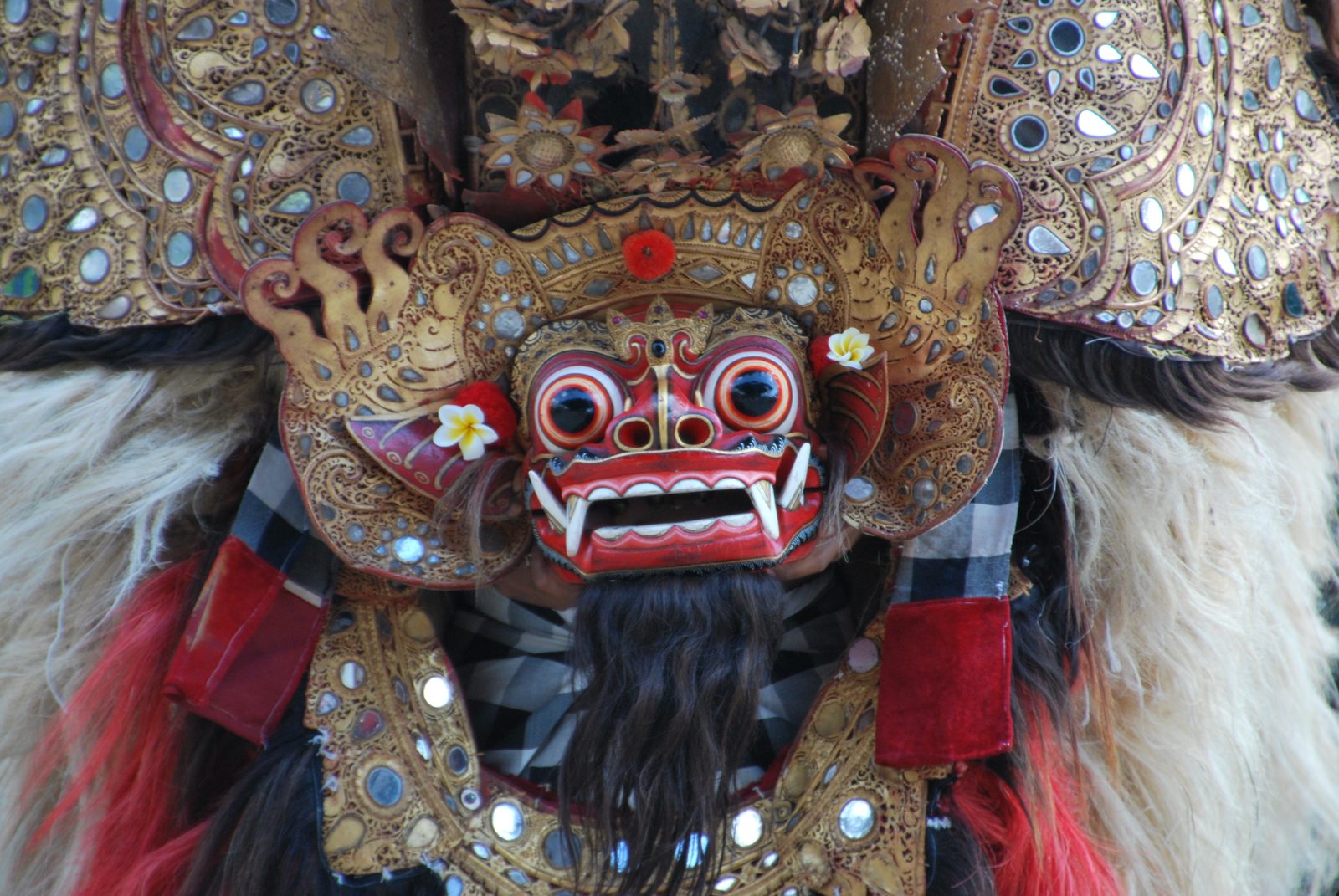
Bali is a Hindu-majority province of Indonesia. It has rice fields on a shared irrigation system that UNESCO has protected since 2012, water temples, and volcanoes that Indonesia’s volcanology authority monitors daily.
Six days is enough for Ubud and its rice fields, Mount Batur, the inland temples and the south coast. The entry, health and price figures come from the official sources linked in the text and were checked on 19 Oct 2026.
Bali in 30 seconds
- Country: Indonesia (Bali is one of its provinces)
- Size: the province covers 5,780.06 km², according to BPS Bali (2020 census)
- Religion: Hinduism, practised by 86.5% of the population at the end of 2024, according to data from Indonesia’s Ministry of Religious Affairs reported by Katadata
- Active volcanoes: Agung (3,142 m) and Batur (1,717 m), elevations from PVMBG reports; both were at Level I (Normal) on 19 Oct 2026, according to MAGMA Indonesia (PVMBG, the country’s volcanology authority)
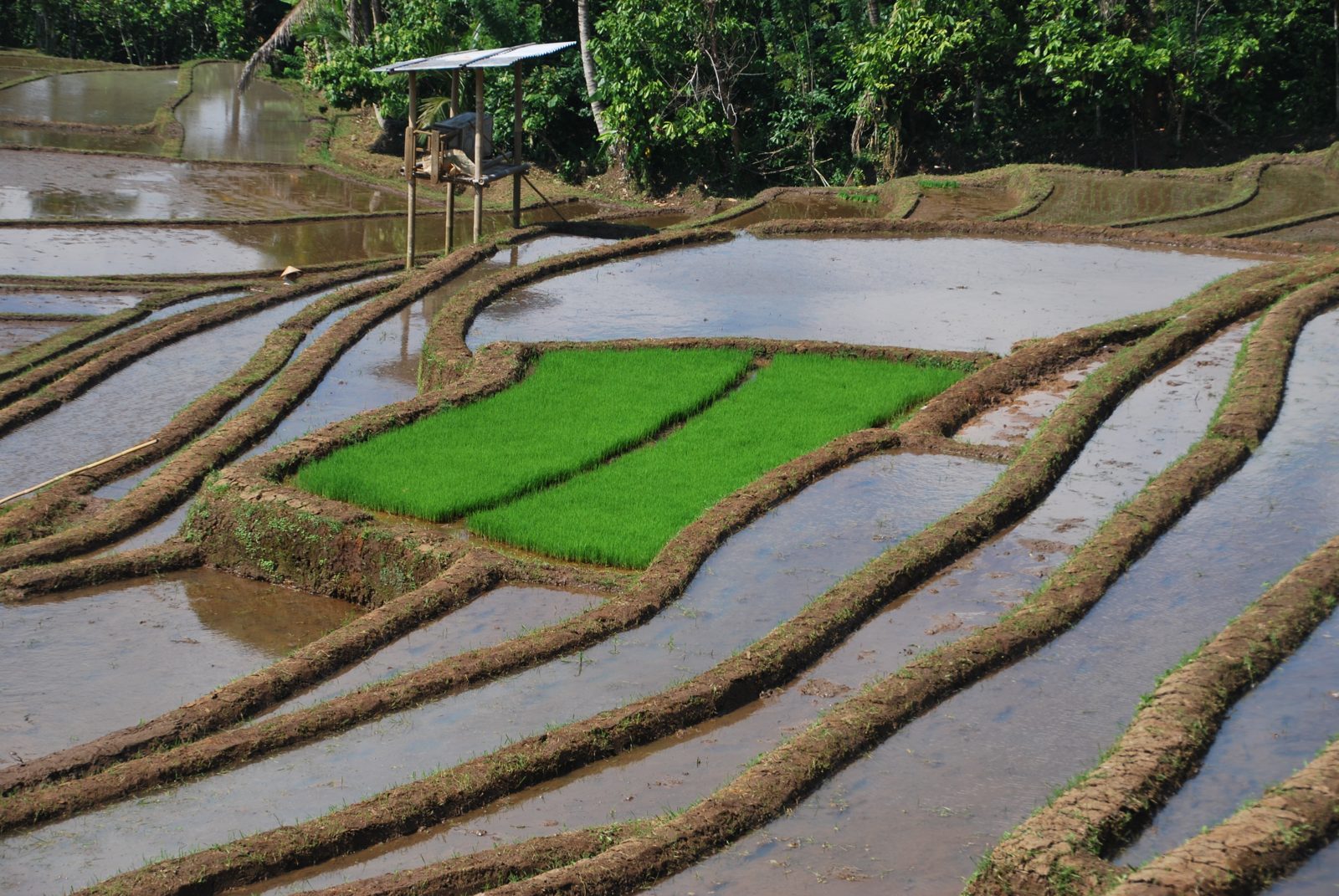
- UNESCO: the subak irrigation system and its water temples have been a World Heritage Site since 2012, according to the UNESCO listing
- Entry: Spanish citizens need a visa (500,000 IDR) and pay a tourist levy of 150,000 IDR in Bali, according to the Ministerio de Asuntos Exteriores (Spain’s Ministry of Foreign Affairs)
6-day route
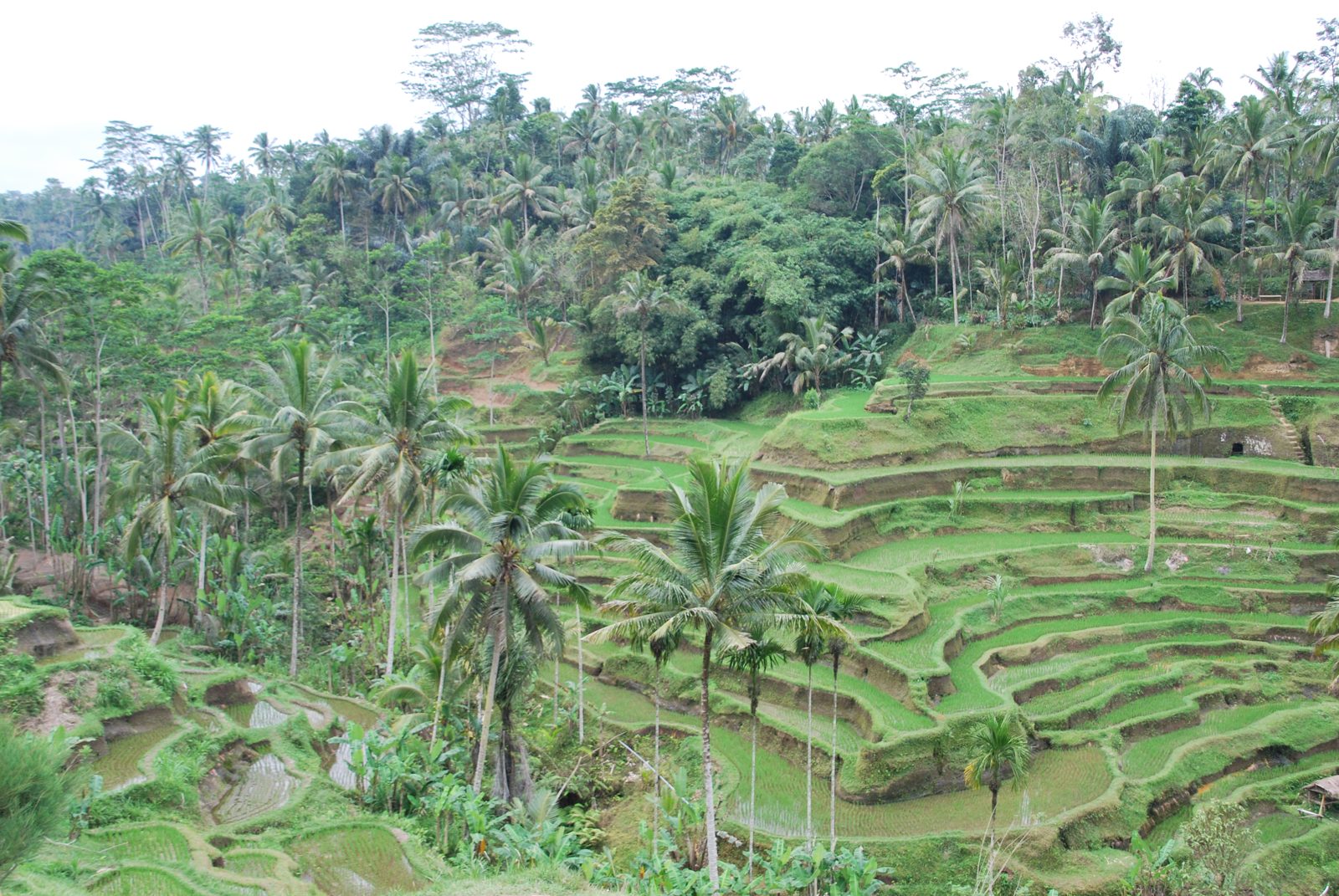
Days 1–2: Ubud, in the centre of the island. Walk through the Tegalalang rice fields first thing in the morning and visit the Monkey Forest, which is home to about 700 long-tailed macaques: keep your belongings out of their reach (indonesia.travel). To see terraces within the World Heritage area, the official Jatiluwih page places these rice fields in Tabanan, about 40 km from Denpasar and about 2 hours by car.
Day 3: Mount Batur at sunrise, in Bangli Regency. Ask at your accommodation about the departure time, the price and whether the guide is included: the Ministry of Foreign Affairs advises climbing active volcanoes with a professional guide. Before setting off, check the activity level on MAGMA Indonesia: on 19 Oct 2026 Batur was at Level I (Normal). In its daily report of 18 Oct 2026, the volcanology authority asks visitors not to linger or spend the night in the active crater area and not to approach the gas vents, because of the risk of toxic gases.
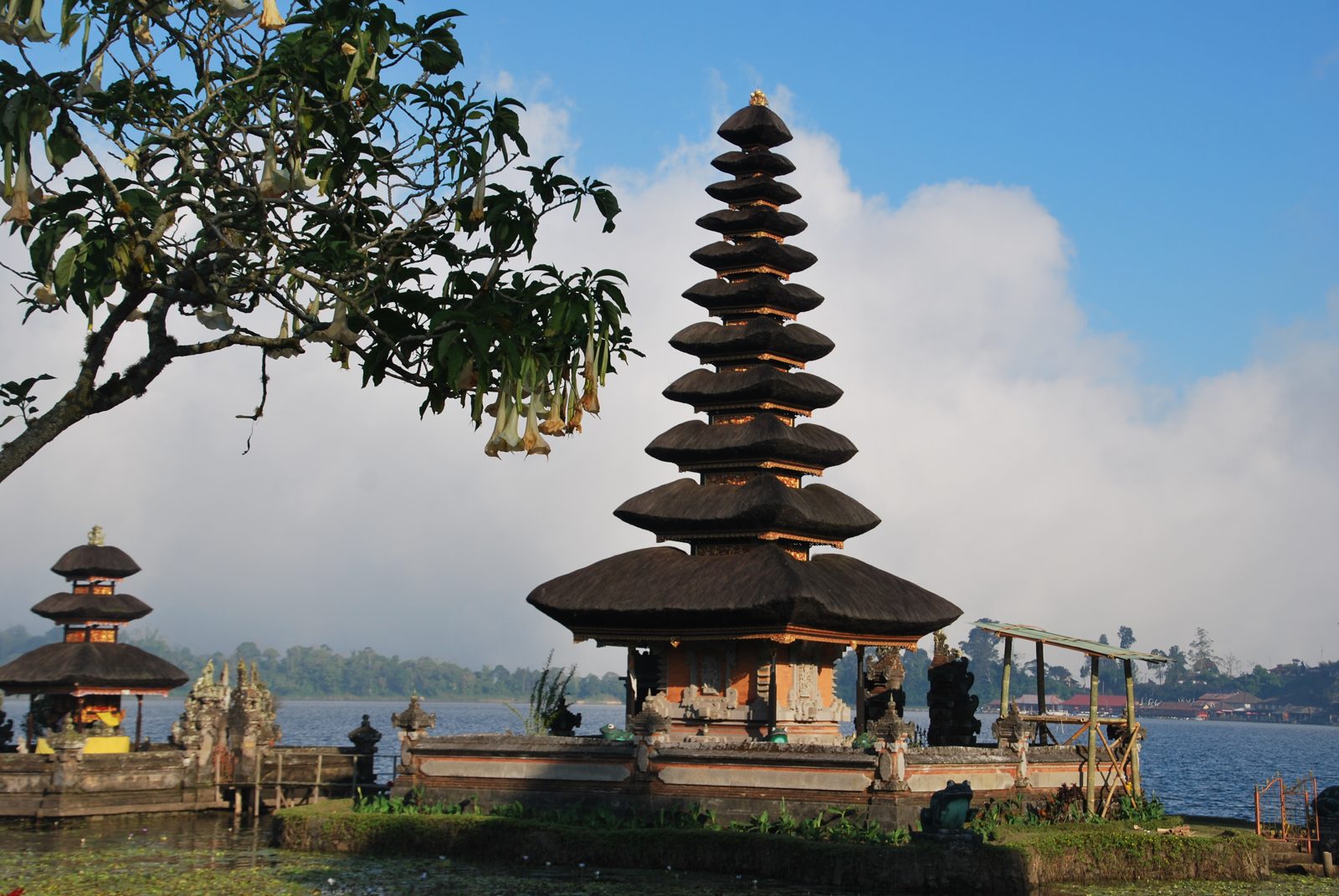
Day 4: temples in the centre of the island. Tirta Empul, in Tampaksiring (Gianyar), has a holy spring where the purification ritual (melukat) takes place, open to anyone who does it respectfully. Pura Ulun Danu Beratan stands on the shore of Lake Beratan, in Bedugul. The indonesia.travel temple list places Tirta Empul about 30 minutes from Ubud and the Lake Beratan temple 1.5–2 hours by car from Denpasar or Kuta.
Day 5: south coast: Uluwatu, in Pecatu (Badung). The temple stands on a 70 m cliff above the Indian Ocean. The kecak dance is performed at sunset in an open-air venue, depicts the Ramayana and is paid for separately from the entrance ticket; the temple page recommends arriving around 17:00 and the dance page gives 18:00 as the daily start time, so confirm the time when you buy the ticket. Look after your glasses and hats: the temple’s monkeys steal them. From Ubud it is 1.5 to 2 hours by car (indonesia.travel).
Day 6: beach time in Canggu or a day trip to Nusa Penida by fast boat, which leaves from Sanur, Kusamba or Padang Bai and takes 30 to 45 minutes according to indonesia.travel. The same portal places Manta Point, a diving spot with manta rays, on the south side of Nusa Penida. Use official boats, book snorkelling and diving at authorised centres and swim only in designated, supervised swimming areas: the Ministry of Foreign Affairs (MAEC) warns that currents make swimming a high-risk activity even close to the shore.
Understanding Balinese Hinduism
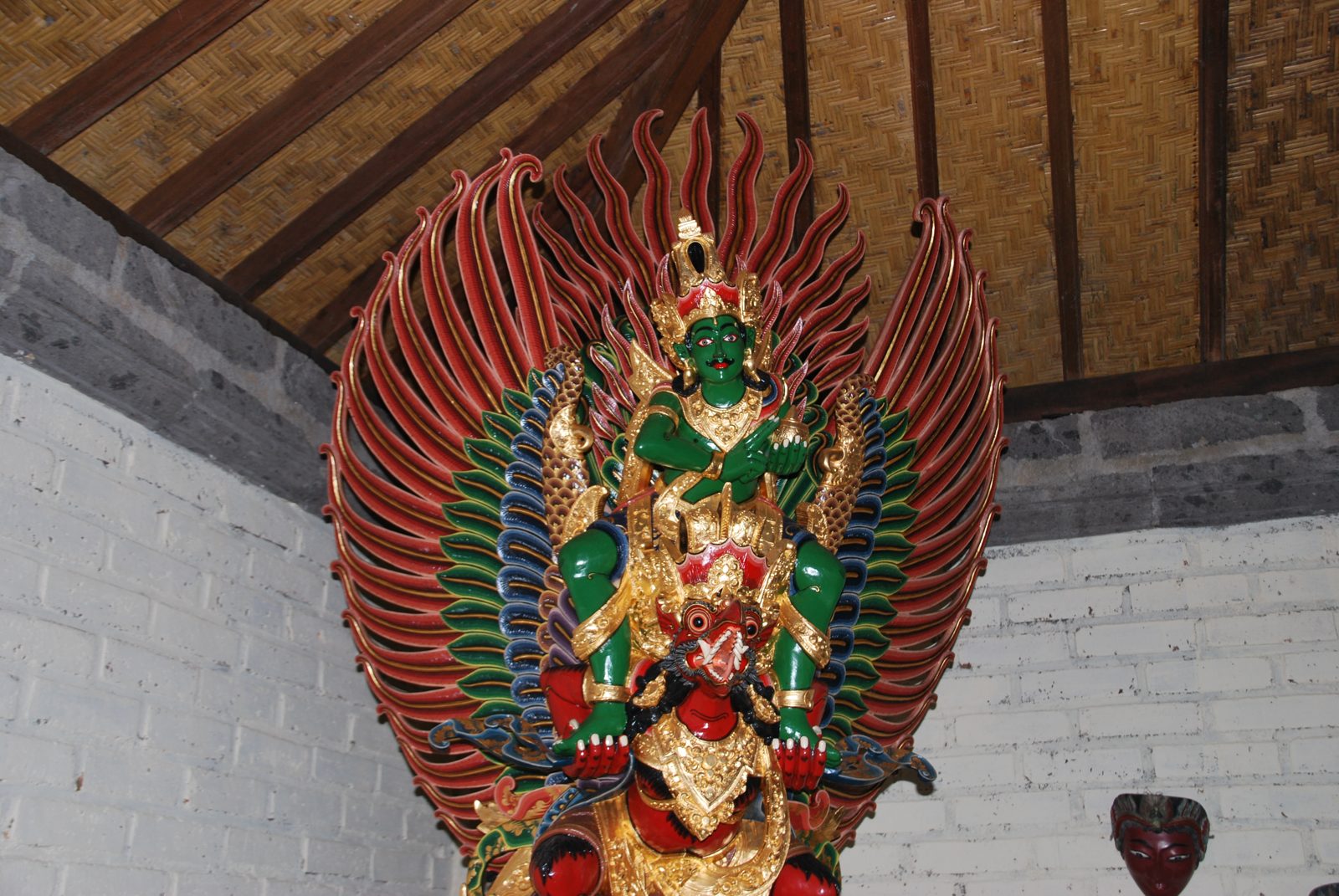
Bali’s water temples have drawn inspiration from several ancient religious traditions for more than a thousand years, according to UNESCO:
- Saiva Siddhanta Hinduism
- Samkhya Hinduism
- Vajrayana Buddhism
- Austronesian cosmology
Canang sari are small offerings placed daily on pavements and at shrines, according to indonesia.travel. Do not step on them: if you see one on the ground, walk around it.
Tri Hita Karana is the Balinese philosophical principle that unites the spirit world, the human world and nature. According to UNESCO, the rituals of the water temples seek a harmonious relationship between people and their environment.
Five temples in Bali
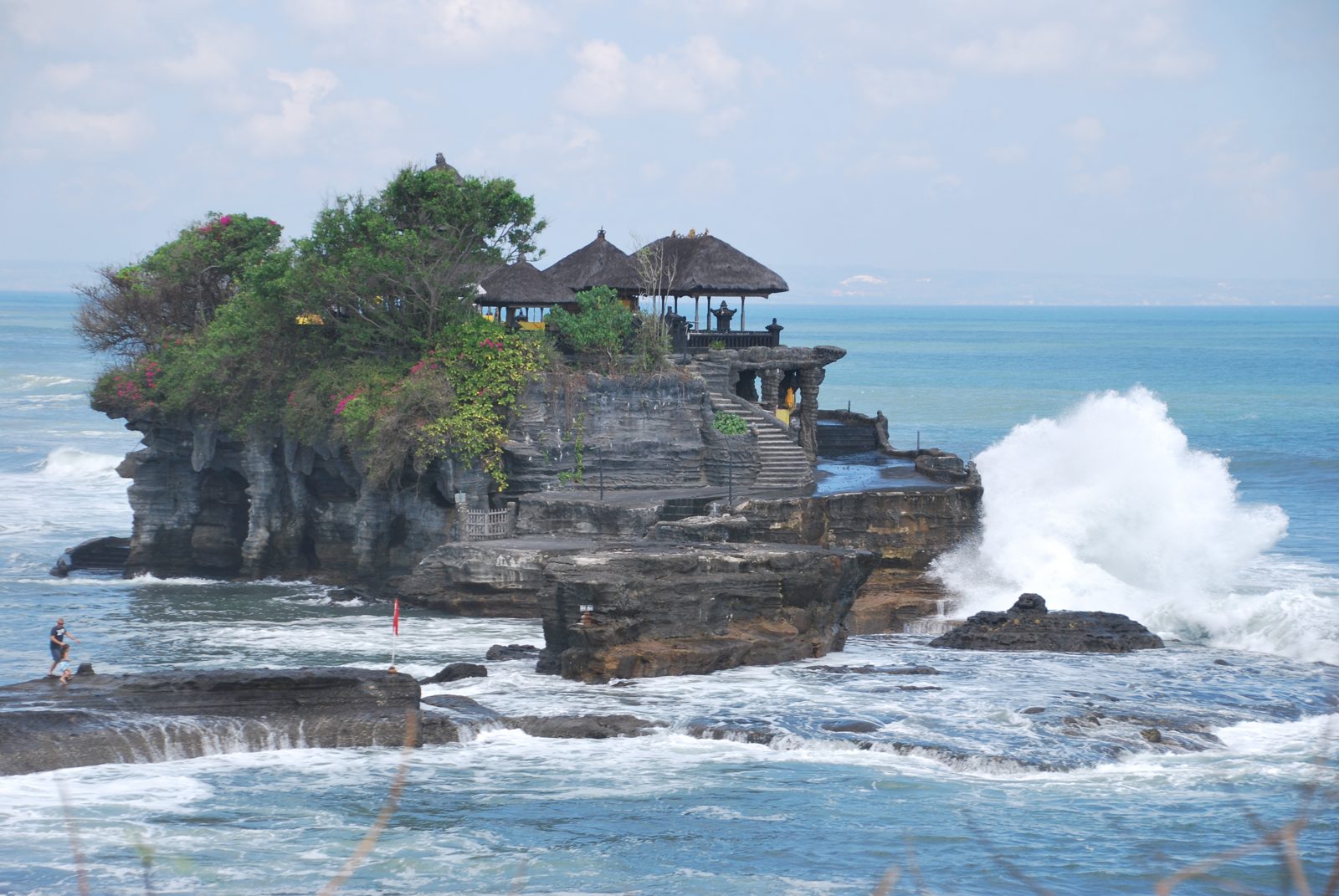
- Pura Besakih — the “mother temple”, the largest and holiest temple complex in Bali, on the slopes of Mount Agung (Karangasem); the indonesia.travel temple list places it 2–3 hours from Ubud by car
- Tirta Empul — holy spring founded in the year 962, according to its official page; you enter wearing a sarong and sash, which are lent or rented at the entrance
- Uluwatu — on a 70 m cliff overlooking the Indian Ocean, with kecak dance at sunset
- Tanah Lot — temple on a rock off the coast of Tabanan, about 30 km from Denpasar; the official page describes it as one of the most photographed sea temples in Bali
- Pura Ulun Danu Beratan — temple on Lake Beratan, in Bedugul (also spelt Bratan), known for its tiered-roof shrines (meru) that seem to float on the water
Balinese food
- Nasi goreng: fried rice with spices and sweet soy sauce, usually with egg and cucumber slices. It is not exclusive to Bali: according to indonesia.travel it is found all over Indonesia, from street stalls to luxury hotels.
- Bebek betutu: duck (or chicken, in the classic ayam betutu) rubbed with a spice paste, wrapped in banana leaf or palm fibre and cooked for hours over embers; modern versions steam or bake it (indonesia.travel).
- Sate lilit: minced fish, chicken or pork, mixed with grated coconut and spices and wrapped around a lemongrass or bamboo stick. “Lilit” means “to wrap” in Balinese (indonesia.travel).
- Babi guling: whole pig stuffed with spices and spit-roasted, with crisp skin. The official page considers it perhaps the most famous dish in Bali.
- Kopi luwak: coffee obtained from civet droppings. A 2016 study in the journal “Animal Welfare” observed 48 wild-caught civets kept in captivity on 16 tourist plantations in Bali and concluded that they suffered inadequate conditions; the authors note that this harm is not associated with the traditional collection of droppings from free-living civets. A plantation that shows civets in cages produces coffee from captive animals.
Fixed costs and paid formalities
- Visa: Spanish citizens are not exempt. The visa on arrival (VoA) or the electronic one (e-VoA) costs 500,000 IDR, is valid for 30 days and can be extended for another 30, according to the Ministry of Foreign Affairs. The e-VoA is processed at evisa.imigrasi.go.id, the official Immigration website; the Ministry warns that fraudulent sites exist that charge without issuing the visa.
- Bali tourist levy: 150,000 IDR per person (a little under €10, according to the Ministry of Foreign Affairs), as a single payment during the stay. It is paid on Love Bali before the trip or at the counters at the airport and at Tanjung Benoa port, according to indonesia.travel.
- Rental motorbike: Spanish citizens need an international driving permit, with the motorcycle endorsement if applicable, and a helmet is compulsory. The Ministry of Foreign Affairs advises against renting without a contract and without a policy that covers damage to third parties. Driving is on the left.
- Medical insurance: the Ministry of Foreign Affairs recommends a policy with at least €80,000 in medical expenses and evacuation cover.
- Temple tickets: each temple charges separately and the amount varies from one official page to another; those for Uluwatu, Tirta Empul and Ulun Danu Beratan are listed under “Practical information”. The Uluwatu kecak is paid for separately from the temple ticket.
Practical information (official sources, checked on 19 Oct 2026)
Visa rules, fees and entrance prices change: check the linked source before you travel.
Getting there
- By air: I Gusti Ngurah Rai International Airport (code DPS) is Bali’s only commercial airport. It is in Tuban, in Badung Regency, about 13 km south of central Denpasar, according to the airport website.
- By road: from the airport to Uluwatu it is 45 minutes to 1 hour, according to indonesia.travel. Tanah Lot is about 30 km from Denpasar according to its official page, and the temple list places it about 45 minutes by car from Denpasar or Kuta.
- Nusa Penida: fast boat from Sanur, Kusamba or Padang Bai, 30 to 45 minutes depending on the weather; it docks at Toyapakeh or Sampalan. Book your ticket in advance in high season. On the island you can rent a motorbike or car, with or without a driver; the trails are demanding, with climbs and rocky stretches, so choose a suitable vehicle in good condition. The official page recommends the dry season, from April to October.
- Leaving the country: the MAEC advises against connecting a domestic flight with the international departure flight on the same day, because delays are common.
Tickets and opening hours
The amounts on the indonesia.travel pages do not match each other and change over time. Confirm the price at the ticket office.
- Uluwatu: open 09:00 to 19:00, according to the temple list. Entry for a foreign adult costs 100,000 IDR on the temple page, which includes the loan of a sarong and sash, and 50,000 IDR on the list. The kecak is paid for separately: the temple page gives 200,000 IDR for foreigners (2025 price) and the dance page gives 150,000 IDR at the ticket office and 139,000 online, without distinguishing nationality. The first recommends arriving around 17:00 and the second gives 18:00 as the daily start time.
- Tirta Empul: the temple page gives 50,000 IDR per adult and 25,000 per child; the temple list, 75,000 and 50,000. The purification ritual is not charged separately. Renting a sarong and sash costs 10,000 to 15,000 IDR. Bring a change of clothes, because you get wet, and go between 8:00 and 10:00 to avoid the crowds.
- Pura Ulun Danu Beratan: 75,000 IDR per foreign adult and 50,000 per child, according to the temple list, which recommends going first thing to see the mist over the lake.
Entry requirements and health
- Passport: it must be valid for at least six months from the planned departure date and have one blank page for each entry. The Indonesian authorities refuse entry to travellers with a passport in poor condition or with less validity, and the traveller is repatriated at their own expense (MAEC).
- Onward ticket: the visa on arrival requires a return ticket or a ticket out of the country (MAEC).
- Arrival card: the official website of the Indonesian Immigration e-Visa service states that all travellers must submit it in the 3 days before arrival, on the All Indonesia platform.
- Yellow fever: Indonesia requires the certificate from travellers who arrive from countries with a risk of transmission and are 9 months old or older; the Ministerio de Sanidad (Spain’s Ministry of Health) does not recommend vaccination against this disease for travel there. The MAEC specifies that it is requested from anyone who has spent the previous six months in Africa or South America.
- Other vaccines: keep the official vaccination schedule up to date. The MAEC also advises hepatitis A and B, dengue, Japanese encephalitis and typhoid fever; the Ministry of Health refers travellers to an International Vaccination Centre to decide case by case.
- Malaria: the Ministry of Health reports a year-round risk in the five eastern provinces (East Nusa Tenggara, Maluku, North Maluku, Papua and West Papua) and in some districts of other areas, but not in Jakarta, the big cities or the areas of the main tourist centres. Bali is not named; if you are going to leave the tourist areas, the MAEC advises consulting a doctor about prophylaxis.
- Mosquitoes and rabies: dengue is a serious public health problem in Indonesia; use repellent and clothing that covers the body, especially from October to April, in the rainy season. Rabies remains a problem in Bali: avoid contact with stray animals (MAEC).
- Food and drink: the MAEC advises against raw food, unpeeled fruit and drinks that are not industrially packaged, and warns of spirits adulterated with methanol.
Safety and rules on the island
- Volcanoes: check the activity level on MAGMA Indonesia, which is in Indonesian. According to the MAEC, eruptions can close airports and cancel flights.
- Sea: currents and tides make swimming a high-risk activity even close to the shore. Swim only in designated, supervised areas, use official boats and check that they carry life jackets, lifeboats and a radio, and book snorkelling and diving at authorised centres. Boat accidents are frequent, even on official boats (MAEC).
- Roads: a helmet is compulsory and the alcohol limit for driving is zero. Motorbike accidents are common in Bali and the MAEC advises against driving at night.
- Theft: petty theft from tourists is very common in Bali. Keep your passport in a safe place: if it is stolen, getting a new one means travelling to Jakarta (MAEC).
- Conduct: Circular No. 4 of 2023 from the Governor of Bali asks for appropriate clothing at sacred sites, not climbing sacred trees, not using single-use plastics and visiting attractions with authorised guides.
- Temples: according to the indonesia.travel temple list, shoulders and knees must be covered, and sarongs and sashes are usually lent at the entrance. Walk in silence, do not step on canang sari and do not interrupt rituals.
- Emergencies: police, 110; fire service, 113; ambulance, 118. The Spanish Embassy runs a 24-hour emergency line: +62 81380013988 (MAEC).
Official links
- Travel advice for Indonesia (Spain’s Ministry of Foreign Affairs)
- Health advice for Indonesia (Spain’s Ministry of Health)
- e-Visa and arrival card (Indonesian Immigration)
- Bali tourist levy (Love Bali, Bali Provincial Government)
- Volcano activity level (MAGMA Indonesia, PVMBG)
- Cultural Landscape of Bali Province: the subak system (UNESCO)
- Indonesia tourism portal (Indonesia’s Ministry of Tourism)
- I Gusti Ngurah Rai International Airport
Published on Bidaiatzen. More on Instagram: @vidaiatzen.
