
Bali temple photography rules: culture and Nyepi 2027
At Bali’s temples, photographing a ceremony needs permission, and the inner and middle courtyards are for prayer only.
By Ander BilbaoOwn photosPublished 14 min read
Bali temples in short
- Ceremonies
- No photos without permission
- Inner courtyards
- For prayer only, in traditional Balinese or prayer clothing
- Clothing
- Shoulders and knees covered; sarongs and sashes usually provided at the entrance
- Guide
- Licensed, when visiting tourist attractions
- Nyepi 2027
- Monday 8 Mar 2027, 6:00 to 6:00: nobody goes out and the airport closes
- Bali levy
- IDR 150,000 (€7.44), paid once per stay
Facts checked on 15 Nov 2026 with: the Bali Government (Circular No. 7 of 2025 and Love Bali), Indonesia’s Ministry of Tourism and the Indonesian State Secretariat. Euros at the ECB rate of 13 Nov 2026.
Photographs by the author from August 2012, according to the EXIF data; those that keep their camera data were taken with a Nikon D60 and a Tamron 18-270 mm lens. Rules, dates and prices come from official sources, with the source under each section. About me
| 01Temple rules |
| 02Barong and Balinese dance |
| 03Nyepi 2027 |
| 04Offerings and odalan |
| 05Rice terraces, Tanah Lot and Lempuyang |
| 06Mas and Celuk |
| 07Gamelan |
| ·History in 2 facts: the barong dance |
| ·Logistics: levy, visa, weather and gear |
| ·Sources |
Day-by-day routes: Bali in 6 days and Bali in 10 days, the latter with the fee of every temple that publishes one.
Temple rules: the 2025 circular and official guidance
The Governor of Bali signed Circular No. 7 on 21 Mar 2025: the code of conduct for foreign tourists. Anyone who breaches it faces sanctions or legal proceedings. Alongside the circular, the list includes guidance from the Bali Government’s official card and Indonesia’s tourism portal, credited on each point.
- Inner courtyards. Entering the utamaning mandala and the madyaning mandala, the inner and middle courtyards, is prohibited except to pray, in traditional Balinese or prayer clothing and not while menstruating.
- Clothing. Modest and respectful at sacred sites, attractions and public places. At temples, cover shoulders and knees; sarongs and sashes are usually provided at the entrance (tourism portal).
- Ceremonies. No photos without permission. Respect those who are praying, avoid noise and excessive laughter, and do not sit or stand on the altar (official Pura Lempuyang page).
- Photos. Indecent or inappropriate photos at sacred sites, including nudity, are prohibited. The Bali Government’s official card adds: do not take or post disrespectful photos at religious sites.
- Sacred trees and buildings. Climbing them is prohibited.
- Offerings. Do not step on the canang sari on the ground (official card and tourism portal).
- Guide and site rules. The circular requires a licensed guide when visiting tourist attractions and compliance with each site’s rules; it does not say how this is applied at each site.
- Levy. Anyone who has not paid it may be denied access to services at tourist attractions.
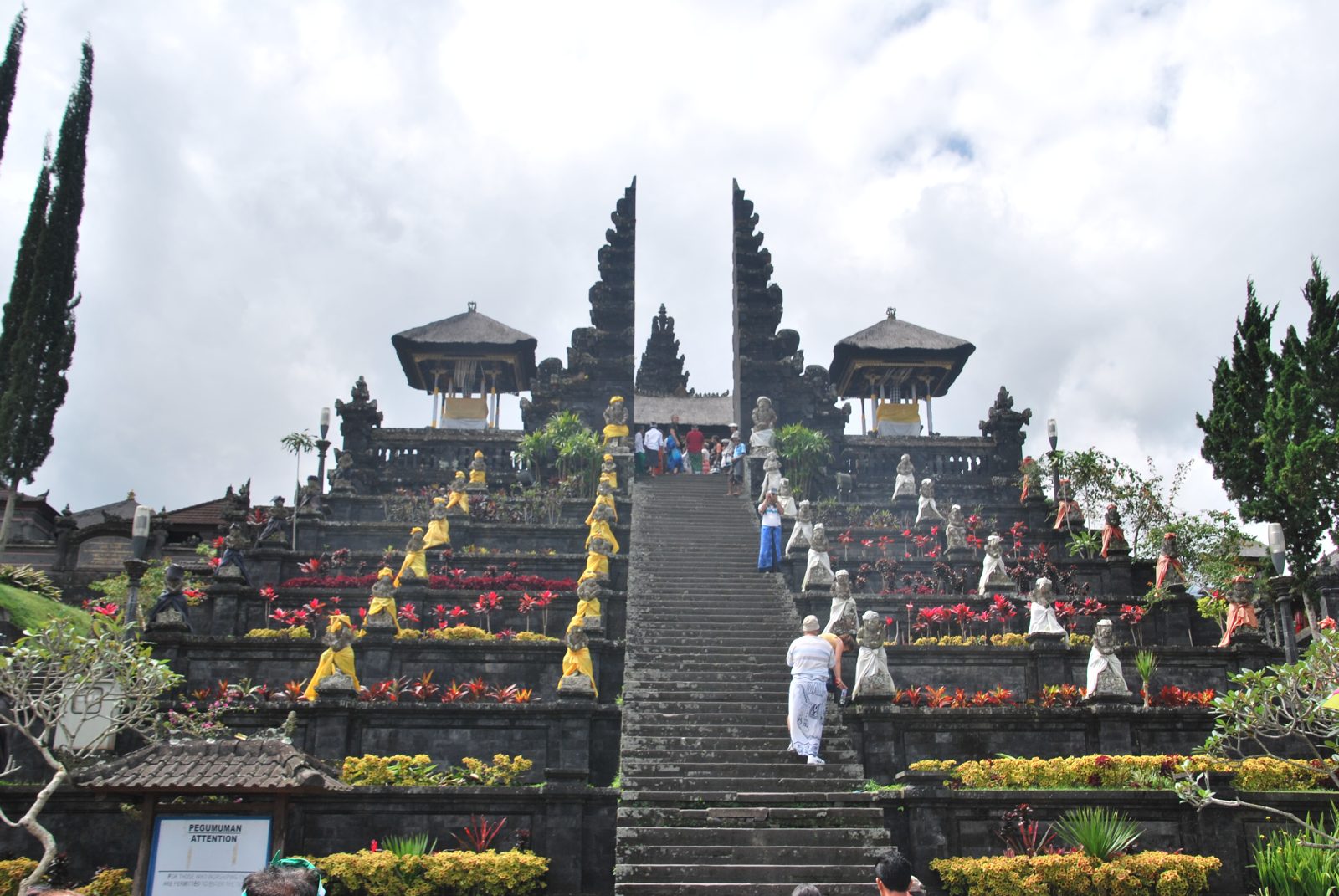
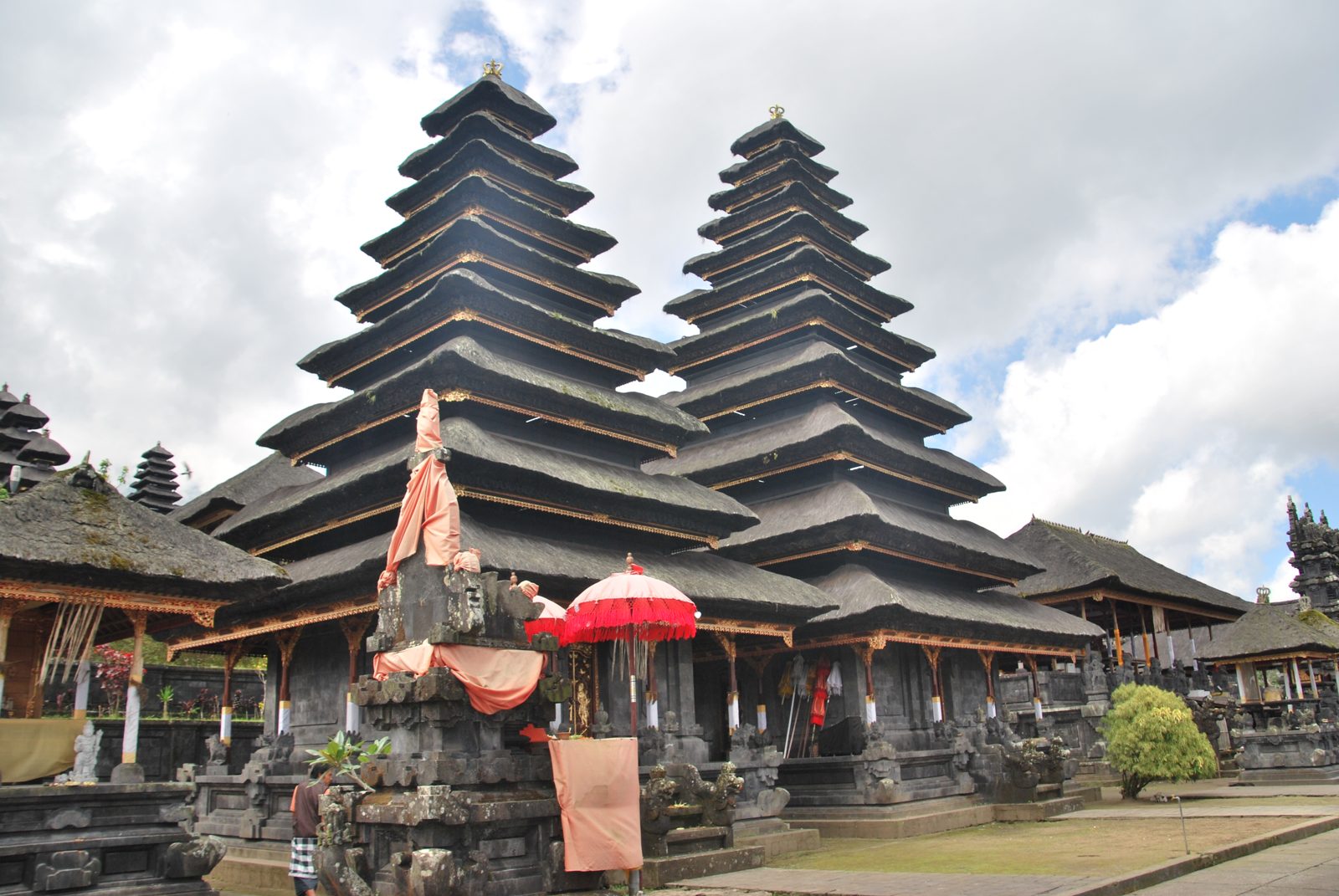
Temples are laid out as a series of courtyards. At Tirta Empul, for example, a large stone gate, the candi bentar, leads to the outer courtyard (jaba sisi), and another to the central courtyard.
Sources: Circular No. 7 of 2025 (Governor of Bali, PDF), official card (Love Bali) and Indonesia’s Ministry of Tourism (Bali temples, Pura Lempuyang and Tirta Empul) · checked on 15 Nov 2026.
Barong and Balinese dance: ceremony or scheduled performance
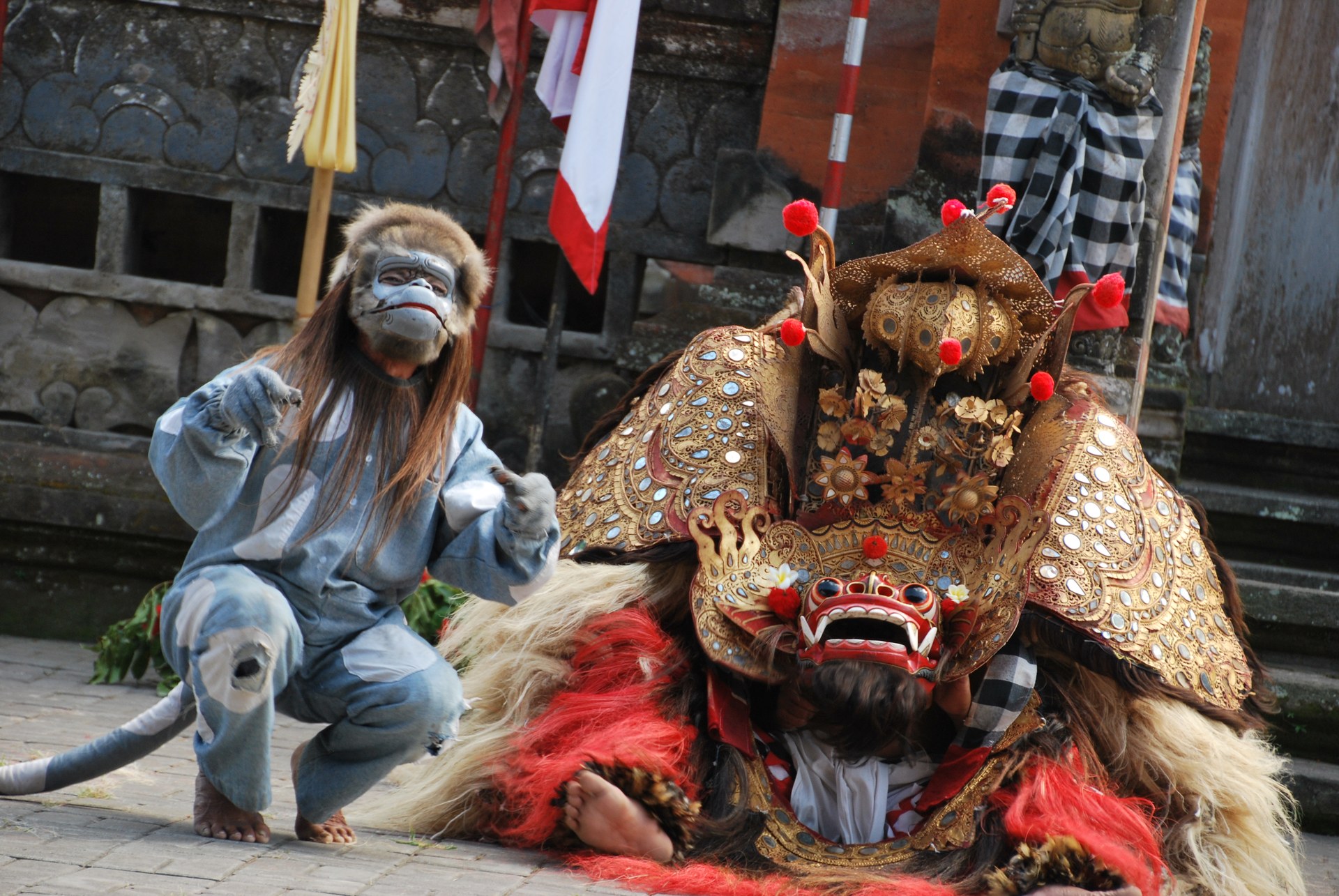
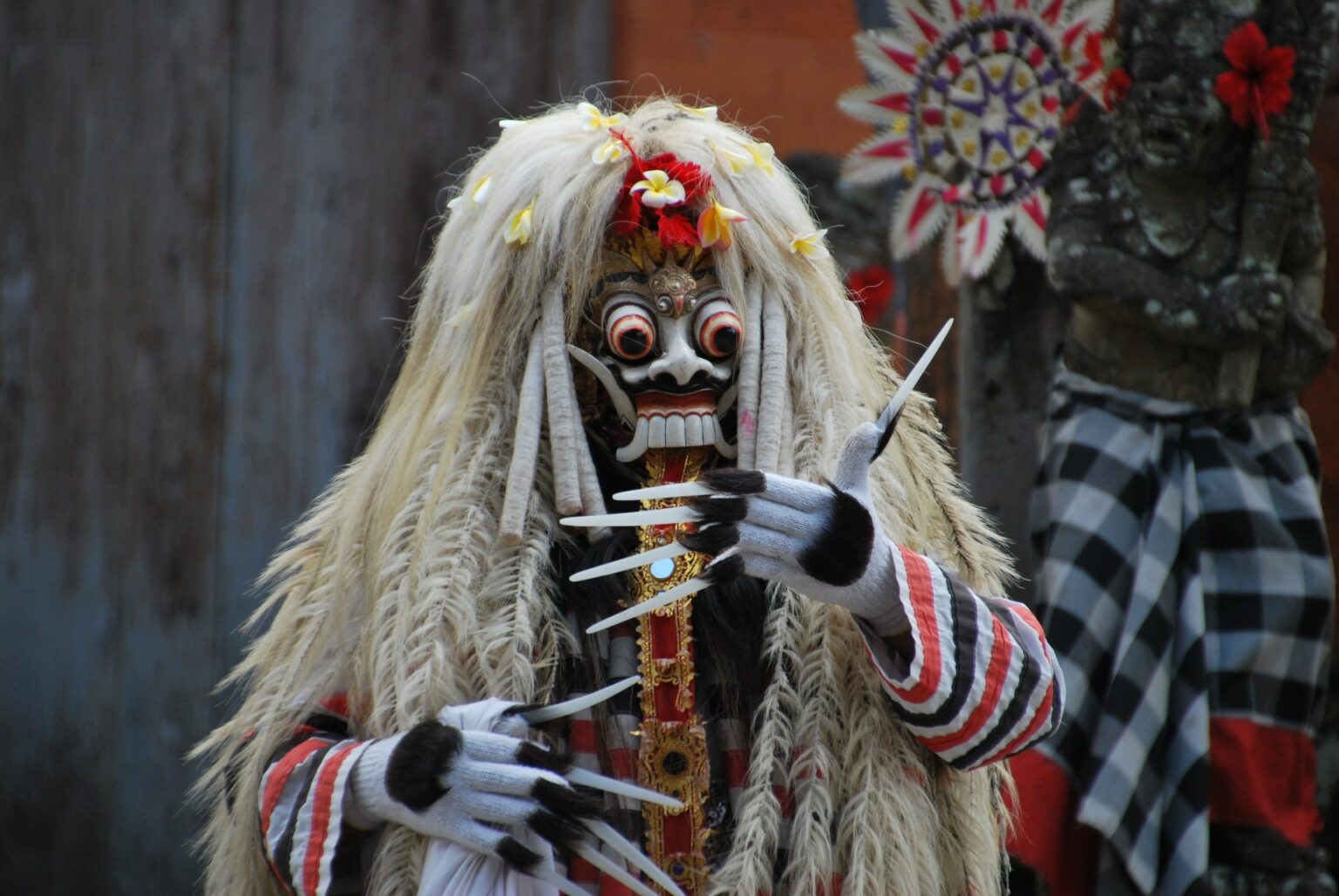
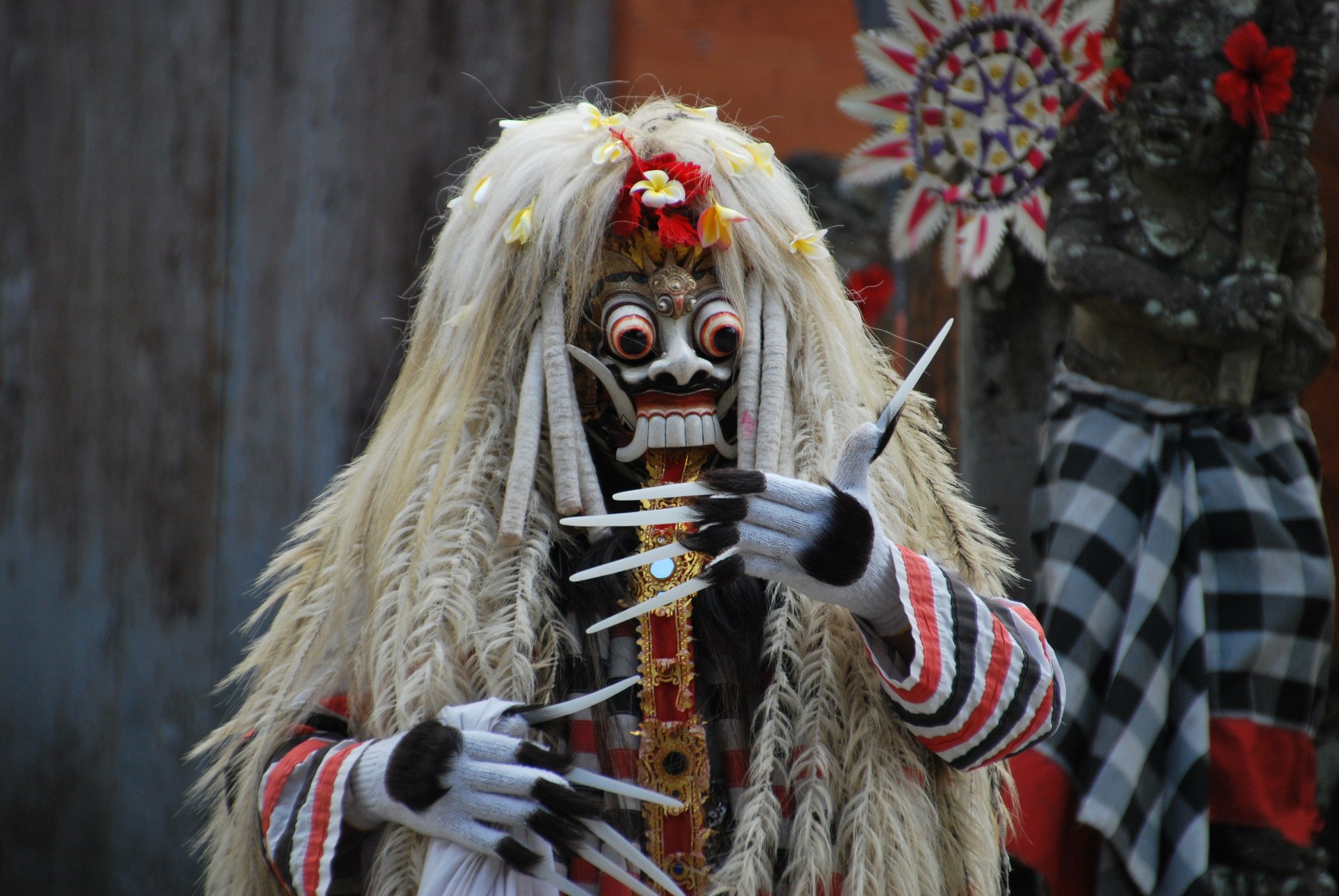
The barong is a mythological lion-shaped character: the official tourism portal presents it as the king of spirits, who represents virtue. Facing it is Rangda, the queen of demons, who leads an army of witches.
The dance depicts this never-ending battle between good and evil and is often performed at ritual ceremonies. The barong ket, the lion type, is the most common on the island.
UNESCO inscribed three genres of traditional Balinese dance in 2015, all accompanied by gamelan music. The tourism portal names them:
- Wali, sacred. Only at religious ceremonies and temple rituals, as an offering, not as entertainment.
- Bebali, semi-sacred. With more flexible ritual functions; often staged within customary ceremonies.
- Balih-balihan, for everyone’s enjoyment. This is where the barong ket “Kuntisraya” belongs.
Practical conclusion, deduced from those sources and not an official rule: what determines how to use the camera is not whether the dance is “authentic” or “touristy”, but whether it is a temple ceremony, where every photo needs permission, or a scheduled performance, with the venue’s rules, which the circular requires you to follow.
- Where
- Regular performances take place in many parts of Bali; the most popular are at Batubulan (Gianyar) and Kesiman (Denpasar). Traditional dances are regularly performed in Ubud, Denpasar, Klungkung and Gianyar, at temples, festivals and art studios.
- Hours
- The official pages do not publish them: ask at the venue.
- Price
- Not published either.
- Note
- At a ceremony, no photos without permission.
Sources: Indonesia’s Ministry of Tourism (barong page and Balinese dance), UNESCO and Circular No. 7 of 2025 · checked on 15 Nov 2026.
Nyepi 2027: Monday 8 March, 24 hours of silence
Nyepi is the New Year of the Balinese Saka calendar. In 2027 it falls on Monday 8 March (Saka year 1949), according to the joint decree on public holidays signed on 15 Sep 2026.
According to the Bali Government, it runs from 6:00 to 6:00 the next morning. Nobody may go outside, not even tourists, who are encouraged to stay in their hotels. The airport closes, with no flights in or out; beaches, restaurants and shops close too.
The day is governed by the catur brata, four prohibitions: no fire, light or electricity (amati geni), no work (amati karya), no travel (amati lelungan) and no entertainment (amati lelanguan). Only the pecalang, the local watchmen, may be out on the streets.
Those who do not celebrate Nyepi respect it too: indoors, with as little noise and light as possible, and without starting engines. Love Bali adds that radio, television and the internet are switched off. Hotel staff are reduced: stock up on food and drink beforehand and ask whether your hotel will serve meals that day.
Nyepi 2027 calendar
- BeforeMelastiPurification by the sea, 3 or 4 days before
- 7 MarEve: torches and ogoh-ogohSunday; parades around 17:00 or 18:00
- 8 MarNyepiMonday, 6:00 to 6:00 on Tuesday
- 9 MarNgembak GeniFamily visits; collective leave for Idulfitri
- 10-11IdulfitriEnd of Ramadan; national holiday
For photography, the useful date is the eve: around 17:00 or 18:00 local residents parade with torches, and then the ogoh-ogoh set out, giant effigies representing evil spirits that are burned afterwards. The Bali Government welcomes tourists to watch the parades.
Idulfitri falls on 10 and 11 March, although its final date is set by the Ministry of Religious Affairs, and the decree adds collective leave days on 9, 12 and 15 March. From Saturday 6 to Monday 15 March, every day is a weekend, a public holiday or a collective leave day in Indonesia (our own calculation from the decree).
Sources: Indonesian State Secretariat (2027 holiday decree), Love Bali (Bali Government) and Indonesia’s Ministry of Tourism (Nyepi guide and Nyepi page, written for 2018: the source of the melasti and the parade times) · checked on 15 Nov 2026.
Offerings and odalan: each temple’s festival, every 210 days at Besakih and Tanah Lot
Canang sari are daily offerings that express gratitude and spiritual balance: a small palm-leaf basket with coloured petals and incense. The Bali Government’s official card asks visitors not to step on them.
The odalan (or piodalan) is a temple’s anniversary. According to the Bali Government, it marks the day the temple was built and dedicated to the deities; the tourism portal describes it as a festival with offerings, traditional dances and community gatherings, following the Balinese calendar.
The official pages for Pura Besakih and Tanah Lot place it every 210 days. The Tanah Lot page adds that it usually falls near Galungan and Kuningan, and the Besakih page that the temple is then at its most elaborately decorated. The date depends on each temple: ask at your accommodation whether there is an odalan nearby.
In November 2024, Love Bali reported that penjor, tall bamboo poles decorated with coconut leaves, flowers and produce, lined the roads around Pura Desa Ubud for its great piodalan, and that they are a popular photography subject for tourists.
- When
- Every 210 days at Besakih and Tanah Lot; the date varies by temple.
- Note
- Temples may close temporarily during major ceremonies.
- Rules
- Those in section 01: no photos of the ceremony without permission.
Sources: Indonesia’s Ministry of Tourism (cultural heritage, canang sari, Samsara Museum, Pura Besakih, Tanah Lot and Pura Lempuyang) and Love Bali (piodalan, Ubud penjor and official card) · checked on 15 Nov 2026.
Rice terraces, Tanah Lot and Lempuyang: what they are and when to go
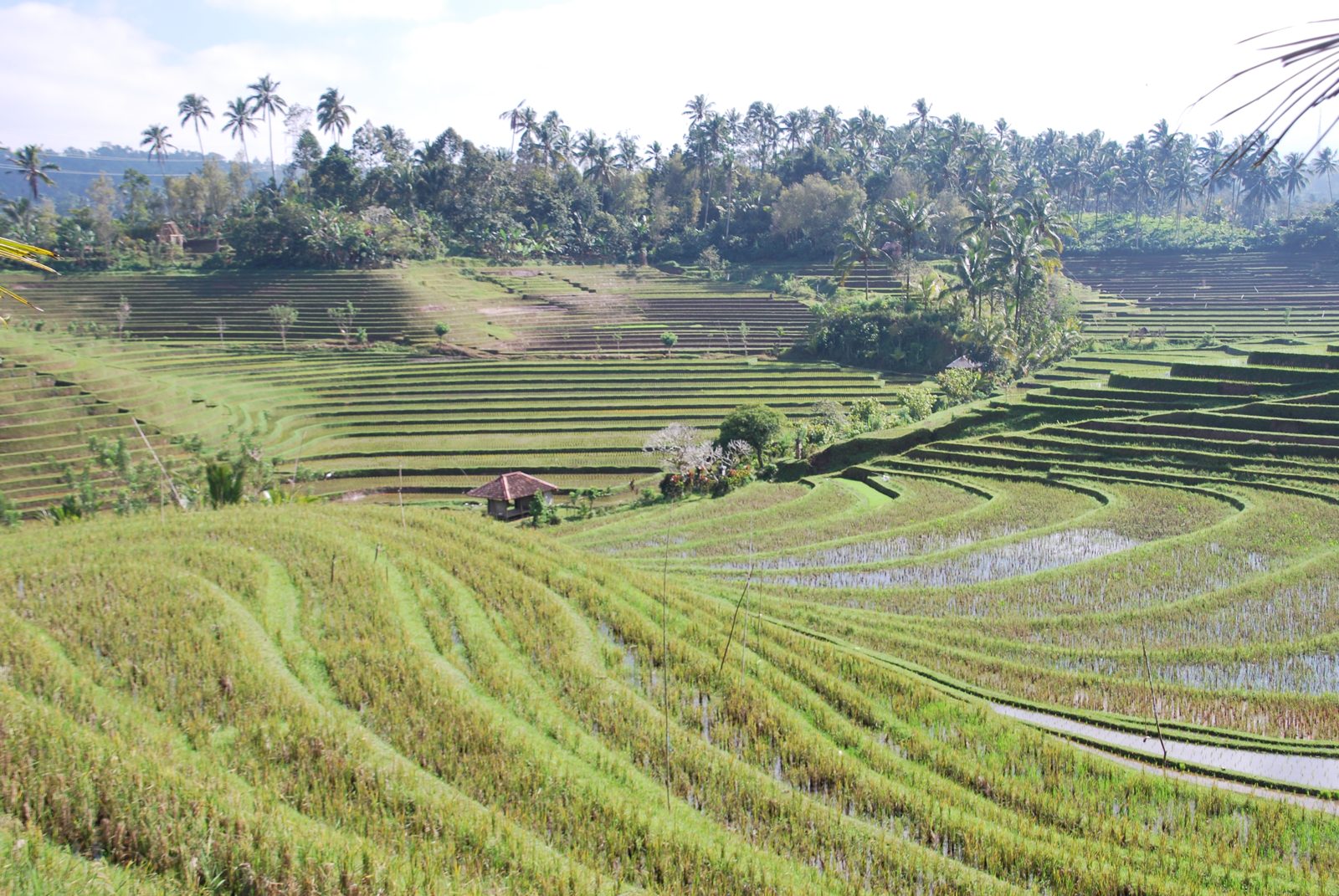
UNESCO inscribed the cultural landscape of Bali Province in 2012: five sites with terraced rice fields and water temples, about 19,500 hectares watered by the subak, a cooperative system of canals and weirs that dates back to the ninth century.
The subak reflects Tri Hita Karana, the Balinese philosophy that unites the realm of the spirit, the human world and nature. UNESCO stresses that these are living landscapes used daily by the community: the rice fields are working fields, not stage sets.
Tanah Lot, about 30 km from the airport, is one of the most photographed sea temples in Bali. The official portal advises going very early in the morning to find fewer people.
Pura Lempuyang, on the eastern slopes of the mountain of the same name, is known for its split gate with Mount Agung in the background. The portal acknowledges that the queue is often long and advises arriving before 7:00, especially for the gate photo, or late in the afternoon.
According to the same page, the famous reflection is sometimes created with mirrors.
- Lempuyang
- Open 7:00 to 17:00 (WITA, UTC+8). Fee and shuttle: day 7 of Bali in 10 days.
- Tanah Lot
- Fewer people first thing. Fee and tides: day 8.
- Rice fields
- Working fields, not a backdrop.
Sources: Indonesia’s Ministry of Tourism (Tanah Lot and Pura Lempuyang) and BMKG (WITA time) · checked on 15 Nov 2026; UNESCO, Cultural Landscape of Bali Province · checked on 19 Oct 2026 (the UNESCO page could not be opened today).
Mas and Celuk: the woodcarvers’ and silversmiths’ villages
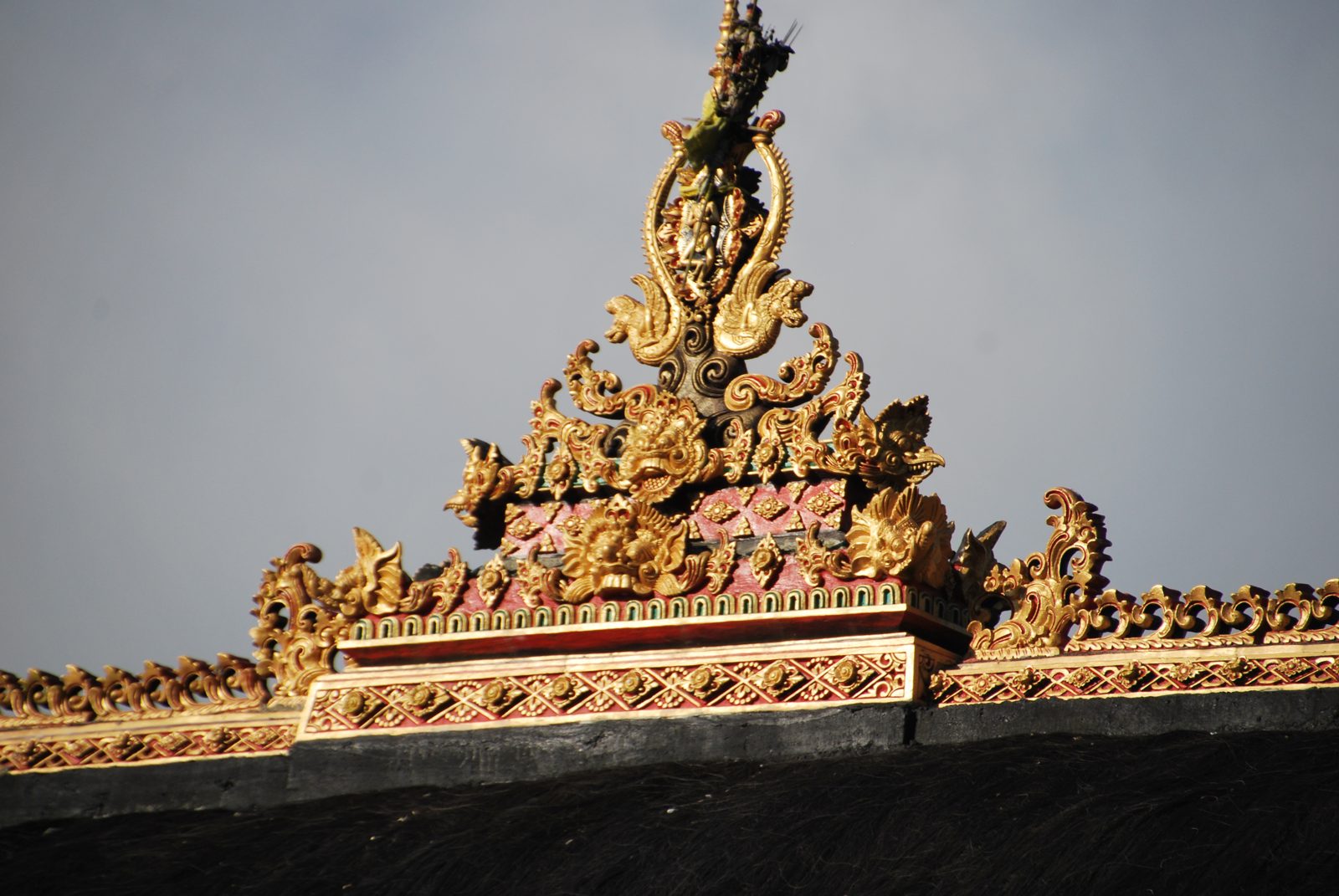
Mas, in Ubud (Gianyar), is a woodcarving centre, known since the 1930s as a carvers’ settlement. Visitors can watch the masters at work and buy pieces in the galleries and shops along the village street.
In the same village, the Njana Tilem Museum keeps carvings by Ida Bagus Njana and his son, Ida Bagus Tilem.
Celuk, in Sukawati (Gianyar), is Bali’s centre for gold and silverware. According to the provincial government’s cultural register, its silverwork has existed as a small family business since the days of the Sukawati kingdom, when it worked mainly for the royal family of Puri Sukawati.
It made mostly ceremonial utensils (bokor, caratan, sangku). It peaked in the 1980s and has declined since the 2000s, with fewer young people interested in learning the craft.
- Price
- The official pages publish no visit or workshop fees.
- Hours
- Not published either: ask at each workshop and at the museum.
- Note
- Workshops are places of work: ask before photographing a craftsperson or their work.
Sources: Indonesia’s Ministry of Tourism (Mas, Njana Tilem Museum and crafts) and the Ceraken register of the Bali Government’s Culture Office · checked on 15 Nov 2026.
Gamelan: the music of the ceremonies
Gamelan is Indonesia’s traditional percussion orchestra and the set of instruments it uses. UNESCO inscribed it in 2021: it is typically played at religious rituals, ceremonies, traditional theatre, festivals and concerts, and it accompanies Balinese dance.
The official Pura Lempuyang page lists the scent of incense and the distant sound of gamelan as part of its atmosphere. When there is a ceremony and you have no permission to photograph it, put the camera away.
Sources: UNESCO (gamelan and Balinese dance) and Indonesia’s Ministry of Tourism · checked on 15 Nov 2026.
History in 2 facts: what the barong dance tells
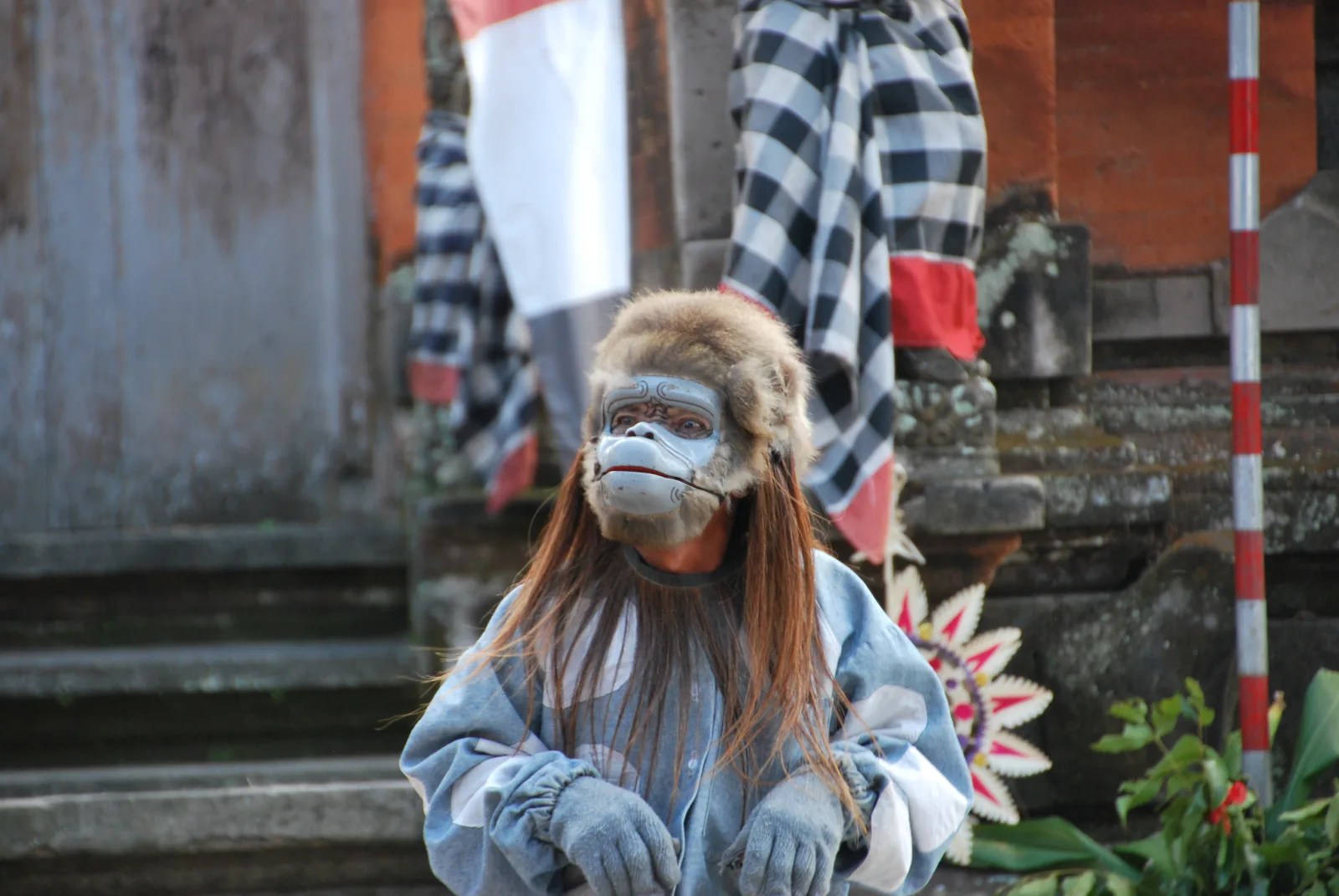
The dance section above already introduces the barong and Rangda and their battle between good and evil. Two facts about how it is told on stage are missing:
- It opens with two monkeys. The performance starts calmly, with two playful monkeys teasing the barong. (Wikipedia)
- The kris scene. Rangda bewitches the warriors so that they kill themselves; the barong and a priest protect them with their magic and, in a trance, they stab themselves with their krises without getting hurt. That is the story the dance tells: the scene is considered sacred because of the trance, and the risk is real. In February 2021 a 16-year-old dancer died in Denpasar, stabbed by his own kris during a Rangda dance. (Wikipedia and Indonesia’s Ministry of Tourism)
Sources: Wikipedia and Indonesia’s Ministry of Tourism, linked in each fact · checked on 22 Nov 2026.
Logistics: levy, visa, weather and gear
Bali tourist levy: how to pay
- Go to Love Bali, the Bali Government’s website or app, before you travel or during your stay.
- Enter your name, email, passport number, country and arrival date; you can pay individually or as a group.
- Pay IDR 150,000 (€7.44) by bank transfer, virtual account or QRIS.
- Keep the voucher sent to your email: it is a one-time payment per stay and is non-refundable.
- If you did not pay beforehand, there are counters at Ngurah Rai airport and Tanjung Benoa port that take cards.
Exemptions include holders of diplomatic, official, student or family-unification visas and of KITAS or KITAP stay permits. Holders of a golden visa or another non-tourist visa must apply for the exemption on Love Bali at least 5 days before arriving; if they apply later, they pay the levy.
Sources: Love Bali and its terms (Bali Government), Indonesia’s Ministry of Tourism and Circular No. 7 of 2025 · checked on 15 Nov 2026. Euros at the ECB reference rate of 13 Nov 2026: €1 = IDR 20,163.71.
Visa and arrival declaration
- Look up your nationality on Indonesian Immigration’s visa-on-arrival and visa-free lists: entry rules depend on your passport.
- Check that your passport has at least six months’ validity and is in good condition. Spain’s foreign ministry warns that Indonesian authorities turn away travellers whose passports fall short, including damaged ones (with loose covers, for example), and send them home immediately at their own expense.
- If you are eligible, apply for the electronic visa (e-VoA) only at evisa.imigrasi.go.id: Spain’s foreign ministry warns of fake websites that take payment and issue nothing.
- Or pay on arrival, at the bank counter in the immigration area: IDR 500,000 (€24.80) for 30 days, extendable once for another 30.
- Carry a return or onward ticket.
- Within the 3 days before you land, fill in the All Indonesia declaration (website or app), compulsory for every passenger arriving from abroad since 1 Oct 2025.
Also check your own government’s travel advice before you go.
Sources: Indonesian Immigration (B1 visa, eligible nationalities and All Indonesia) and Spain’s Ministry of Foreign Affairs (fake websites, refused passports and repatriation) · checked on 15 Nov 2026.
Weather and light
- Dry season
- April to October in Java and Bali; the wet season, November to March. Global warming has made the seasons less predictable.
- Rain
- Spain’s foreign ministry places the rainy season between October and April and warns of deadly floods and landslides after torrential rain. The two sources do not agree on the months: treat them as a guide.
- Sun
- Rises between 5:48 and 6:35 and sets between 18:06 and 18:47 (WITA). The range barely changes from year to year: it is identical in 2026 and 2027, according to the US Naval Observatory.
- Low-angle light
- The first hour after sunrise and the last before sunset (our own suggestion).
Sources: Indonesia’s Ministry of Tourism, Spain’s Ministry of Foreign Affairs and the US Naval Observatory, Denpasar (2026 and 2027) · checked on 15 Nov 2026.
Gear, drones, safety and emergencies
- Gear. Three guides on the blog to help you choose, in Spanish: cameras for travel photography, accessories for travel photographers and travel tripods.
- Drones. The requirements of Indonesia’s civil aviation authority are in Gear and drones, in Bali in 10 days.
- Flights. Volcanic eruptions can close airports temporarily and cause delays and cancellations.
- Domestic flights. Many domestic airlines are unreliable: avoid connecting a domestic flight with your international departure on the same day.
- Food and drink. Spain’s foreign ministry advises against raw food, unpeeled fruit and drinks that are not industrially bottled, and warns of cases of serious illness from spirits containing methanol.
- Sea. Currents can be a serious, even deadly, danger to swimmers: swim only in designated, supervised areas.
- Emergencies. Police, 110; fire brigade, 113; ambulance, 118. Your embassy’s emergency line is in your government’s travel advice.
- Airport, transport, money and health. See Logistics in Bali in 10 days: official taxi, licensed transport, money changers, vaccinations, insurance and theft.
Flights, food and drink, the sea and emergency numbers: Spain’s Ministry of Foreign Affairs · checked on 15 Nov 2026. Everything else, with its source, in the linked guide.
Sources
- Governor of Bali, Circular No. 7 of 2025 (PDF, signed on 21 Mar 2025) · official · code of conduct, licensed guide, levy payment and sanctions · checked on 15 Nov 2026
- Love Bali, Bali Government (levy, terms, Nyepi, official card, piodalan and penjor) · official · levy, exemptions, Nyepi, rules, odalan and penjor · checked on 15 Nov 2026
- Indonesian State Secretariat, 2027 public holidays · official · Nyepi, Idulfitri and collective leave · checked on 15 Nov 2026
- Indonesia’s Ministry of Tourism (Pura Lempuyang, Tanah Lot, Tirta Empul, Pura Besakih, temples, barong, Balinese dance, Nyepi guide, Nyepi page, cultural heritage, canang sari, Samsara Museum, Mas, Njana Tilem Museum, crafts, levy and weather) · official · rules, hours, cultural context, levy and seasons · checked on 15 Nov 2026
- Bali Government Culture Office, Ceraken register · official · Celuk silverwork · checked on 15 Nov 2026
- Indonesian Immigration (B1 visa, eligible nationalities, All Indonesia and e-Visa) · official · visa and arrival declaration · checked on 15 Nov 2026
- Spain’s Ministry of Foreign Affairs (advice in force on 15 Nov 2026; last updated on 27 May 2026) · official · fake visa websites, refused passports and repatriation, domestic flights, food and drink, methanol, sea currents, rain, volcanoes and emergency numbers · checked on 15 Nov 2026
- UNESCO (three genres of dance and gamelan, checked on 15 Nov 2026; Cultural Landscape of Bali Province, checked on 19 Oct 2026) · official · intangible heritage and subak
- European Central Bank · official · reference rate of 13 Nov 2026 · checked on 15 Nov 2026
- US Naval Observatory (2026 and 2027) and BMKG · official · sunrise and sunset in Denpasar and WITA time · checked on 15 Nov 2026
- Wikipedia: Barong dance · encyclopaedia · the two monkeys at the start, the kris scene and the 2021 accident · checked on 22 Nov 2026
