
Uzbekistan Silk Road Photography Guide: 10-Day Route
The whole Tashkent–Samarkand–Bukhara–Khiva route works by train: the Afrosiyob as far as Bukhara, then train 706 to Khiva, daily except Mondays.
By Ander BilbaoOwn photosPublished 12 min read
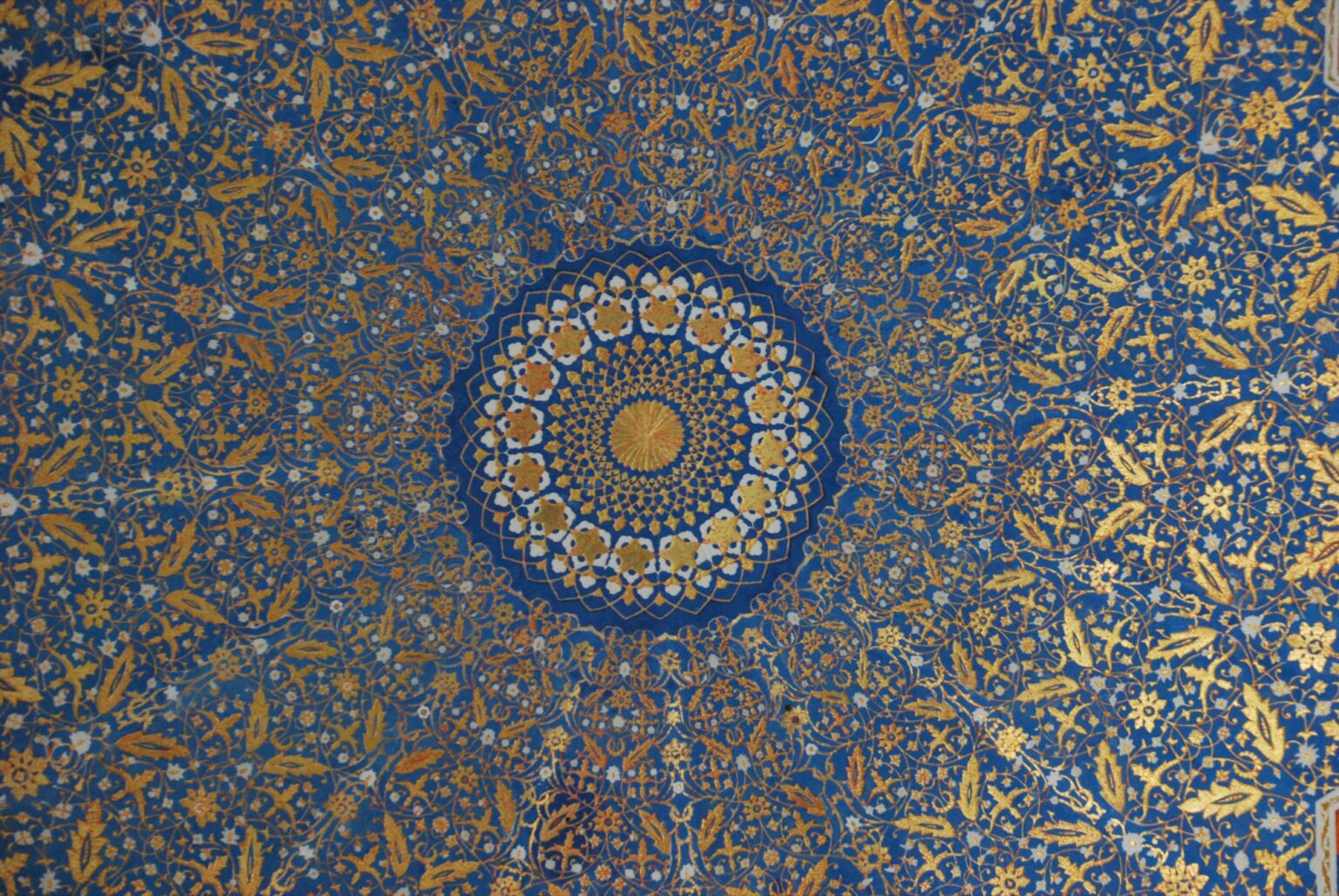
Uzbekistan in short
- Days
- 10: Tashkent 2, Samarkand 2, Bukhara 3, Khiva 2, then back
- Visa
- Spanish passport: 30 days without a visa
- Registration
- Required for stays over 3 days; your hotel or host does it
- Trains
- Afrosiyob Tashkent–Samarkand–Bukhara; train 706 Bukhara–Khiva
- Currency
- Som: €1 = 13,280.68 (official rate from 14 Nov 2026)
- Drones
- Importing one is banned
Facts checked on 15 Nov 2026 with Spain’s Ministry of Foreign Affairs (visa, registration, Afrosiyob and drones), Uzbekistan’s Tourism Committee (train 706) and the Central Bank of Uzbekistan (exchange rate). The split of days is our own suggestion.
Photographs by the author, taken with a Nikon D60 and a Tamron 18-270 mm lens between 31 March and 4 April 2024, according to their EXIF data. Visa, train and currency details come from official sources, with the source under each block; monument prices have no official source checked yet, and each entry says so. About me
| City | Getting there | Days |
|---|---|---|
| 01Samarkand | Afrosiyob from Tashkent | 3 and 4 |
| 02Bukhara | Afrosiyob from Samarkand | 5 to 7 |
| 03Khiva | Train 706 from Bukhara | 8 and 9 |
| ·Before you plan | ||
| ·10-day itinerary: Tashkent, Samarkand, Bukhara and Khiva | ||
| ·Light: when to photograph each place | ||
| ·Food and tea houses: plov | ||
| ·Gear: what was used and what to bring | ||
| ·History in 2 facts: Shah-i-Zinda and Bukhara | ||
| ·Logistics: entry, trains, money and climate | ||
| ·Before you go: health and safety | ||
| ·Sources | ||
Samarkand: the Registan and Shah-i-Zinda
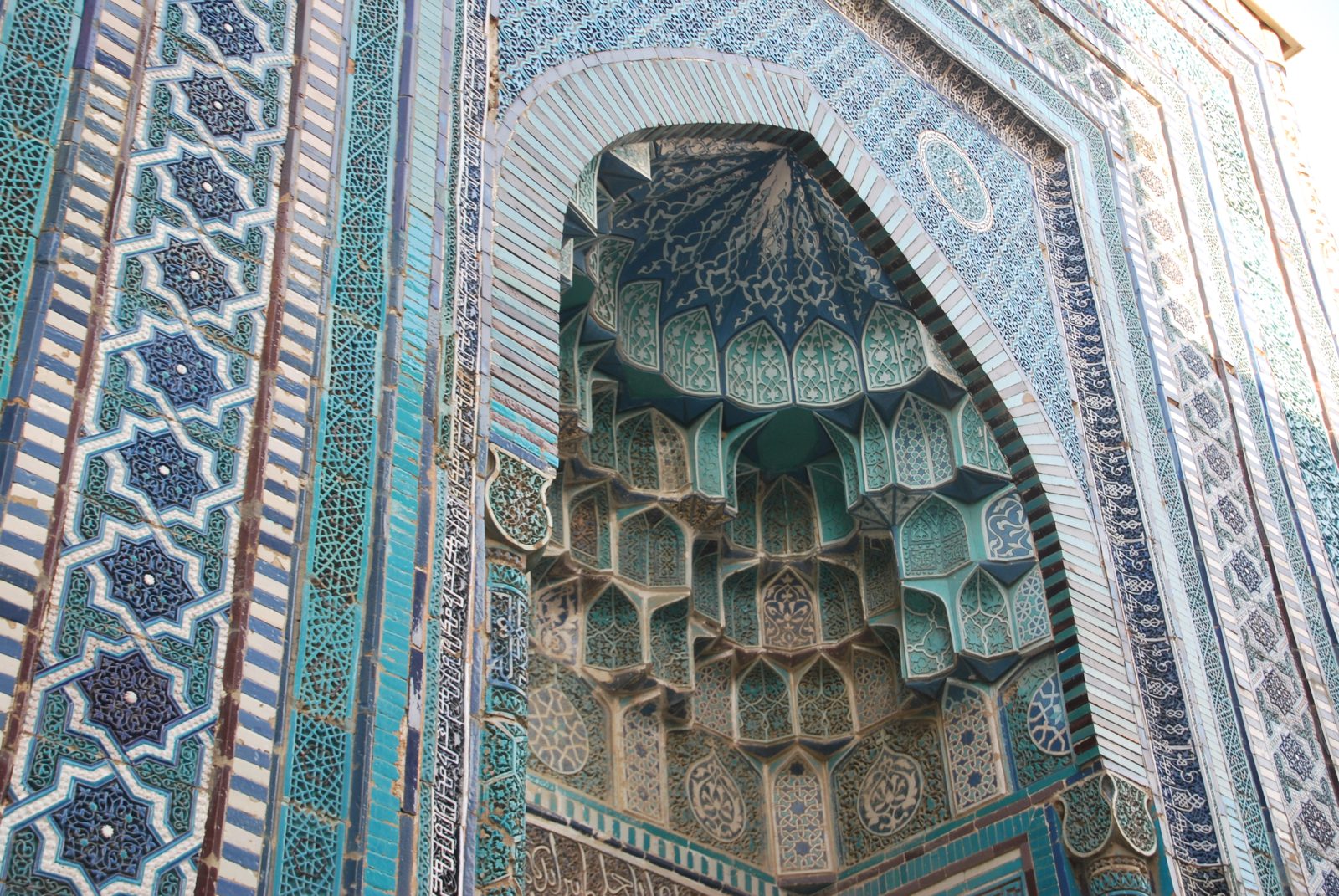
This is the monumental city on the route, inscribed on the World Heritage List in 2001 as ‘Samarkand – Crossroad of Cultures’. According to UNESCO, it reached its greatest development in the Timurid period, between the 14th and 15th centuries.
The Registan is a square flanked by madrasas that were built of adobe and clad in decorated ceramic. Shah-i-Zinda is a separate complex of mosques, madrasas and mausoleums, with buildings from the 11th to the 19th century: give it a visit of its own (our own suggestion).
- Days
- 3 and 4 of the itinerary.
- Getting there
- Afrosiyob high-speed train from Tashkent; timetables and fares from Uzbekistan Railways.
- Admission
- No official source checked: confirm prices and opening hours at each ticket office.
Sources: UNESCO, Samarkand – Crossroad of Cultures · checked on 19 Oct 2026. Train: Spain’s Ministry of Foreign Affairs · checked on 15 Nov 2026.
Bukhara: the medieval centre and the Poi Kalyan minaret
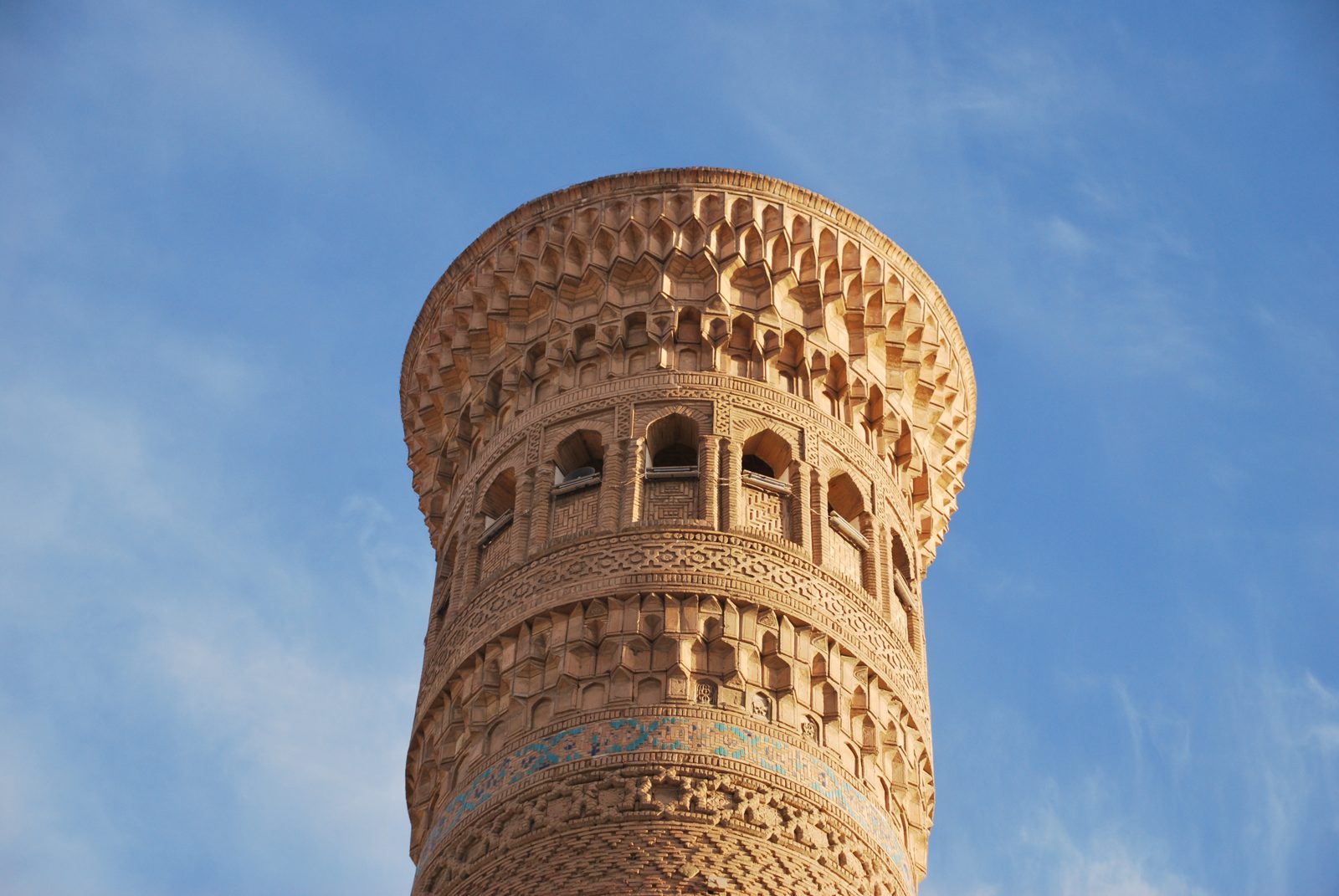
UNESCO describes the historic centre of Bukhara as the most complete example of a medieval city in Central Asia, with an urban fabric that is largely intact. Among its monuments, the same source highlights the Poi Kalyan minaret as a masterpiece of brick decoration.
It is best explored on foot and without hurry, which is why the itinerary gives it three days (our own suggestion).
- Days
- 5 to 7 of the itinerary.
- Getting there
- Afrosiyob from Samarkand.
- Admission
- No official source checked: confirm prices and opening hours at each ticket office.
Sources: UNESCO, Historic Centre of Bukhara · checked on 19 Oct 2026. Train: Spain’s Ministry of Foreign Affairs · checked on 15 Nov 2026.
Khiva: Ichan Kala, the walled city
Ichan Kala, Khiva’s inner city, is protected by brick walls about ten metres high and was inscribed on the World Heritage List in 1990. UNESCO describes Khiva as the last stop for caravans before crossing the desert to Iran.
If you stay inside the walls, you can walk around Ichan Kala at the start and the end of the day.
- Days
- 8 and 9 of the itinerary.
- Getting there
- Train 706 from Bukhara-1: departs at 15:45 and arrives at 20:25, every day except Monday.
- Admission
- No official source checked: confirm prices and opening hours at the ticket office.
Sources: UNESCO, Itchan Kala · checked on 19 Oct 2026. Train: Uzbekistan’s Tourism Committee (announcement of 8 Sep 2026) · checked on 15 Nov 2026.
Before you plan
- Mondays
- Train 706 from Bukhara to Khiva does not run on Mondays: if you rely on it, day 8 cannot fall on a Monday.
- Back from Khiva
- According to the state news agency UzA, the Jaloliddin Manguberdi high-speed train leaves Khiva for Tashkent on Wednesdays, Fridays and Sundays (first train) and, since 22 July 2026, also on Tuesdays, Thursdays and Saturdays at 7:15 (second train). With train 706 on day 8 and this train on day 10, day 10 cannot fall on a Monday or a Wednesday.
- Registration
- If you stay more than three days in the country, register in each city; hotels and private hosts do it for you.
- Cash
- ATMs are scarcer than in Spain and many places accept cash only.
Summary of the entries and of ‘Logistics’. That day 10 cannot fall on a Monday or a Wednesday is our own calculation from the days published by the Tourism Committee and the state news agency UzA.
10-day itinerary: Tashkent, Samarkand, Bukhara and Khiva
Split of days and order: our own suggestion. Train times are those published by official bodies; confirm them when you buy your ticket. The number takes you to the entry.
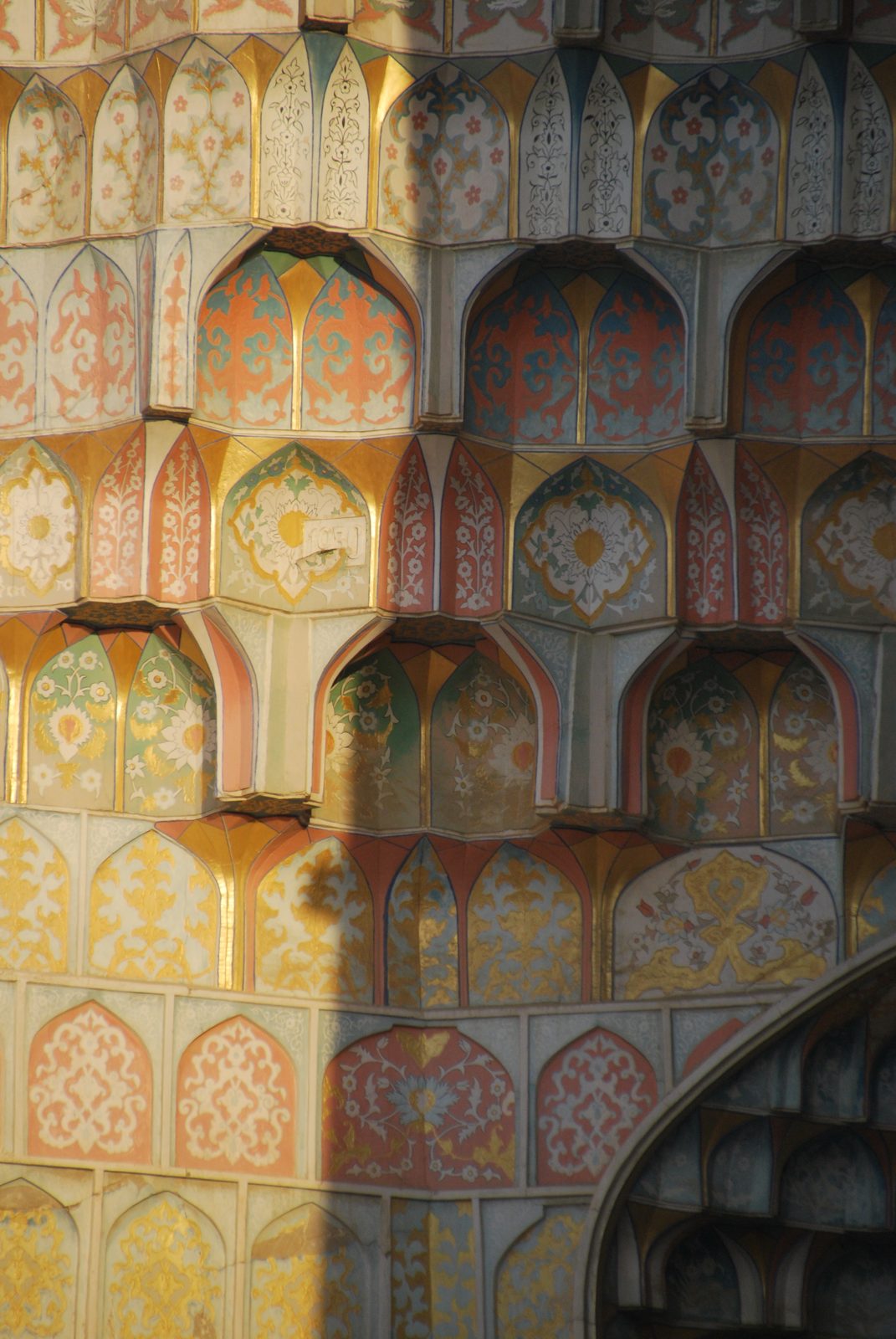
Days 1 and 2 · Tashkent
- Day 1Arrival in Tashkent, the capitalIf your hotel registers you, ask for the proof of registration.
- Day 2Tashkent and its metroTo photograph in the metro, follow the signs and ask the staff: the rules on cameras and tripods can change.
Days 3 and 4 · Samarkand
Days 5 to 7 · Bukhara
Days 8 and 9 · Khiva
- 15:45Train 706 from Bukhara-1 (day 8)Arrives in Khiva at 20:25; does not run on Mondays.
- Day 903Ichan KalaAt the start and the end of the day, if you stay inside the walls.
Day 10 · Back to Tashkent
- Day 10Jaloliddin Manguberdi train, Khiva to TashkentAbout 7 h 30 min; between the two trains, it leaves Khiva every day except Monday. Leave a margin before your international flight.
Light: when to photograph each place
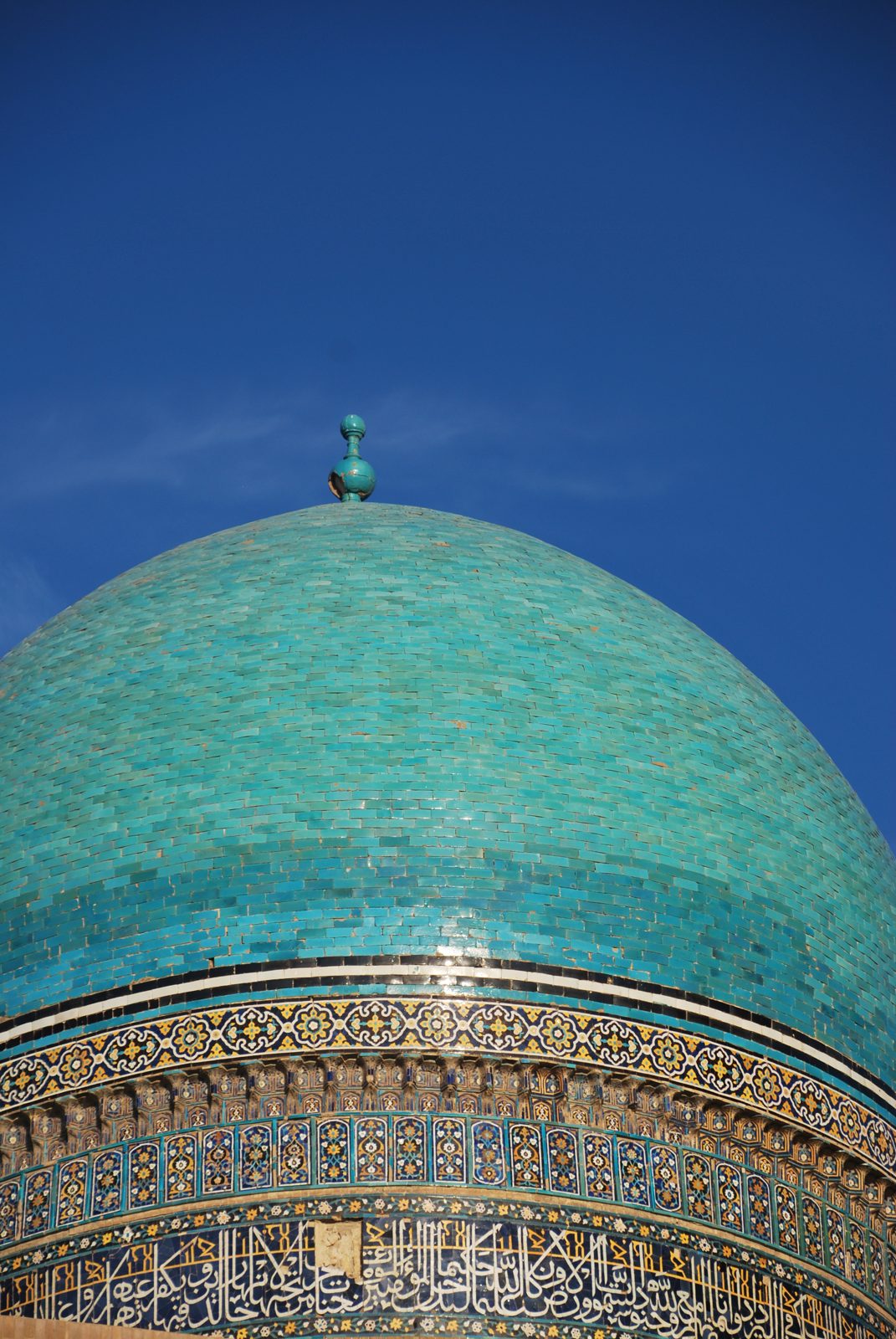
Glazed tiles change with the light: in photography, when you shoot matters as much as what you shoot. The low light at the start and the end of the day brings out the relief of the architecture and the colour of the tiles (our own view).
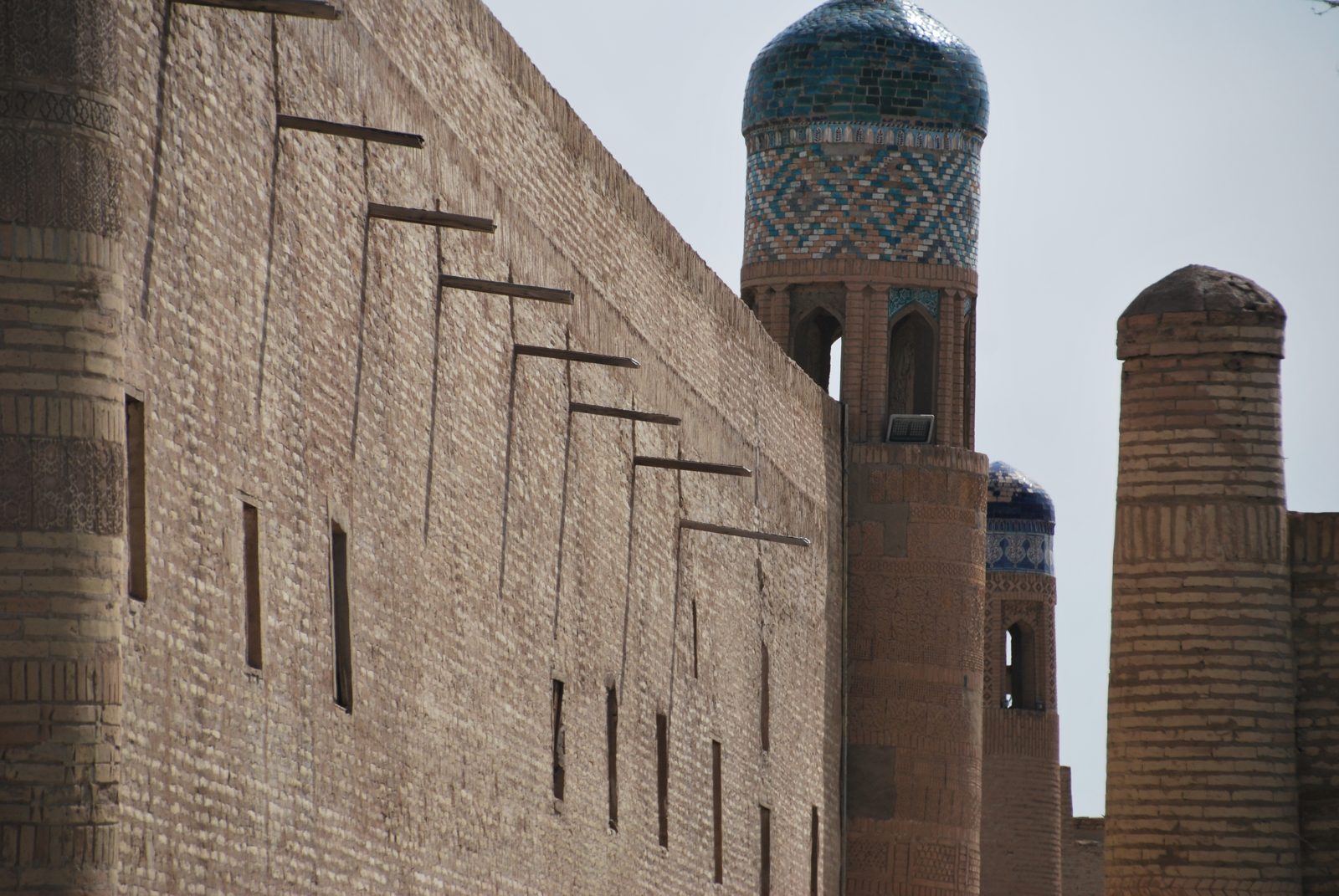
Sunrise and sunset shift a lot over the year, so work them out for your travel dates. These are suggested approaches, not fixed timetables:
- Registan: at the start and the end of the day, with soft light on the façades.
- Shah-i-Zinda: in an hour of soft light; no official source has been checked for its opening hours.
- Kalyan complex (Bukhara): at the blue hour, just after sunset.
- Khiva walls: at golden hour, from outside the walls looking in.
Food and tea houses: plov
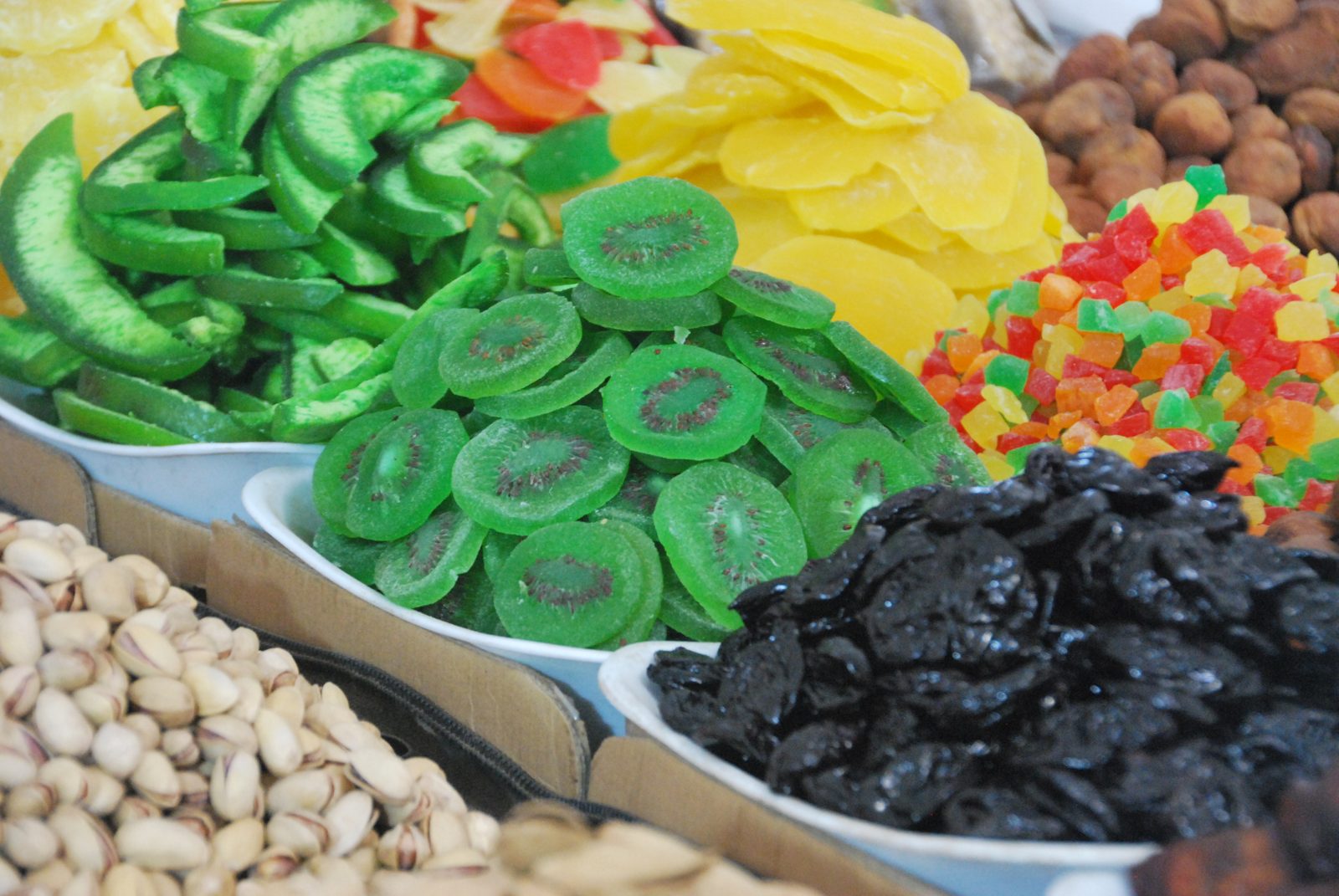
Plov (palov in Uzbek) is a traditional dish of Uzbek cuisine. UNESCO inscribed it in 2016 on the Representative List of the Intangible Cultural Heritage of Humanity: it is cooked with rice, meat, vegetables and spices and offered to guests as a gesture of hospitality.
Try it in a choyxona (tea house), which is also a good place to rest between visits (our own suggestion). Ask permission before photographing people.
Source: UNESCO, Intangible Cultural Heritage · checked on 15 Nov 2026.
Gear: what was used and what to bring
The photographs in this guide were taken with a Nikon D60 and a single lens, a Tamron 18-270 mm, at focal lengths from 35 to 270 mm, according to their EXIF data.
- Standard zoom (24–70 mm or equivalent): for tile details and architecture.
- Wide-angle (16 mm or wider): helps to take in the large madrasa courtyards.
- Polariser: reduces reflections on glazed tiles and can intensify the blues.
- Lens cleaning cloth: useful in dry, dusty environments, where it is also best not to change lenses outdoors.
- Small tripod: useful for architecture at the blue hour; check at each site whether it is allowed.
- Drone: leave it at home. Uzbek law bans importing one, according to Spain’s Ministry of Foreign Affairs.
Drone source: Spain’s Ministry of Foreign Affairs · checked on 15 Nov 2026.
History in 2 facts: Shah-i-Zinda and Bukhara
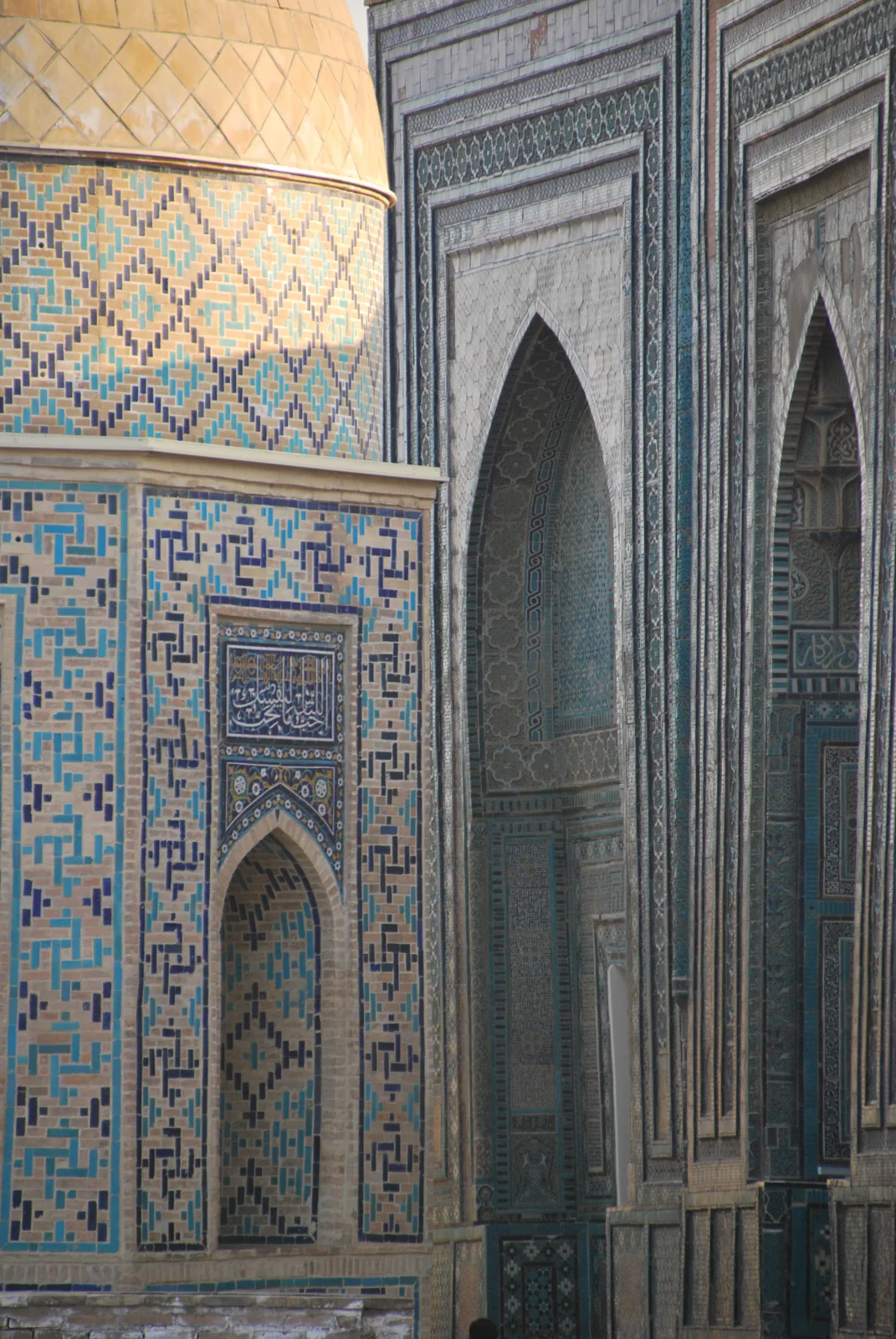
The entries above already give UNESCO’s dates for Samarkand and Khiva and the centuries of the buildings at Shah-i-Zinda. Two facts are missing:
- The ‘Living King’ is a legend. Shah-i-Zinda means ‘the Living King’. The name is linked to the legend that Qutham ibn Abbas, a cousin of the Prophet Muhammad, is buried here: it is a legend, not an established fact. (Wikipedia)
- Bukhara, World Heritage since 1993. UNESCO inscribed its historic centre that year and, among its monuments, singles out the tomb of Ismail Samani, a masterpiece of 10th-century Muslim architecture. (UNESCO)
Sources: UNESCO and Wikipedia, linked in each fact · checked on 22 Nov 2026.
Logistics: entry, trains, money and climate
Entry and registration
Entry rules depend on your nationality. These are the ones Spain’s Ministry of Foreign Affairs publishes for Spanish passport holders:
- A passport that is valid for at least three months after the end of your stay. With it, 30 days without a visa for tourism, a scheme in force since 1 February 2019.
- If you stay more than three days in the country, register within the first three; Saturdays and Sundays count as working days. If you visit several cities, register in each one.
- In hotels and private homes, the accommodation registers you: check that it has been done. If you stay in neither, register yourself on the online registration site, which charges a tourist tax payable only with an Uzbek bank card in local currency.
- Always carry your passport and proof of registration: the police carry out frequent checks, and registrations are checked when you leave the country. Without registration you risk a fine or deportation.
Without a Spanish passport, check your own government’s travel advice and Uzbekistan’s official e-visa portal.
Source: Spain’s Ministry of Foreign Affairs, Uzbekistan page current as of 15 Nov 2026 and last updated on 29 Oct 2026 · checked on 15 Nov 2026. Check it again before booking.
Trains between the four cities
The Afrosiyob high-speed train, from the Spanish company Talgo, runs on the Tashkent–Samarkand–Bukhara line. Beyond it, Spain’s Ministry of Foreign Affairs warns that public transport does not offer Western levels of comfort and safety and that the roads are not in good condition.
Since 9 September 2026, high-speed electric trains with five carriages and 415 economy-class seats have run between Bukhara and Khiva:
Bukhara-1 ⇄ Khiva≈ 4 h 40 min
- 706 · Bukhara-1 → Khiva
- 15:45 → 20:25
- 706 · No service
- MONDAYS
- 707 · Khiva → Bukhara-1
- 9:55 → 14:32
- 707 · No service
- TUESDAYS
- Carriages
- 5
- Seats
- 415
Two Jaloliddin Manguberdi high-speed trains run between Khiva and Tashkent, covering the 1,022 km in about 7 h 30 min. The first leaves Khiva on Wednesdays, Fridays and Sundays and Tashkent on Tuesdays, Thursdays and Saturdays; its source gives no times. The second, since 22 July 2026, leaves Tashkent on Mondays, Wednesdays and Fridays at 7:00 and Khiva on Tuesdays, Thursdays and Saturdays at 7:15, and takes 7 h 36 min. Confirm days and times when you buy.
Timetables and ticket sales: Uzbekistan Railways website.
Sources: Spain’s Ministry of Foreign Affairs (Afrosiyob), Uzbekistan’s Tourism Committee (announcement of 8 Sep 2026) and the state news agency UzA (6 May 2026) and its note on the second train (21 Jul 2026) · checked on 15 Nov 2026. None of these sources gives Afrosiyob times or fares: check the Uzbekistan Railways timetable page.
Money and customs
- Currency: the som. Central Bank official rate from 14 Nov 2026: €1 = 13,280.68 som and 1 USD = 12,014.37 som.
- Paying: large establishments accept Visa and Mastercard, but many places take cash only, and ATMs are scarcer than in Spain. The ministry recommends carrying enough cash for the whole trip.
- Changing money: by law, only at banks, hotels and official exchange points. Euros and dollars are easy to change if the notes are in perfect condition, not folded or written on.
- Customs: declare valuables, cash from 2,000 USD and any medicine, even if it is in everyday use in Europe. Importing e-cigarettes and their liquids is banned.
Sources: Central Bank of Uzbekistan and Spain’s Ministry of Foreign Affairs · checked on 15 Nov 2026.
Climate: when to go
Uzbekistan’s climate is continental and dry, with big differences between summer and winter temperatures, according to Spain’s Ministry of Health. In Samarkand, the average high is around 21 °C in April and October and reaches 33.9 °C in July:
| Month | High | Low | Rain |
|---|---|---|---|
| January | 6.2 °C | −3.6 °C | 43.9 mm |
| February | 7.9 °C | −2.1 °C | 39.2 mm |
| March | 13.6 °C | 3.2 °C | 70.5 mm |
| April | 20.8 °C | 8.9 °C | 63.2 mm |
| May | 26.4 °C | 12.7 °C | 33.2 mm |
| June | 32.0 °C | 16.4 °C | 4.2 mm |
| July | 33.9 °C | 17.8 °C | 4.3 mm |
| August | 32.2 °C | 15.9 °C | 0.4 mm |
| September | 27.9 °C | 11.2 °C | 3.8 mm |
| October | 21.1 °C | 6.0 °C | 24.0 mm |
| November | 14.9 °C | 2.0 °C | 28.2 mm |
| December | 9.2 °C | −1.0 °C | 40.5 mm |
On those figures, spring and autumn are the mildest seasons for walking around the three cities (our own reading of the table). For your travel dates, check the forecast from the Hydrometeorological Service of Uzbekistan.
Sources: World Meteorological Organization, with data from Uzhydromet (the WMO does not state the period of the averages), and Spain’s Ministry of Health · checked on 15 Nov 2026. Bukhara and Khiva have no station on the WMO website.
Language
Uzbek and Russian, according to Spain’s Ministry of Health. A few basic phrases written down or a translation app will help.
Before you go: health and safety
- Vaccinations: none is compulsory to enter. Spain’s Ministry of Foreign Affairs recommends tetanus-diphtheria and whooping cough, measles-mumps-rubella, hepatitis A and B, rabies and typhoid fever; Spain’s Ministry of Health advises keeping your vaccination schedule up to date and consulting an International Vaccination Centre.
- Insurance: the Ministry of Foreign Affairs strongly recommends comprehensive travel medical insurance.
- Safety: the ministry recommends travelling with caution. It describes the country as generally stable and safe, with a strong police presence in Samarkand, Bukhara, Khiva and Nukus, and advises avoiding any ostentatious display, above all in quiet areas and at night.
- Travellers’ register: Spanish citizens can sign up to the ministry’s Registro de Viajeros before they leave.
Sources: Spain’s Ministry of Foreign Affairs and Spain’s Ministry of Health · checked on 15 Nov 2026.
Another Silk Road guide on this site: Xi’an 3-Day Itinerary: Terracotta Army, City Wall, Museums.
Follow @vidaiatzen on Instagram for more travel photography.
Sources
- Spain’s Ministry of Foreign Affairs, Uzbekistan page (in Spanish) · official · entry, registration, Afrosiyob, drones, money, customs, health and safety; current as of 15 Nov 2026, last updated on 29 Oct 2026 · checked on 15 Nov 2026
- Uzbekistan’s Tourism Committee · official · trains 706 and 707 between Bukhara and Khiva (announcement of 8 Sep 2026) · checked on 15 Nov 2026
- UzA, the state news agency · state press · Jaloliddin Manguberdi train between Tashkent and Khiva (6 May 2026) · checked on 15 Nov 2026
- UzA, the state news agency · state press · second Jaloliddin Manguberdi train from 22 July 2026: days, times and journey time (21 Jul 2026) · checked on 15 Nov 2026
- Uzbekistan Railways · official · timetables and ticket sales · checked on 15 Nov 2026
- Central Bank of Uzbekistan · official · official exchange rate from 14 Nov 2026 · checked on 15 Nov 2026
- eMehmon · official · online registration of stay · checked on 15 Nov 2026
- Spain’s Ministry of Health (in Spanish) · official · climate, language and vaccinations · checked on 15 Nov 2026
- World Meteorological Organization · official · Samarkand monthly averages, with data from Uzhydromet · checked on 15 Nov 2026
- UNESCO, Intangible Cultural Heritage · official · plov (palov) · checked on 15 Nov 2026
- UNESCO World Heritage: Samarkand, Bukhara and Itchan Kala · official · inscription years, periods and monuments · checked on 19 Oct 2026
- UNESCO, World Heritage List open data: dataset whc001 · official · Bukhara’s inscription year (1993) and the tomb of Ismail Samani · checked on 22 Nov 2026
- Wikipedia: Shah-i-Zinda · encyclopaedia · meaning of the name and the legend of Qutham ibn Abbas · checked on 22 Nov 2026
No official source found for: monument prices and opening hours in Samarkand, Bukhara and Khiva, or the Afrosiyob timetable and fares. Each entry says so.
