9-day itinerary: six days in northern Tanzania and three in Zanzibar
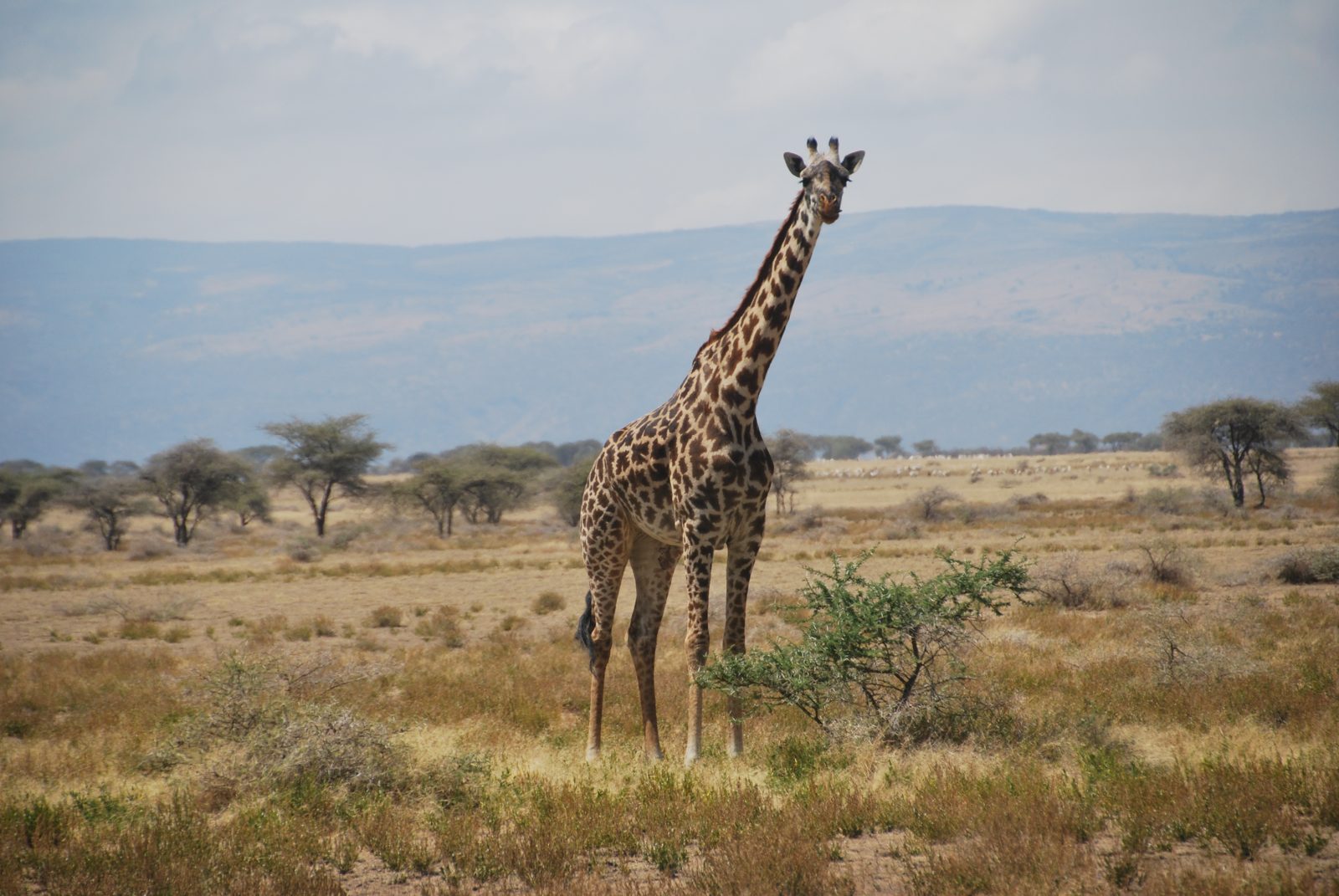
Six days cover Arusha, Lake Manyara, the Serengeti, Ngorongoro Crater and Tarangire, and three more are spent in Zanzibar. Entering the Serengeti costs TZS 178,850 per non-resident adult per day until 14 March 2027, according to the tariff table of Tanzania National Parks (TANAPA) (checked on 13 Nov 2026), and going down into the crater adds US$295 per vehicle per trip, according to the tariffs of the Ngorongoro Conservation Area Authority (NCAA). The figures in this guide were checked against the linked sources on 19 Oct 2026.
| Day | Area | Key activities |
|---|---|---|
| 1 | Arusha | Arrival at Kilimanjaro airport, transfer to Arusha and an overnight rest. |
| 2 | Lake Manyara → Karatu | Safari in Lake Manyara National Park, with elephants, baboons and waterbirds. Night in Karatu. |
| 3 | Karatu → Serengeti | Drive through the Ngorongoro Conservation Area, stop at Olduvai Gorge, entry to the Serengeti via Naabi Hill and an afternoon safari towards Seronera. |
| 4 | Serengeti | Two safaris, one in the morning and one in the afternoon, in the central area of the park. |
| 5 | Serengeti → Ngorongoro Crater → Karatu | Early departure and descent into the caldera before 16:00: hippos, hyenas, zebras, wildebeest and the Big Five. Night in Karatu. |
| 6 | Karatu → Tarangire | Safari among baobabs and elephants in Tarangire National Park. |
| 7-9 | Zanzibar | Day 7: road from Tarangire to Arusha and flight to Zanzibar. Days 8 and 9: Stone Town and the beach. |
Day 5 links the Serengeti with the crater. According to the NCAA visitor rules, the descent gates into the crater close at 16:00. Leave the Serengeti early and ask the operator what time the vehicle will reach the rim of the caldera.
Tanzania or Kenya: size, crater and calendar
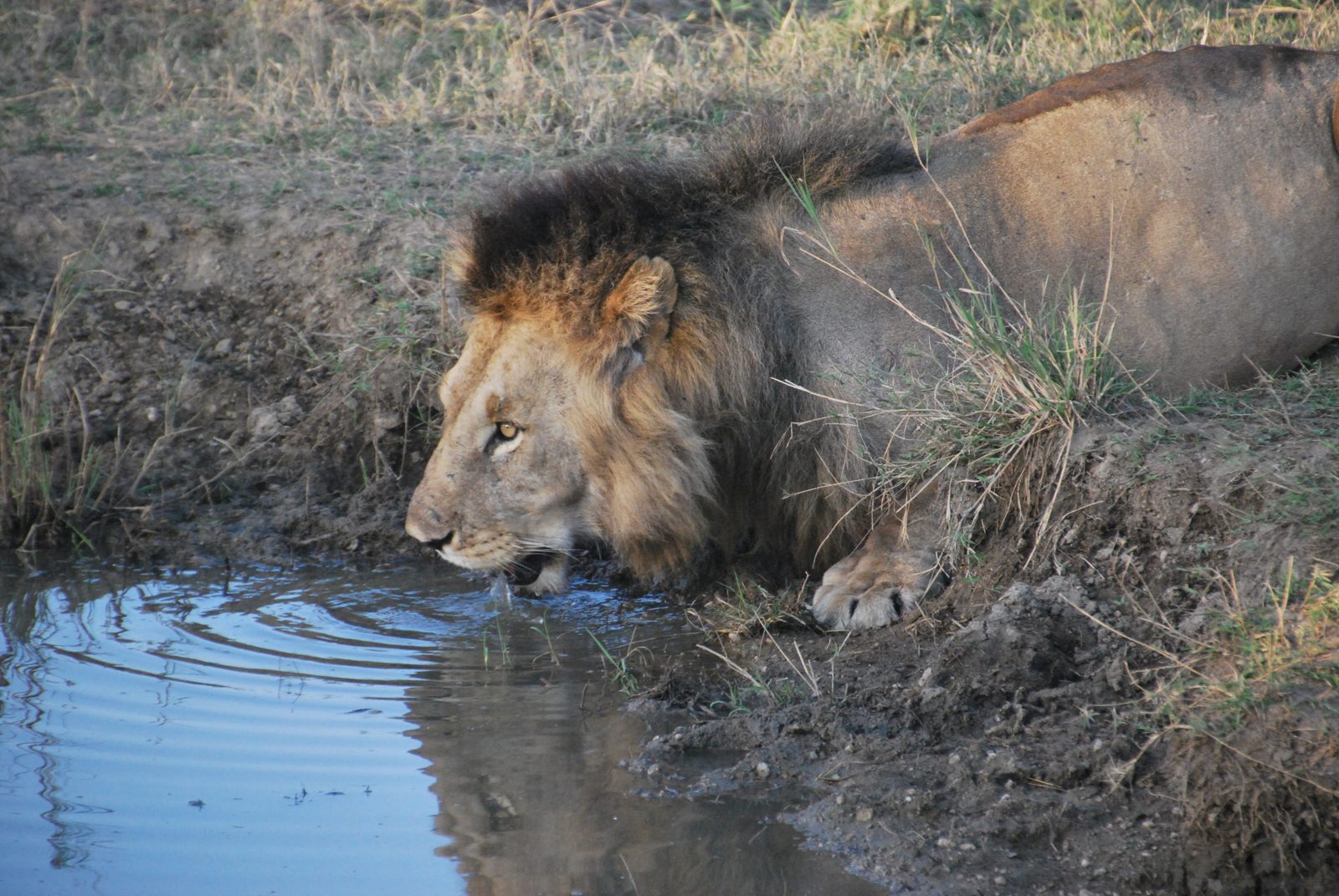
The Serengeti and the Maasai Mara form a single ecosystem that the wildebeest travel in an annual cycle of about 1,000 km between Tanzania and Kenya, according to UNESCO. The practical difference is scale: Serengeti National Park covers 14,763 km², according to the TANAPA brochure, and Maasai Mara National Reserve covers 1,672 km², according to UNESCO. The Tanzanian park is almost nine times larger.
Tanzania also has Ngorongoro. UNESCO describes it as the largest intact volcanic caldera in the world and inscribed it in 1979. The NCAA gives its dimensions: about 260 km², about 20 km in diameter and 610 m deep, with more than 25,000 animals, among them the Big Five.
Timing matters more than fame when choosing a country. From December to March, most of the wildebeest gather in Ndutu, in the south of the Serengeti plains; from July to October, many travellers come to watch the wildebeest cross the Mara River into the grasslands of the Maasai Mara, according to NASA.
Northern Tanzania connects with Zanzibar by domestic flight: the Coastal Aviation timetable includes one daily departure from Arusha to Zanzibar. Safari and beach therefore fit into the same trip.
The areas of the Serengeti
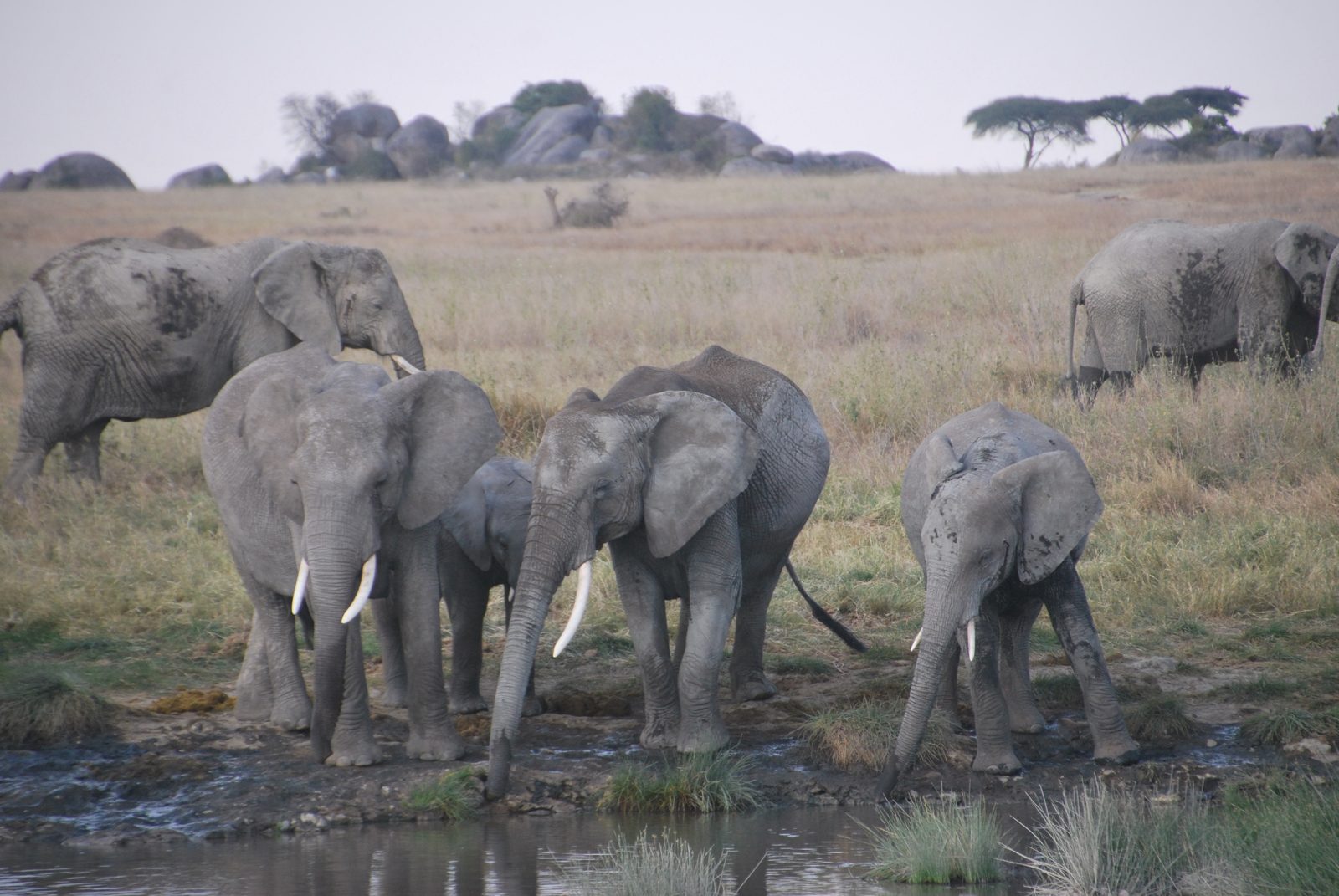
TANAPA presents the Serengeti as a year-round destination with access to all its areas, and describes very different places: treeless plains, mountains, riverine forests and springs (brochure “Tanzania Unforgettable”). Its airstrips mark out five areas: centre, south, east, west and north.
Seronera (centre)
Seronera lies in the centre of the park. TANAPA runs a public campsite there and, with prior booking, rest houses and bandas (Serengeti brochure). The conservation report that TANAPA submitted to UNESCO in 2017 mentions the road from Naabi Hill to Seronera inside the park (TANAPA report to UNESCO). Kopjes, rocky outcrops that dot the plains, are part of the landscape that UNESCO describes in the park.
Ndutu (south)
The Ndutu plains belong to the Ngorongoro Conservation Area and border the south of the Serengeti. The NCAA recommends visiting them from late December to April and lists lions, cheetahs, leopards, hyenas, giraffes and elephants among the resident wildlife all year round. The airstrip in the southern area is called Kusini.
Western Corridor (west)
The west of the park is close to Lake Victoria, according to NASA. TANAPA mentions two uncommon primates here, the patas monkey and the Angolan black-and-white colobus, offers rest houses at Kirawira and maintains a public campsite by the Ndabaka gate.
Lobo (east)
Lobo lies in the east of the park. TANAPA runs a public campsite and there is one place to stay, Lobo Wildlife Lodge. The same brochure states that walking safaris with an armed ranger are offered in the east and north of the park.
Kogatende and Lamai (north)
The north has two airstrips, Kogatende and Lamai, and Coastal Aviation flies to both from Arusha. The Mara is the only river in the park with water all year, according to UNESCO, and the herds cross it to reach the grasslands of the Maasai Mara. The exact timing of the crossings changes every year with the rains, according to NASA.
Gates and airstrips
According to the TANAPA Serengeti brochure, you enter by road through the gates of Naabi Hill, Ndutu, Handajega, Ikoma, Tabora B, Lamai, Ndabaka, Machochwe and Kleins. The “Tanzania Unforgettable” brochure adds Seronera, Kusini and Kirawira. Check with your operator which gate the vehicle will use.
| Area | Position in the park | Airstrip |
|---|---|---|
| Seronera | Centre | Seronera |
| Ndutu | South | Kusini |
| Western Corridor | West | Kirawira |
| Lobo | East | Lobo |
| Kogatende and Lamai | North | Kogatende and Lamai |
The Serengeti calendar
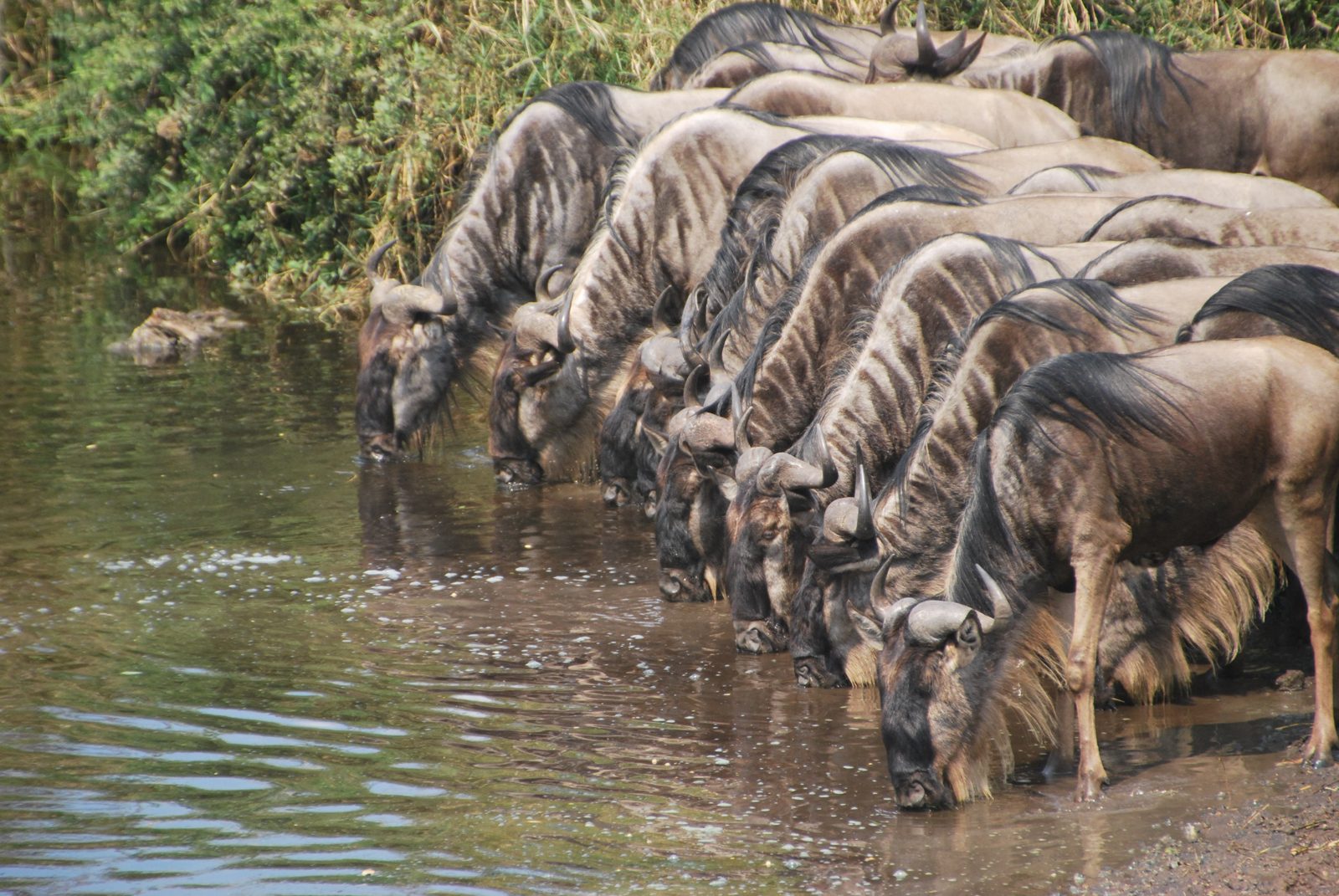
The migration follows the rain, so the dates change every year, according to NASA: in 2019, for example, the wildebeest crossed the Mara earlier than usual because the dry season arrived earlier. TANAPA recommends June to October, the dry season, for seeing the migration, and January and February for the calving. According to the Serengeti brochure, the rains in the park run from November to April and the dry season from May to October.
December to March · Ndutu. Most of the wildebeest gather in Ndutu. Births are concentrated in February, with about 8,000 calves a day for four to six weeks, according to NASA. The resident predators of the area stay there all year, according to the NCAA.
April and May · heading west. With the onset of the drought, the wildebeest leave Ndutu and turn clockwise. Around May they head for the western corridor, near Lake Victoria (NASA).
May to July · west and north. In June or July they reach the northern plains, where they meet the Grumeti and Mara rivers, with crocodiles in their waters (NASA).
July to October · Mara crossings. Many travellers come in these months to watch the river crossings (NASA). The exact timing varies from one year to the next, so book several nights in the north.
November · return to the south. The rain returns to the south of the Serengeti and the wildebeest go back to Ndutu (NASA).
Logistics: vehicle, clothing and luggage
Operator and vehicle. The Ministerio de Asuntos Exteriores (Spain’s Ministry of Foreign Affairs; Exteriores for short) warns of scams involving safaris booked online or by phone from local companies with no legal registration, and recommends booking only with well-known and reliable companies. According to the NCAA rules, commercial vehicles operating in Ngorongoro must belong to registered companies holding a valid TALA licence: ask the operator to show it to you. Also ask whether the vehicle has a pop-up roof, how many people travel in it and whether every passenger has a window.
Clothing. TANAPA recommends neutral-coloured clothing (Serengeti guide) and, in areas with tsetse flies, driving with the windows almost closed and at low speed (Tarangire guide). The Serengeti lies between 1,100 and 2,000 m above sea level, according to the TANAPA brochure. The Ministerio de Sanidad (Spain’s Ministry of Health; Sanidad for short) advises light clothing all year round and some warm clothing between June and September. Exteriores also recommends clothing that covers arms and legs at dawn and dusk, and mosquito repellent.
Luggage on light aircraft. The weight includes camera equipment. Coastal Aviation allows 15 kg per person including hand luggage, recommends soft bags and sells an XL seat with a 30 kg allowance. Other airlines set their own limits: check them before booking. Weigh the camera backpack and the suitcase together before booking the flight.
Park rules and photography. In the Ngorongoro Conservation Area, the NCAA requires visitors to keep at least 25 metres from the animals, limits vehicles at a sighting to five and requires visitors to remain in the vehicle outside authorised areas. With that minimum distance, a long zoom lens (as a suggestion, a 70-300 mm or longer) lets you frame the shot without moving the car closer. The NCAA prohibits photographing local residents except in designated cultural villages (bomas), requires a permit for commercial filming and bans plastic bags in the area. TANAPA prohibits drones without a special permit (Serengeti guide).
Combining with Zanzibar
Zanzibar has its own immigration control: travellers coming from the mainland must carry their passport, according to Exteriores. It also requires its own compulsory travel insurance (see “Practical information”).
Stone Town, on the west coast of Unguja island, has been a World Heritage Site since 2000. UNESCO describes it as a Swahili trading town with Arab, Indian and European influences, and highlights its carved double doors. Among its main buildings it lists the Old Fort, the House of Wonders, the Hamamni Persian Baths and the Anglican Christ Church cathedral, built where the last slave market stood.
Beaches. There are beaches in the north of the island (Nungwi and Kendwa) and on the east coast (Paje, Jambiani and Matemwe).
Flight from Arusha. The Coastal Aviation timetable, valid until 31 May 2027, includes a daily departure from Arusha to Zanzibar at 12:45, arriving at 14:20, and another at 13:00 from July to September. Check the current timetable before fixing day 7. Exteriores warns that local airlines do not comply with European and international safety standards and are prohibited from operating in EU airspace; check the European Union’s air safety list before booking.
Day-by-day route
Day 1 · Arusha. Land at Kilimanjaro International Airport (JRO) and transfer to Arusha, the most common entry point to the Serengeti, according to the TANAPA Serengeti guide. Rest: the first safari starts the next day.
Day 2 · Arusha → Lake Manyara → Karatu. Lake Manyara park is about two hours from Arusha on a paved road and covers 325 km². It combines a spring-fed forest, acacias, an alkaline lake and the wall of the Rift Valley. Elephants, buffalo, hippos, lions, giraffes and large troops of baboons live there, and some lions rest in the branches during the hottest hours (TANAPA). Sleep in Karatu, a town on the way to Ngorongoro and the Serengeti.
Day 3 · Karatu → Serengeti. Cross the Ngorongoro Conservation Area and stop at Olduvai Gorge, a deep ravine included in the Ngorongoro World Heritage Site (UNESCO). At Olduvai, Mary and Louis Leakey worked for more than 30 years and unearthed the Zinjanthropus skull and remains of Homo habilis, to which numerous stone tools 1.6 to 1.8 million years old are attributed; the NCAA maintains a museum on the site. Continue to Naabi Hill, enter the Serengeti and spend the afternoon on safari towards Seronera.
Day 4 · Serengeti. Take two safaris in the central area, one in the morning and one in the afternoon. The park gates close at 18:00, according to TANAPA, so plan your return to your accommodation with time to spare. UNESCO reports, without stating the year of the count, about 200 black rhinos, 1,000 leopards, 2,700 elephants and 70,000 buffalo in the park: the rhino is the least numerous of the Big Five. TANAPA lists picnic areas where you can get out of the vehicle, such as Retima Hippo Pool, to see hippos on foot, and offers balloon safaris at dawn (Serengeti brochure).
Day 5 · Serengeti → Ngorongoro Crater → Karatu. Leave early and descend into the caldera before 16:00. A licensed guide must accompany all visitors to the crater, and only 4×4 vehicles with an unladen weight of up to 3,500 kg may enter its floor, except for authorised trucks of organised groups (visitor rules). According to the NCAA, walking safaris are not allowed inside the crater, but are allowed on its rim and in other areas; the caldera covers about 260 km² and drops 610 m to the floor. Have your picnic in the designated areas and do not bring plastic bags, which the NCAA bans in the area. Return to sleep in Karatu.
Day 6 · Karatu → Tarangire. Tarangire covers 2,850 km² and its savannahs are recognisable by their baobabs. TANAPA describes it as a dry-season refuge, where wildlife gathers in large numbers by the Tarangire River and the Silale Swamp, and highlights the period from July to November. Its visitor guide advises booking well in advance for the dry season, from June to October, and recommends a 4×4 vehicle in the wet season, from November to May.
Day 7 · Tarangire → Arusha → Zanzibar. The Tarangire guide estimates between 2.5 and 3 hours by road to Arusha. If the flight to Zanzibar leaves at midday, leave the park first thing. In Zanzibar, its own immigration control and its own compulsory insurance apply, and you must have taken out the insurance beforehand (see “Practical information”).
Days 8 and 9 · Zanzibar. Spend one day on Stone Town and the other on the coast. The international return flight may leave on day 9 itself or the day after, depending on the airline’s timetable.
Practical information (official sources, checked on 19 Oct 2026)
Getting there. According to TANAPA, the airports nearest to the Serengeti are Kilimanjaro (JRO) and Arusha (ARK). Its Serengeti guide states that the road from Arusha can take 7 to 8 hours, and that there are scheduled flights to the Seronera airstrip. The Coastal Aviation timetable lists daily departures from Arusha to the airstrips of Seronera, Lobo, Ndutu, the south of the park, Grumeti, Kogatende and Lamai. From Arusha to Tarangire it is 2.5 to 3 hours by road (TANAPA) and to Lake Manyara about 2 hours (TANAPA brochure).
Serengeti entry and opening hours. According to TANAPA, the park is open all year and its gates close at 18:00. TANAPA’s 2026/2027 tariff table, published in Tanzanian shillings, sets entry at TZS 178,850 per non-resident adult per day from 16 May 2026 to 14 March 2027 and TZS 51,100 per child aged 5 to 15 (checked on 13 Nov 2026). The park page gives $70 per international adult and $20 per child, and the visitor guide says around $70 a day, so ask your operator for the exact amount. TANAPA adds that separate charges apply for the vehicle and for camping. Lake Manyara and Tarangire, on days 2 and 6, charge TZS 127,750 per non-resident adult per day over the same period and TZS 38,325 per child aged 5 to 15, according to the same table.
Ngorongoro entry and opening hours. According to the NCAA tariffs, the entry permit costs US$70.80 per person aged 16 or over who is not an East African citizen or a resident of Tanzania, the crater service US$295 per vehicle per trip, and the visit to Olduvai Gorge and Shifting Sand US$35.40 per person aged 16 or over. According to the visitor rules, permits are single-entry, entry and camping fees are paid within 24 hours of entry, driving is allowed between 06:00 and 18:00 and the crater descent gates close at 16:00.
Passport and visa. According to the Ministerio de Asuntos Exteriores (advice in force on 19 Oct 2026), Spanish citizens need a visa and a passport valid for at least six months from the date of entry and with three blank pages. The visa is processed on the official immigration portal or on arrival at the airports of Dar es Salaam, Zanzibar and Kilimanjaro. The tourist visa, valid for up to 90 days, costs US$50.
Compulsory travel insurance. Exteriores reports two compulsory insurance requirements. For mainland Tanzania, the Government amended the insurance law on 4 Sep 2026 and created an entry insurance with a US$44 premium and a maximum validity of 92 days, which is taken out on the official portal and applies from 1 Oct. For Zanzibar, since 1 Oct 2024 every visitor, except residents of Tanzania, must take out the Zanzibar Insurance Corporation policy through Visit Zanzibar, and the authorities may refuse entry to anyone who does not have it. Exteriores also recommends international insurance, because the cover provided by the Zanzibar policy is very limited.
Health. According to the Ministerio de Sanidad, Tanzania requires a yellow fever certificate from travellers over one year old who come from countries with a risk of transmission or who have spent more than 12 hours in an airport in one of them; Sanidad does not recommend the vaccine as a general rule for this destination. Sanidad notes a risk of malaria all year round throughout the country below 1,800 m altitude. Exteriores recommends consulting an International Vaccination Centre about vaccines (diphtheria-tetanus-polio, rabies, typhoid fever, hepatitis A and B, meningitis) and antimalarial prophylaxis before travelling. In addition, because of the Ebola outbreak in the Democratic Republic of the Congo, Tanzania’s Ministry of Health requires all travellers to complete the online Traveller’s Health Surveillance Form at afyamsafiri.moh.go.tz, before arriving or on arrival, and to show the QR code or reference number from the confirmation at the health check at the point of entry, where body temperature is also taken (Travel Advisory No. 18 of 17 Oct 2026, checked on 3 Nov 2026; Exteriores also lists the form). Each traveller fills in their own form with their passport and travel details; children too, with help from a parent or guardian. The portal accepts it from 24 hours before arrival.
Safety. Exteriores recommends travelling with caution. Following the protests on election day, 29 Oct 2025, checkpoints on public roads remain; sharing images that cause public alarm is a criminal offence and inspections of electronic devices have been reported. Exteriores also recommends registering your trip details on the Registro de viajeros (travellers’ register).
Official links. TANAPA, Serengeti; TANAPA, Tarangire; NCAA, Ngorongoro; electronic visa; compulsory insurance for the mainland; Visit Zanzibar; Exteriores travel advice; Sanidad, Tanzania; UNESCO, Serengeti; UNESCO, Ngorongoro; UNESCO, Stone Town.
