Romania tells itself in two voices that don’t quite seem to belong to the same country. On one side are the painted churches of Bucovina, UNESCO-listed monasteries from the 15th century whose exterior frescoes have survived 500 Carpathian winters without losing their colour. On the other is the Dracula industry: the myth built on Vlad Țepeș, Bran Castle turned theme-park kitsch, the vampire merchandise that still sells every summer.
This photodump puts them side by side on purpose. Both are Romania. Both help you understand it.
The painted churches
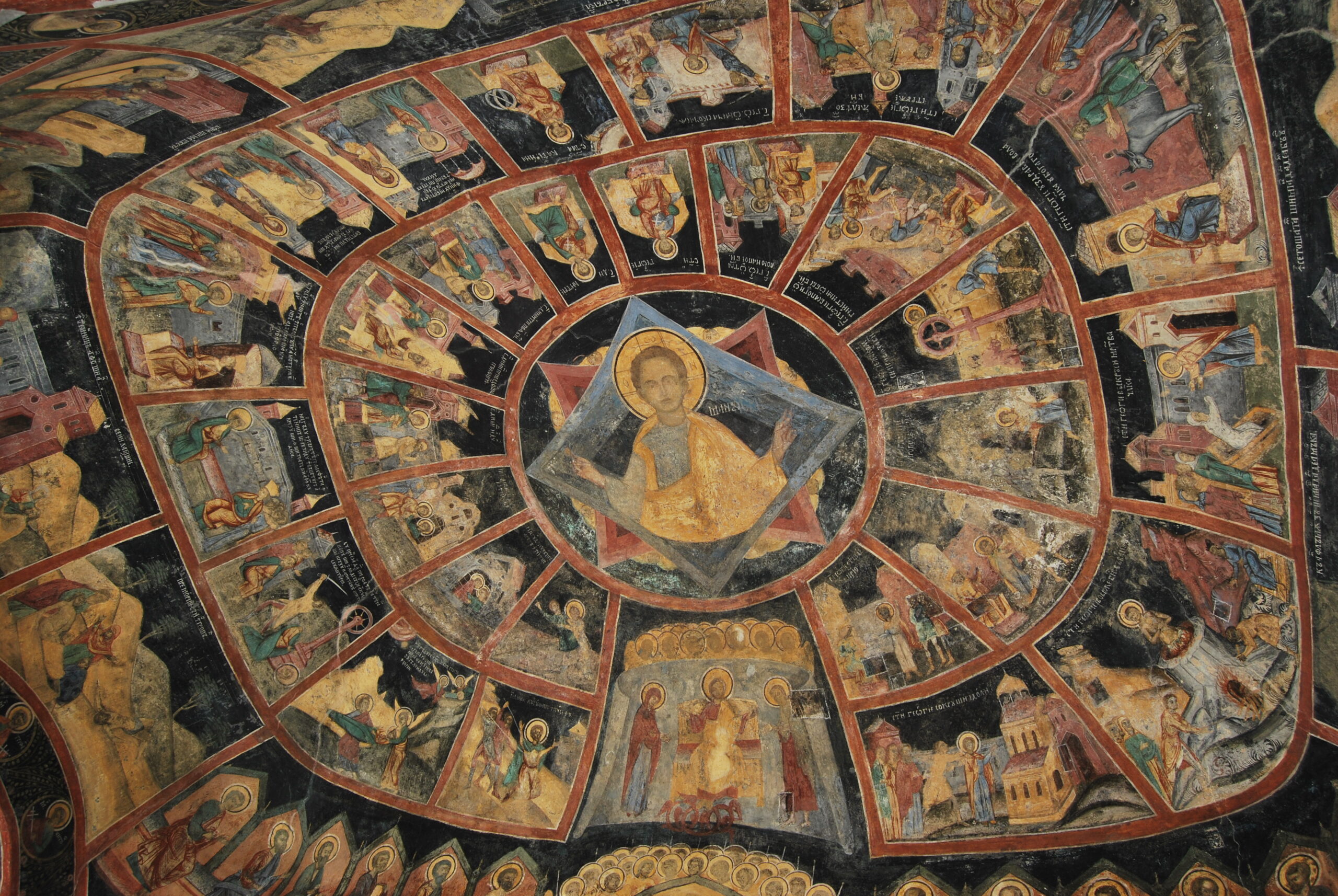
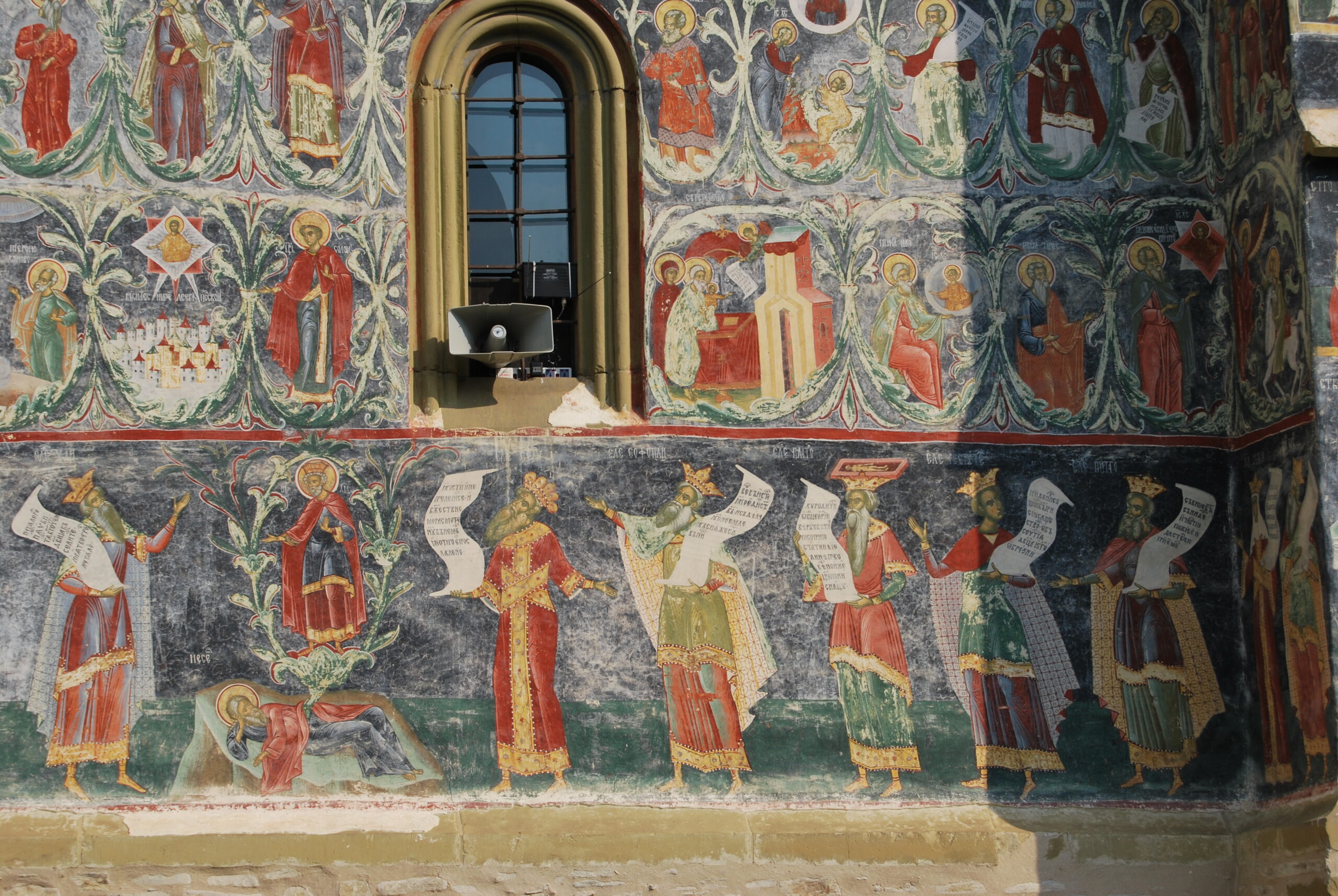
In northern Romania, in the historical region of Bucovina, eight Orthodox monasteries built between the 15th and 16th centuries carry frescoes painted on the outside of their walls. That’s unusual in Christianity: the standard is to decorate the interior. Here, the icon painters worked the façade and coated it with a lime-and-egg render that has lasted half a millennium of sun and snow.
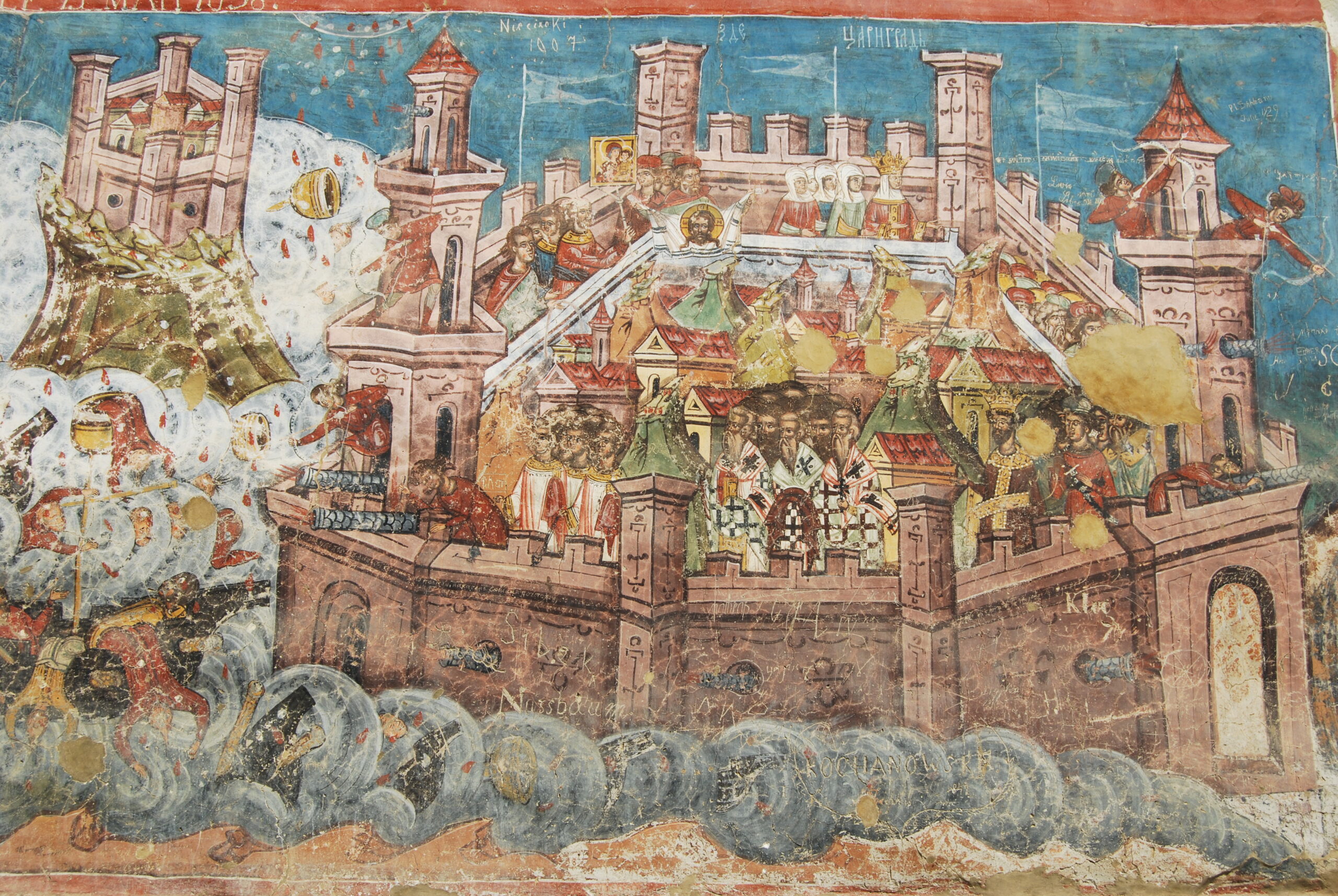
A recurring scene is the Siege of Constantinople — a 626 AD event reinterpreted as 16th-century anti-Ottoman propaganda, back when Moldavia was fighting for its independence. Another common scene is the Ladder of Judgement: monks climbing, demons pulling their feet. The palette is unmistakable: Voroneț blue (a deep ultramarine whose exact technical secret has never been fully decoded), vermilion red, ochre, gold.
The other side: Dracula in Transylvania
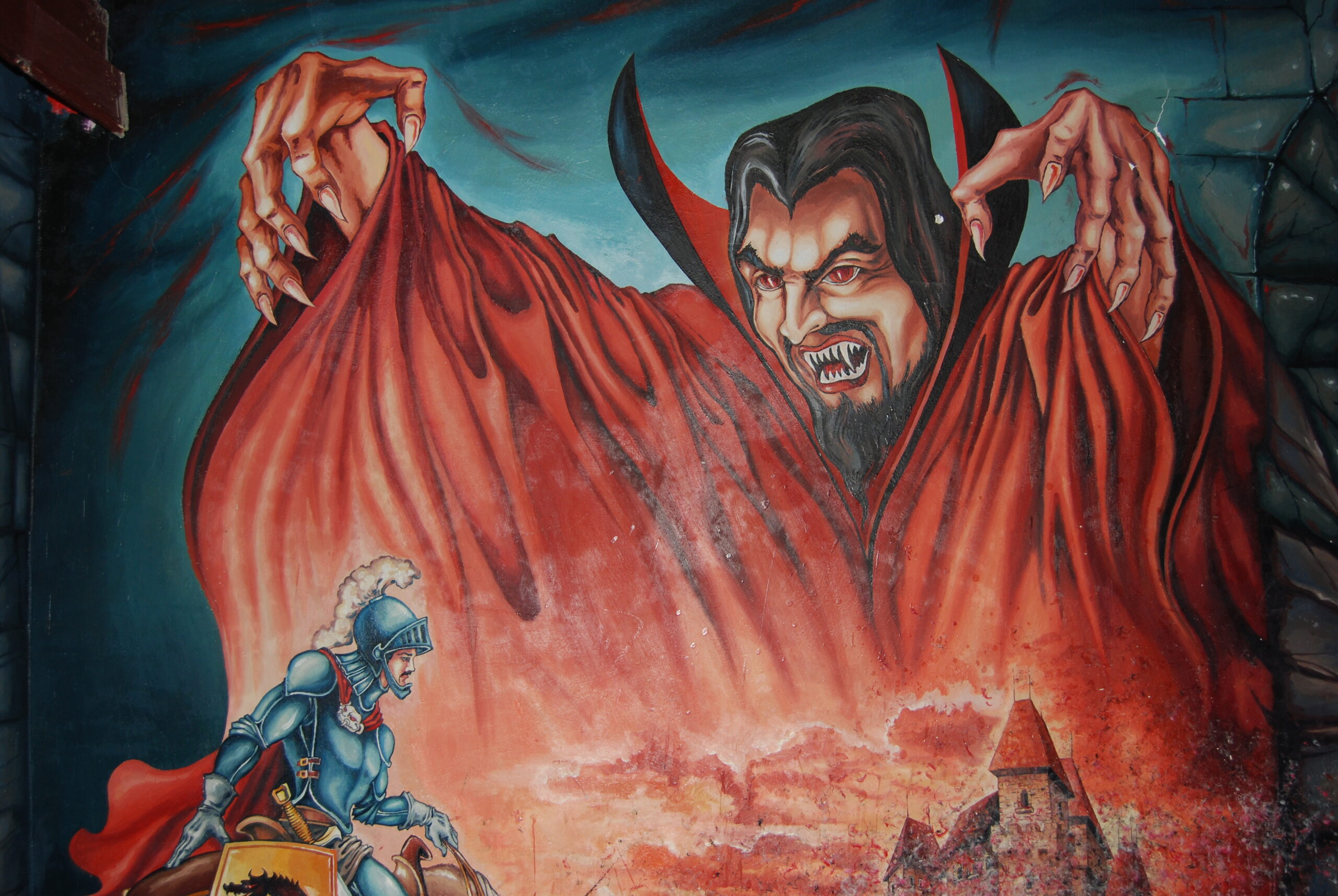
The leap from Byzantine fresco to pop-vampire mural is purely Romanian: in Romania, the 15th-century monastery and the tourist haunted house live side by side without strain. Bran Castle never actually belonged to Vlad Țepeș (Vlad III, “the Impaler”, the historical 15th-century voivode), but 20th-century marketing tied it to Dracula and no one has managed to undo the misunderstanding. Local muralists paint the count in a red cape, fangs out, a knight driving a stake above a Carpathian village.
Better to get the joke than to fight it. It’s part of the landscape.
Photographer’s notes
- Exterior frescoes: arrive before 11 a.m. The low eastern sun rakes across the wall and rescues the pigment’s relief. Later the light flattens.
- Interior detail: usually no flash. High ISO, medium focal length, steady hands. Some monasteries charge a small “camera fee”.
- Bran: arrive at opening time. The 11 a.m. bus fills the courtyard.
Gallery