
Orecchiette con cime di rapa recipe from Puglia
For four people, the Italia.it recipe uses 300 g of durum wheat semolina and about 150 g of lukewarm water, and no egg.
By Ander BilbaoOwn photosPublished 9 min read
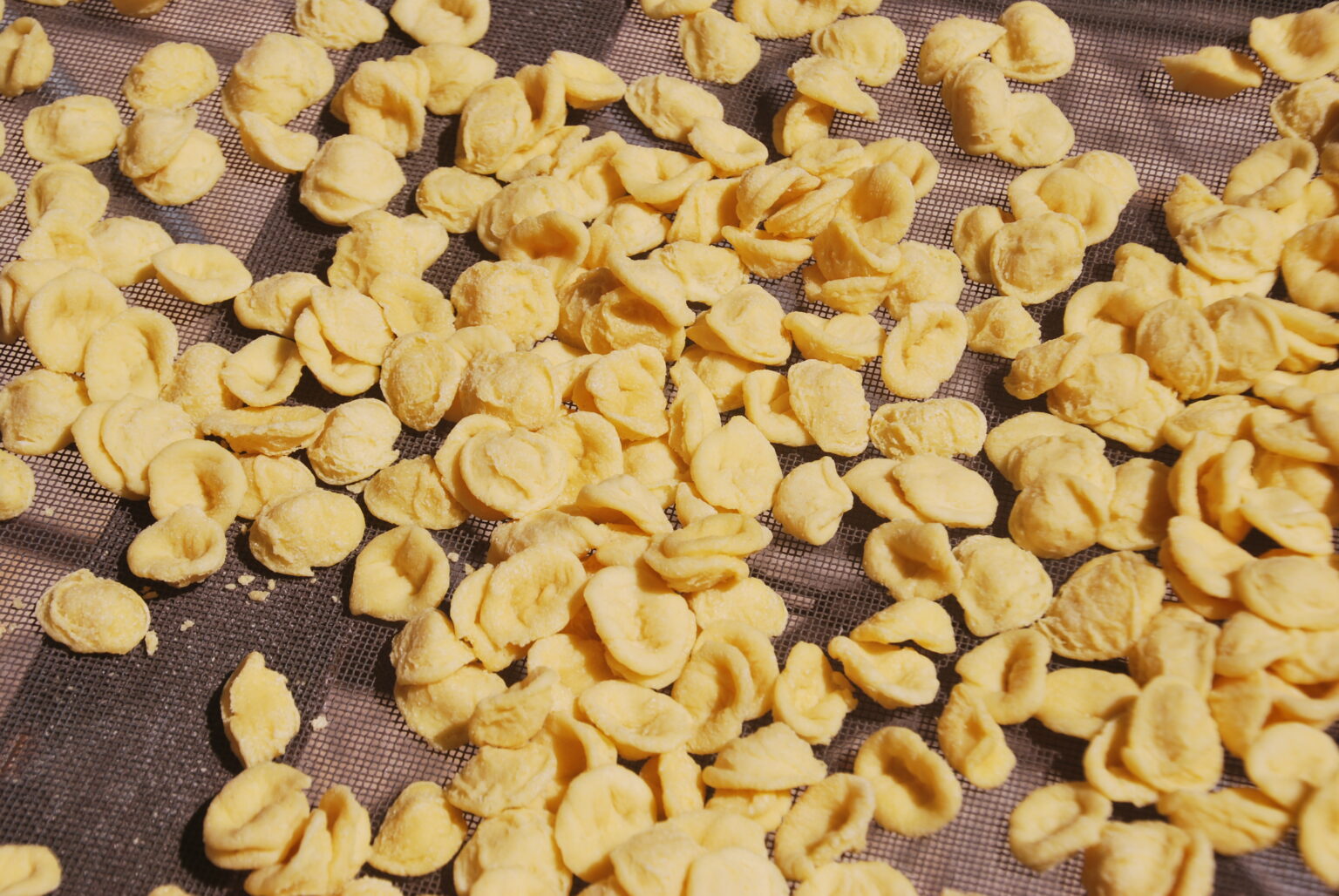
Orecchiette in short
- Serves
- 4 people
- Time
- 1 h 30 min to prepare, 10 min to cook
- Difficulty
- Medium
- Dough
- 300 g of semolina and about 150 g of lukewarm water, no egg
- Greens
- 1 kg of cime di rapa (turnip tops); in Spain, grelos
- Season
- Autumn to spring
Data checked on 15 Nov 2026 on Italia.it: servings, times, difficulty and quantities. The cooking time comes from its French, Portuguese and German pages, because the Italian page has a typo (“IO minuti”). The name turnip tops is from Italia.it’s English pages; grelos as a substitute, from its Spanish page and Galicia’s Official Gazette; the season, from two Italian recipes (Dissapore and Scatti di Gusto).
Own photos, taken with a Nikon D60 and a Tamron 18-270 mm lens on 2 and 6 April 2026, according to the EXIF data. Quantities and times come from Italia.it, and the technique from three Italian recipes credited at each step. About me
| Section | What it covers |
|---|---|
| 01What are orecchiette? | Name and origin |
| 02Ingredients (serves 4) | Shopping list |
| 03Cime di rapa | Choosing the greens |
| 04Step-by-step preparation | Dough, shaping, cooking |
| 05What to avoid when cooking them | Mistakes |
| 06What to serve with it | Wine, bread, dessert |
| 07When and where to eat them | Season and Alberobello |
| 08Food safety and allergens | Allergens and hygiene |
| ·Sources | |
01 / 08What are orecchiette?
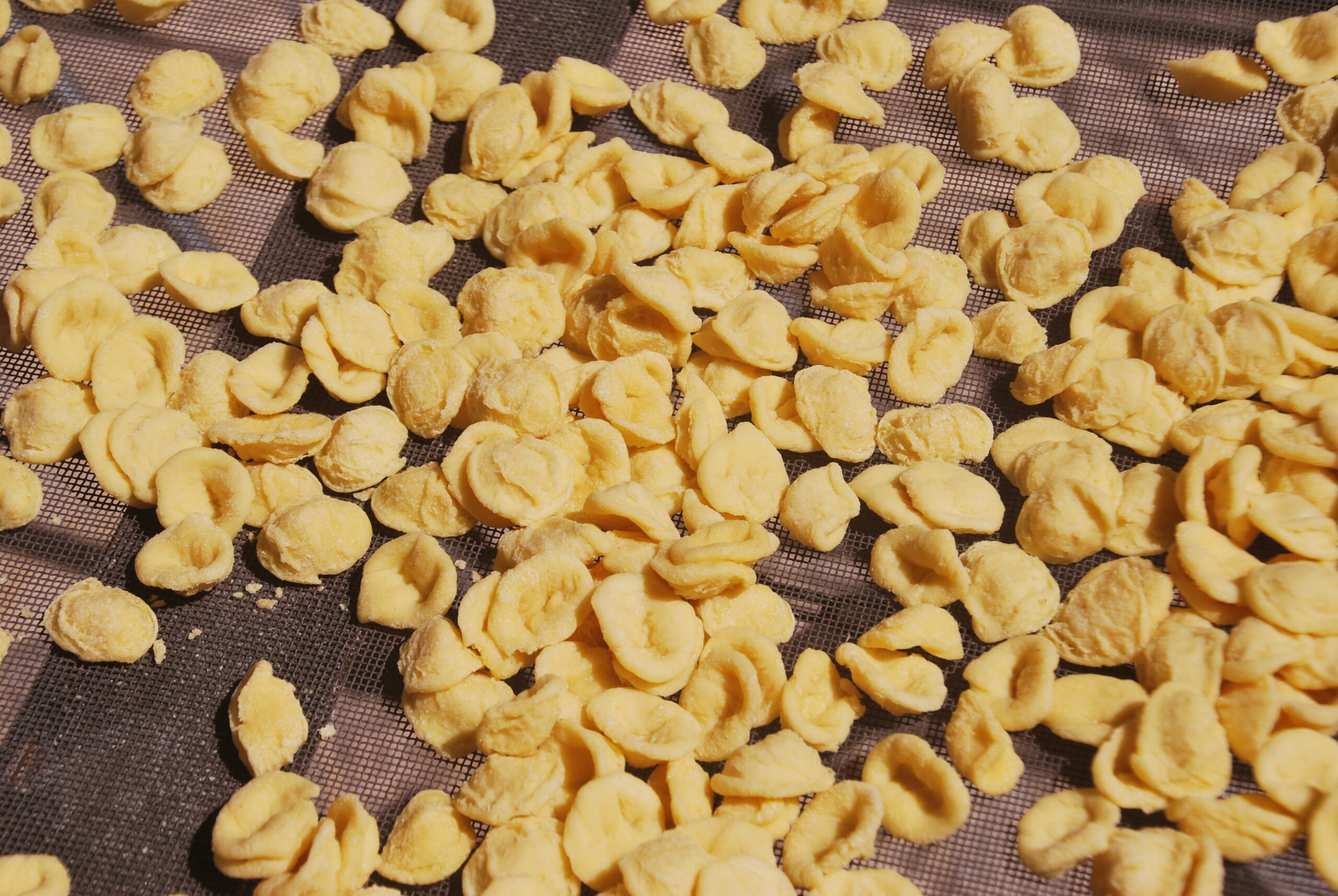
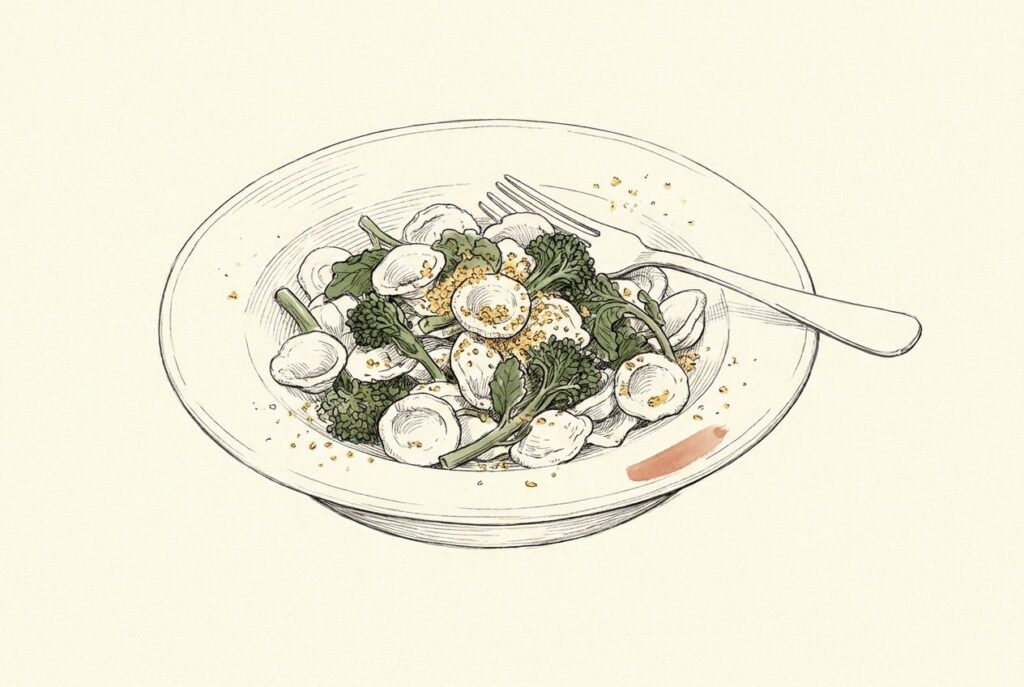
Orecchiette con cime di rapa is a dish from Puglia, in southern Italy: fresh pasta made from durum wheat semolina and water, sautéed with a leafy vegetable related to the turnip (Brassica rapa), garlic, chilli and anchovy.
Italia.it, Italy’s national tourism portal, calls orecchiette the most iconic traditional pasta shape from Puglia, at their best when paired with turnip greens, the name its English pages give to cime di rapa.
Pasta shaped like small ears, traditional in Pugliese cooking, according to the Treccani dictionary. The name is the diminutive of orecchia (“ear”). Dissapore explains that its concave shape holds sauces well, and Visit Italy describes it as hollowed in the centre by the pressure of the thumb.
The origin is disputed. Dissapore links the dish with the peasant culture of the provinces of Bari and Foggia and with the Middle Ages, with a possible Provençal or Arab origin. Visit Italy places the tradition in the 12th and 13th centuries, in the area of Sannicandro di Bari.
Trend-online reports two hypotheses, one French and the other tied to the Norman-Swabian rule of those centuries, and cites no sources for either. So this recipe does not attribute the pasta to any specific people or date.
02 / 08Ingredients (serves 4)
For the pasta
- 300 g of re-milled durum wheat semolina (semola rimacinata)
- About 150 g of lukewarm water
For the sauce
- 1 kg of cime di rapa (or grelos)
- 1 clove of garlic
- 1 chilli (peperoncino)
- 4 anchovy fillets in oil
- 4 tablespoons of extra virgin olive oil
- Salt for the cooking water
- Toasted breadcrumbs, to taste (optional; mentioned by Scatti di Gusto and Dissapore)
Quantities from the Italia.it recipe · checked on 15 Nov 2026. The breadcrumbs are not part of it.
Salt. Italia.it and Scatti di Gusto put it in the cooking water, not in the dough; Visit Italy and Trend-online do add it to the dough. If in doubt, follow a single recipe from start to finish.
| Recipe | Serves | Semolina | Water | Cime di rapa |
|---|---|---|---|---|
| Italia.it | 4 | 300 g | About 150 g | 1 kg; raw or trimmed not stated |
| Scatti di Gusto | 6 | 500 g, not re-milled | 250 g | 1.5 to 2 kg before cleaning |
| Dissapore | 4 | 300 g of fresh orecchiette | — | 500 g |
Scatti di Gusto warns that the amount of greens depends on how much is thrown away when cleaning them, and lets the water cool to about 40 °C after boiling it. Recipes consulted on 15 Nov 2026.
03 / 08Cime di rapa: how to choose them and what to use instead
Cime di rapa are a leafy vegetable of the species Brassica rapa (subspecies sylvestris, according to the Marche Region’s technical cultivation document), typical of central and southern Italy. Italia.it’s English pages call them turnip tops or turnip greens.
Scatti di Gusto says to discard the tough leaves and the stems, to avoid any whose little yellow flowers have already opened, and not to confuse them with broccoli or with friarielli.
In Spain, the Spanish-language version of Italia.it translates the dish as orecchiette with grelos and anchovies. Galician grelos (PGI, protected geographical indication) are the same species, though a different variety (Brassica rapa var. rapa). The PGI regulation published in Galicia’s Official Gazette describes their flavour, once cooked, as slightly acidic with a certain bitterness.
They can serve as a substitute. As they are different varieties, the flavour may vary (inference).
04 / 08Step-by-step preparation
1. The dough
- Make a volcano of semolina on the table.
- Pour the lukewarm water into the centre, a little at a time.
- Knead by hand for a good while, until the dough is smooth, even and elastic.
- Cover it with a light cloth, not cling film or a plastic cover: it has to breathe.
- Leave it to rest for 30 minutes.
Technique from Scatti di Gusto: the right amount of water depends on the humidity and on how much the semolina absorbs.
2. Shaping the orecchiette
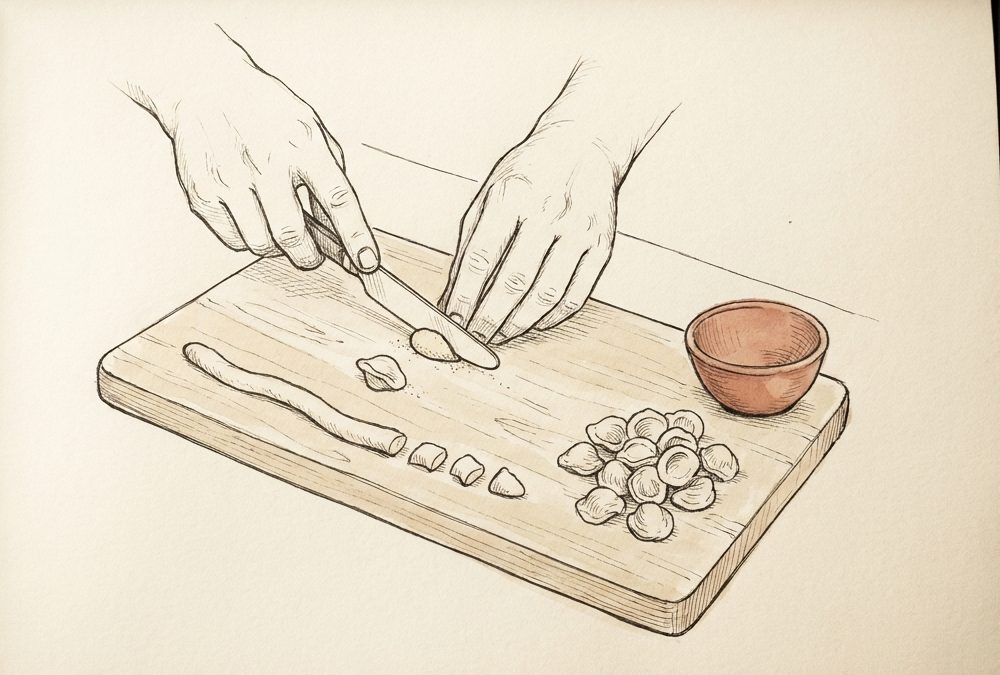
- Cut off a piece of dough.
- Roll it with your palms on the table into a rope as thick as your little finger.
- Cut it into pieces the size of the pad of your index finger.
- With a light knife with a rounded tip and no serrations, push a piece with your thumb from behind the blade.
- Drag it across the board with some pressure: the dough curls up on the knife.
- Lift the blade and turn the dough over your thumb to give it its concave shape.
Technique from Scatti di Gusto: the thicker the rope, the bigger the orecchietta. Getting them right takes years of practice.
3. Drying
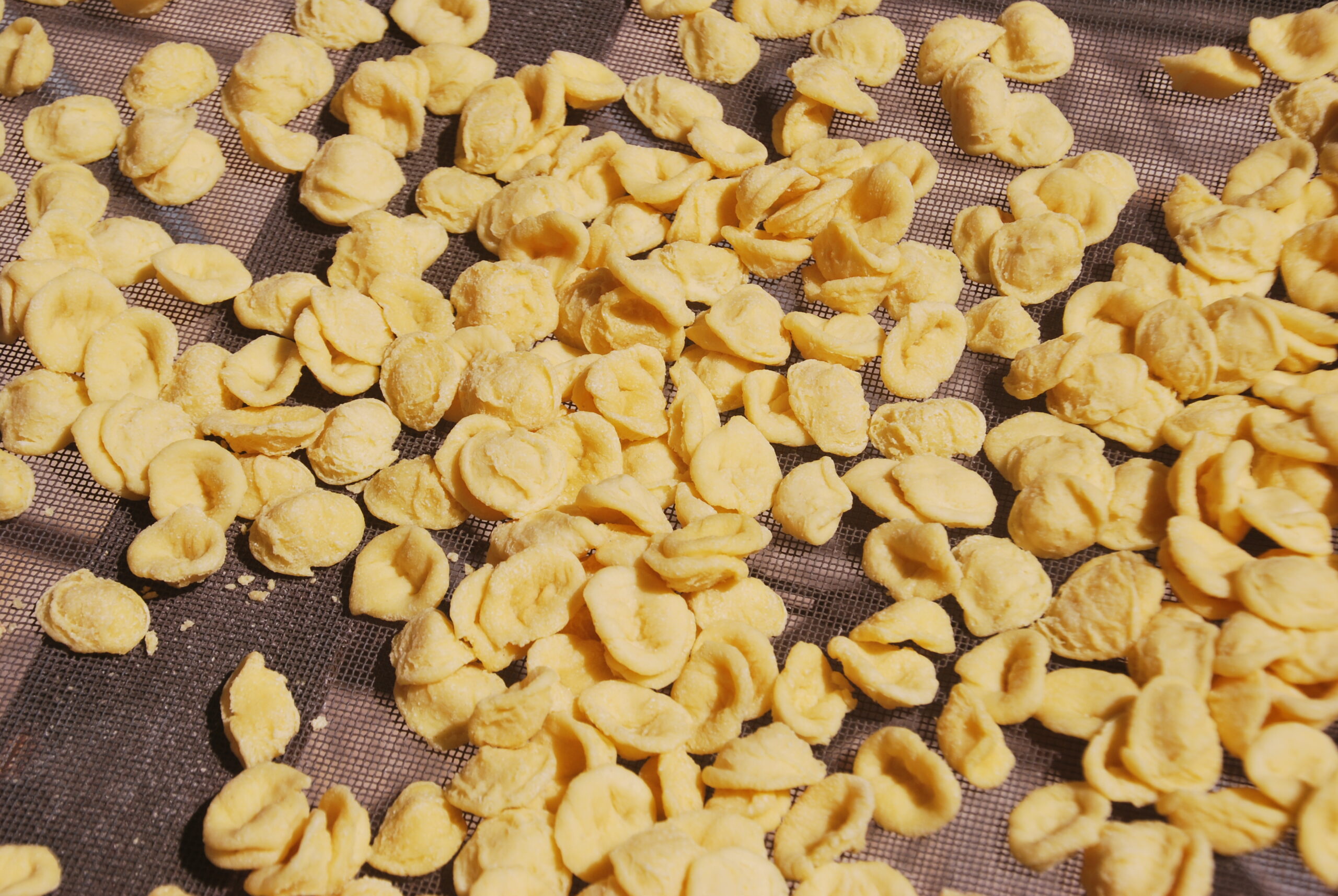
- Place the orecchiette concave side down.
- Lay them on drying racks or on trays covered with a cloth dusted with semolina; no paper or plastic.
- Cook them fresh, without letting them dry out too much.
Technique from Scatti di Gusto. Visit Italy says they can also be air-dried for a couple of days.
4. Cooking and putting it together
- Clean the cime di rapa: remove the tough leaves and the stems.
- Wash them well in drinking water.
- Bring plenty of water to the boil and salt it.
- Cook the cime di rapa first, until tender: taste one.
- Cook the orecchiette in the same water until al dente: taste one before draining.
- Meanwhile, heat the oil in a large frying pan with the garlic and the chilli.
- Remove the garlic when it starts to turn golden.
- Break the anchovies up in the oil until they dissolve.
- Set aside a ladleful of the cooking water.
- Drain the pasta and the greens straight into the pan.
- Add a little of the reserved water.
- Sauté over a high heat for a few minutes.
- Serve straight away, with toasted breadcrumbs on top if you like.
Watch the timing. Visit Italy boils the greens for 10 minutes before adding the pasta; Dissapore, for 4. For fresh pasta, Visit Italy gives at least 4 to 5 minutes; Scatti di Gusto sets no time, as it depends on the greens and on how dry the orecchiette are.
Steps from Scatti di Gusto; the reserved water, from Dissapore. Recipes consulted on 15 Nov 2026.
05 / 08What to avoid when cooking them
- Adding cream. The recipes consulted (Italia.it, Dissapore, Scatti di Gusto) are based on oil, garlic, chilli, anchovy and cime di rapa, with no cream.
- Finishing with cheese. Scatti di Gusto states that cheese is not part of the traditional recipe. The exception it allows is the “formaggio dei poveri” (“poor people’s cheese”): the crumb of stale bread, crumbled and fried, or fine breadcrumbs dry-toasted in the pan. The author herself says she does not normally even add that.
- Adding the greens at the end. The recipes consulted cook them before the pasta; added at the end, they may stay tough (inference).
- Cooking without tasting. The cooking time of fresh pasta depends on thickness and drying.
06 / 08What to serve with it
- Wine: the Italia.it recipe suggests a Castel del Monte Nero di Troia PDO, a red wine from Puglia
- Bread: pane di Altamura PDO, which Italia.it lists among the specialities of Puglia and says must be enjoyed warm
- For dessert: pasticciotto, a typical Salento pastry: a shortcrust case filled with custard, according to the same website
07 / 08When and where to eat them
It is a seasonal dish: according to Dissapore, cime di rapa grow from autumn to spring, and Scatti di Gusto specifies that they are picked from the first cold weather of autumn until well into spring.
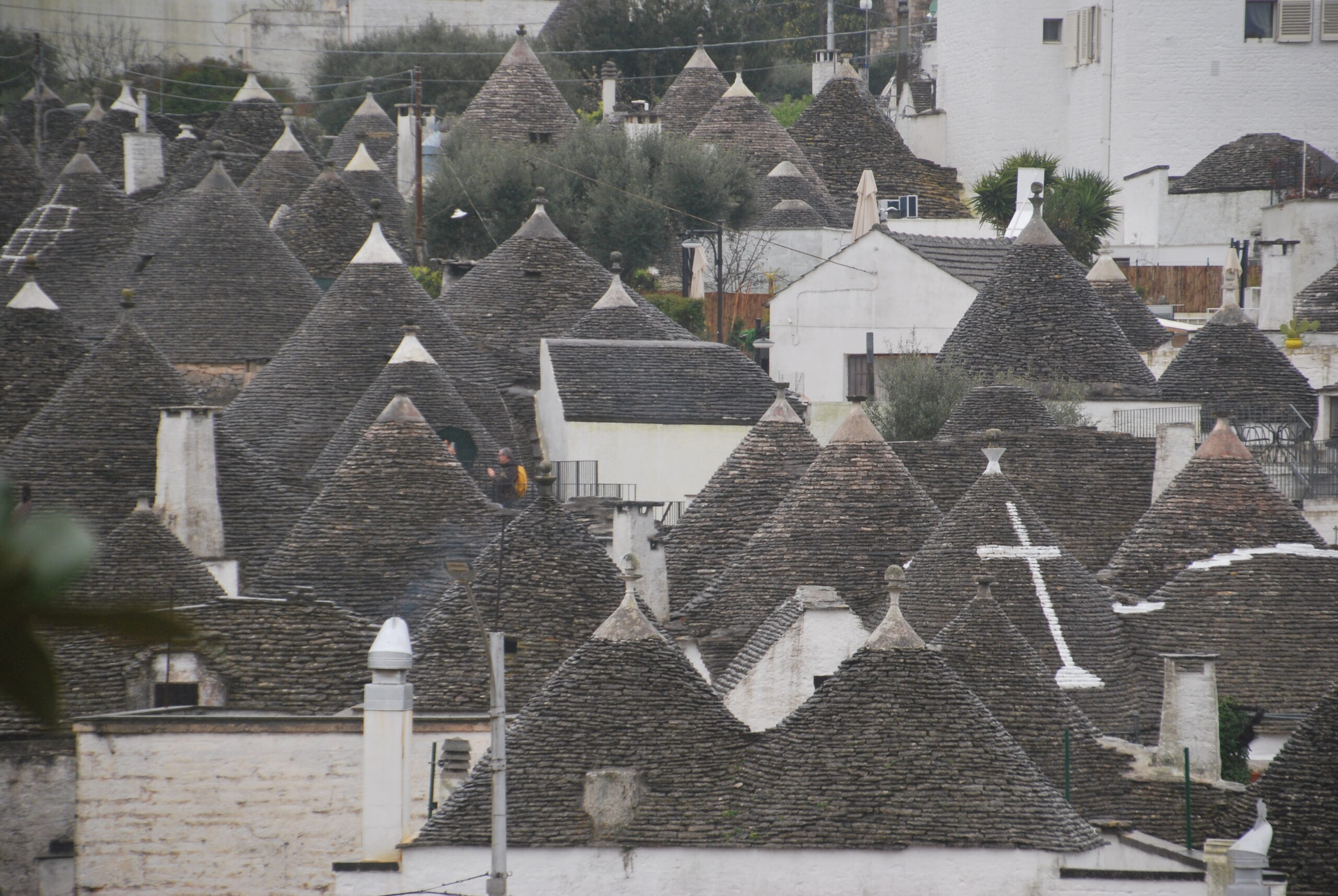
In Puglia, Italia.it suggests starting a meal in Alberobello with orecchiette topped with turnip tops and salted anchovies.
Alberobello and the Itria Valley
Alberobello lies in the Itria Valley, between the provinces of Bari, Brindisi and Taranto, according to Italia.it. Its trulli are dry-stone buildings with conical roofs.
According to the fact sheet from Italy’s Ministry of Culture, there are more than 1,500 of them in the Rione Monti and Aia Piccola districts, and the site has been on UNESCO’s World Heritage List since 1996.
What to see, history and tickets: the Alberobello trulli guide. To carry on through southern Italy: Naples and Pompeii in 4 days.
08 / 08Food safety and allergens
- Allergens: the recipe contains wheat (the semolina and, normally, the breadcrumbs) and fish (the anchovies). Both appear among the substances that must be declared under Annex II of Regulation (EU) No 1169/2011: cereals containing gluten, and fish. According to AESAN (the Spanish Agency for Food Safety and Nutrition), Article 44 of that regulation makes allergen information mandatory for non-prepacked food as well. If you have an allergy, ask about the dish’s allergens before ordering it.
- Raw dough: do not taste the dough before it is cooked. A report in the CDC MMWR (2017) links an outbreak of Shiga toxin-producing E. coli in Canada to flour. Of 22 patients interviewed, 16 used the implicated flour or probably did. Of those 16, 11 ate raw dough or probably did. The report deals with flour; extending it to semolina is an inference, because semolina is also ground wheat that has not been cooked.
- Hygiene and cooking: the WHO sums up food safety in five keys: keep clean, separate raw and cooked food, cook thoroughly, keep food at safe temperatures, and use safe water and raw materials. For this recipe: wash your hands, the board and the knife, wash the greens in drinking water and cook the pasta and the greens all the way through. Dissapore says that leftover orecchiette keep for a day in the fridge, although they lose freshness.
Sources
- Italia.it, orecchiette con cime di rapa recipe and its French, Portuguese and German versions · official · servings, times, difficulty, quantities and wine · checked on 15 Nov 2026
- Italia.it, Puglia of flavours · official · orecchiette as Puglia’s pasta, turnip greens, Altamura PDO bread and pasticciotti · checked on 15 Nov 2026
- Italia.it, Alberobello and its Spanish version · official · Itria Valley; orecchiette with turnip tops (grelos in Spanish) and anchovies · checked on 15 Nov 2026
- Italy’s Ministry of Culture, the trulli of Alberobello · official · more than 1,500 trulli, dry stone and UNESCO (1996) · checked on 15 Nov 2026
- Marche Region, technical cultivation document · official · cime di rapa, Brassica rapa subsp. sylvestris, from central and southern Italy · checked on 15 Nov 2026
- Galicia’s Official Gazette, Grelos de Galicia PGI regulation · official · variety and flavour of grelos · checked on 15 Nov 2026
- Regulation (EU) No 1169/2011, Annex II and AESAN · official · allergens that must be declared, also for non-prepacked food · checked on 15 Nov 2026
- CDC, MMWR (2017) · scientific · E. coli outbreak linked to flour in Canada · checked on 15 Nov 2026
- WHO, five keys to safer food · official · hygiene and cooking · checked on 15 Nov 2026
- Scatti di Gusto, Dissapore and Visit Italy · recipes, not official · technique, times, compared quantities and season · consulted on 15 Nov 2026
- Treccani and Trend-online · dictionary and press, not official · name and origin of orecchiette · consulted on 15 Nov 2026
Published on Bidaiatzen (@vidaiatzen).
