Tonlé Sap responsible tourism: ethical guide and facts
If a Tonlé Sap boat trip stops at an orphanage or a “school” where children sing or ask for donations, skip that stop: according to UNICEF, 77% of the children living in residential care centres in Cambodia have living parents.
By Ander BilbaoOwn photosPublished 11 min read
Visiting responsibly, in short
- Skip
- Orphanages and “schools” visited as attractions
- Don’t pay or give
- Photos with animals; money, food or gifts to children
- Don’t buy
- Wildlife souvenirs unless you can check the species and the permits
- Boat at Chong Khneas
- Official ticket counter only: USD 28 per boat for 1–5 people, USD 38 for 6–8 (international visitors)
- Before paying
- Price and stops in writing, the boat’s owner and life jackets
- Child in danger
- Cambodia’s child helpline: 1280
Data checked on 15 Nov 2026 with UNICEF Cambodia, ChildSafe, MITECO and Angkor Enterprise, the official ticket office. “Before paying” is our own advice.
Photographs by the author, taken with a Nikon D60 and a Tamron 18-270 mm lens on 9 August 2018, according to their EXIF data. Every fact carries its source and the date it was checked. About me
Tonlé Sap is, according to UNESCO, the largest freshwater lake in South-East Asia, and 1,380,615 people live in its 1,483,339 ha biosphere reserve (the factsheet does not give the year). What you do during a visit (who you hire, what you buy, who you photograph) affects those people and the lake itself. How the lake grows and what its people live on is explained in Tonlé Sap lake: flood pulse, fishing and floating villages.
Five practices to avoid
1. Visiting orphanages and “schools” as an attraction
If the excursion includes a stop at a centre where children sing, dance or ask for donations, skip it. According to UNICEF Cambodia, 77% of the children living in residential care centres in the country have living parents.
Cambodia’s alternative care policy, revised in July 2024, prioritises family-based care and leaves institutional care as a last resort.
ChildSafe, the movement that Friends-International created in 2005, asks that children not be treated as a tourist attraction: do not visit orphanages or schools as a tourist, and do not photograph children or families you do not know.
Sources: UNICEF Cambodia (26 Sep 2025), ChildSafe and Friends-International · checked on 15 Nov 2026.
2. Tips and gifts for children
ChildSafe recommends not buying goods or using services offered by children (selling items at tourist sites, guiding services) and not giving them money, food or gifts. If the person steering the boat or collecting payment is a minor, choose another operator.
If you think a business employs underage children, or you see a child in danger or being abused, call a child protection hotline, a local organisation or the police. In Cambodia, the national line is Child Helpline Cambodia, on 1280; in Siem Reap, ChildSafe answers on +855 17 358 758.
For tips to adults, carry small notes in dollars, the currency normally used for payment according to Spain’s Ministry of Foreign Affairs (Ministerio de Asuntos Exteriores, referred to below as Exteriores).
Sources: ChildSafe’s advice, its helplines, UNICEF Cambodia (1280) and Exteriores · checked on 15 Nov 2026.
3. The photo with the python
If a child or an adult offers to let you pose with a live animal in exchange for money, decline: paying sustains the business. If the person offering is a child, ChildSafe also asks you not to buy goods or services from them, because doing so encourages them to carry on (practice 2).
4. The “authentic floating village”
Labelling one village “authentic” and another a “stage set” does not help you decide. What does help is asking who owns the boat, what share of the price reaches the community and whether the excursion obliges you to make purchases. Chong Khneas, one of the four main settlements of the reserve’s buffer zone according to UNESCO, is where the boats with an official fare depart (section 04).
Kampong Phluk, 25 km from Siem Reap, has a community fishery. Its tourist boats brought in USD 24,000 in 2015 and, in June 2016, the commune chief agreed to allocate 10% of that revenue to the fishery: about USD 2,400 a year, the cost of fuel for patrols in its fish conservation zone. The news report does not say whether the agreement was ever put into effect: ask whether it is still in force.
Sources: UNESCO and IUCN (5 Jul 2016) · checked on 15 Nov 2026.
5. Stuffed baby crocodiles and other wildlife souvenirs
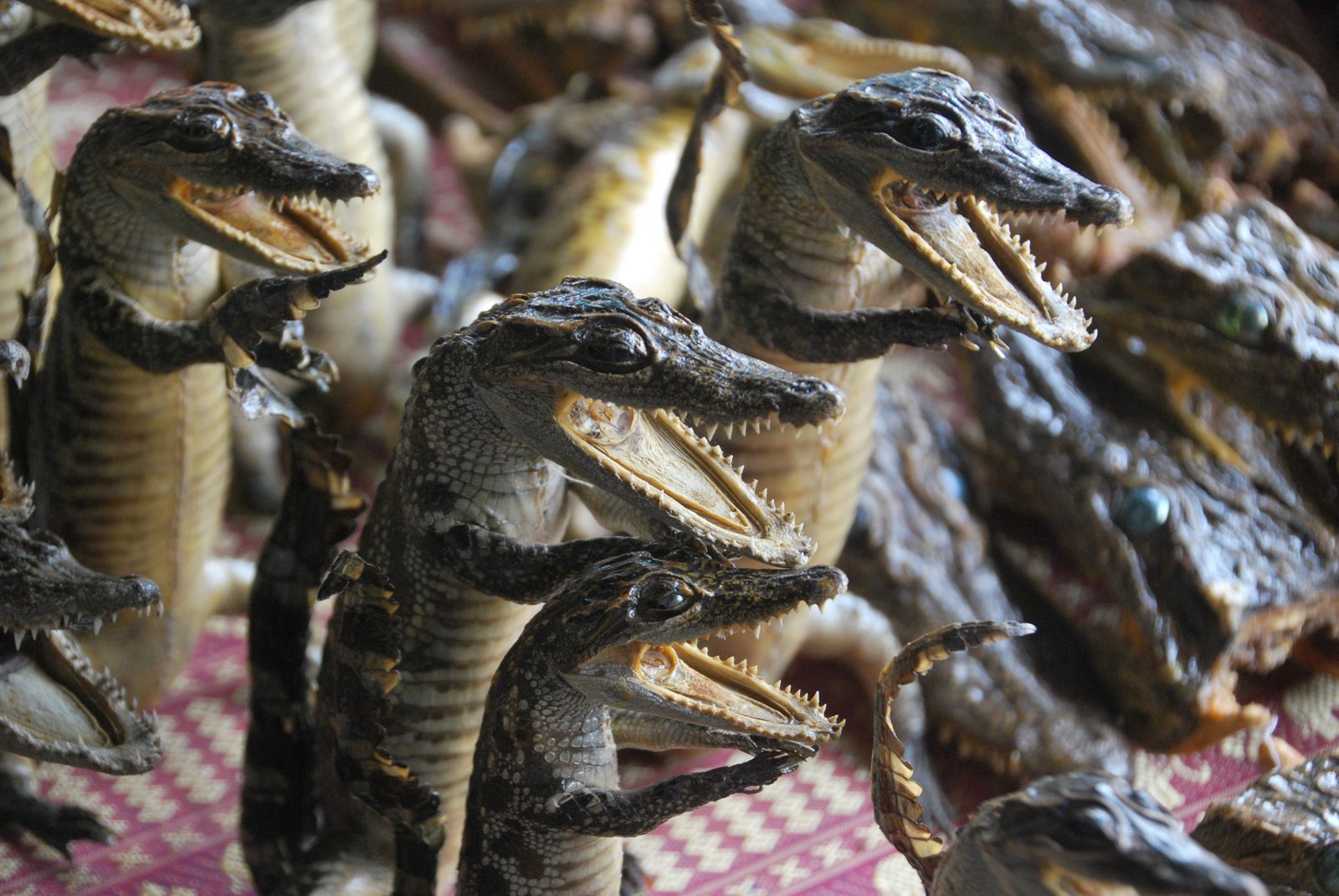
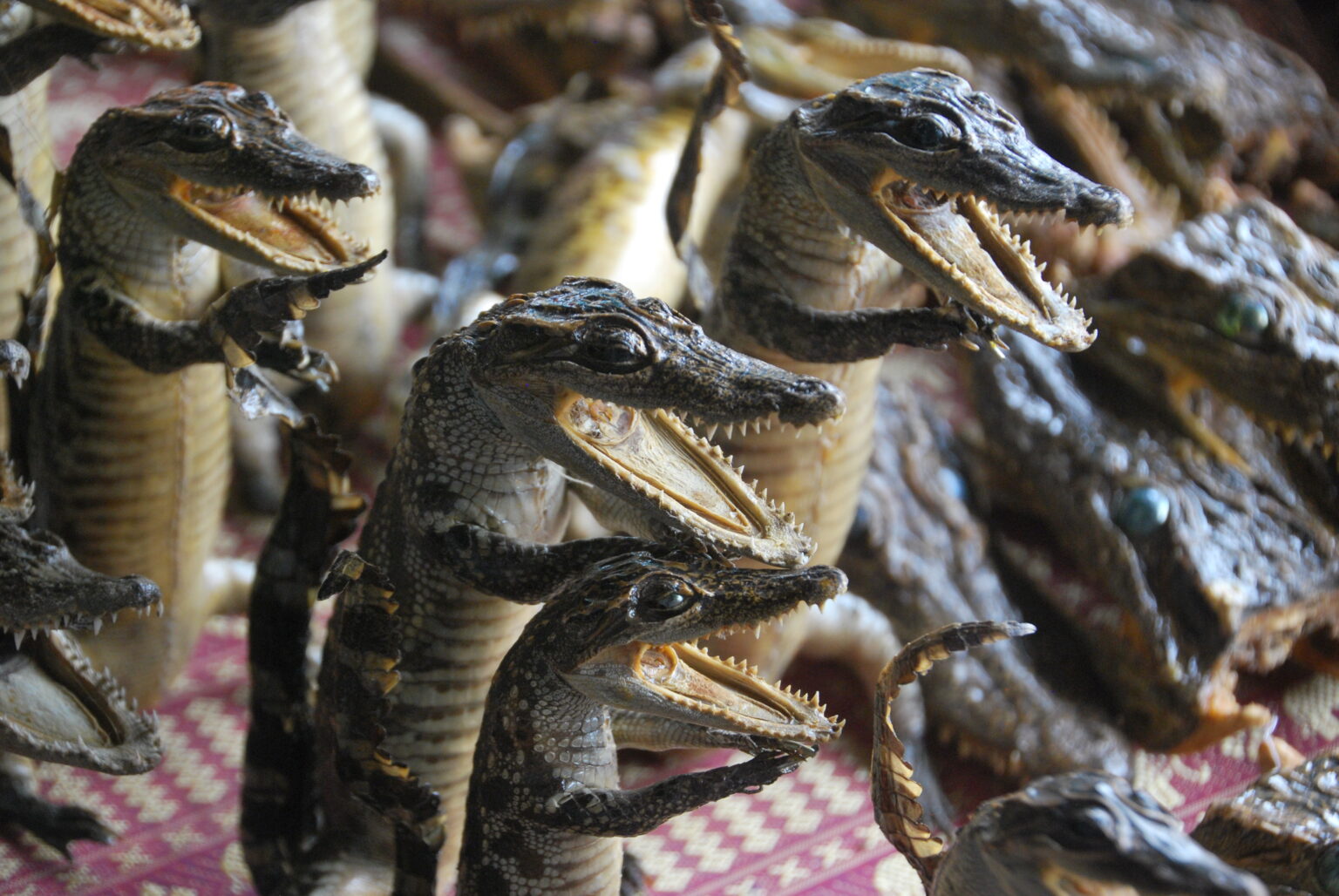
As a general rule, Spain’s Ministry for the Ecological Transition (Ministerio para la Transición Ecológica, MITECO) advises against buying objects or souvenirs made from animal or plant species. Being on sale does not mean they are legal and, depending on the case, permits are needed to take them out of the country of origin and to bring them into Spain. It cites reptile-skin handbags among the risky goods.
The EU personal baggage exemption covers only specific items in Annex B of Regulation (EC) 338/97, never Annex A, and only without commercial purpose. For crocodiles, it is limited to processed dead items (handbags, belts, coats), without meat or hunting trophies, up to four per person; each pair of shoes counts as two.
Without the required CITES documents, the goods can be confiscated, and sanctioning proceedings can lead to a fine or prison. Exteriores adds that bringing birds or exotic animals into Spain without permits is prohibited. These are EU rules: if you live outside the EU, ask your own country’s CITES authority. If you cannot check the species and the permits, do not buy.
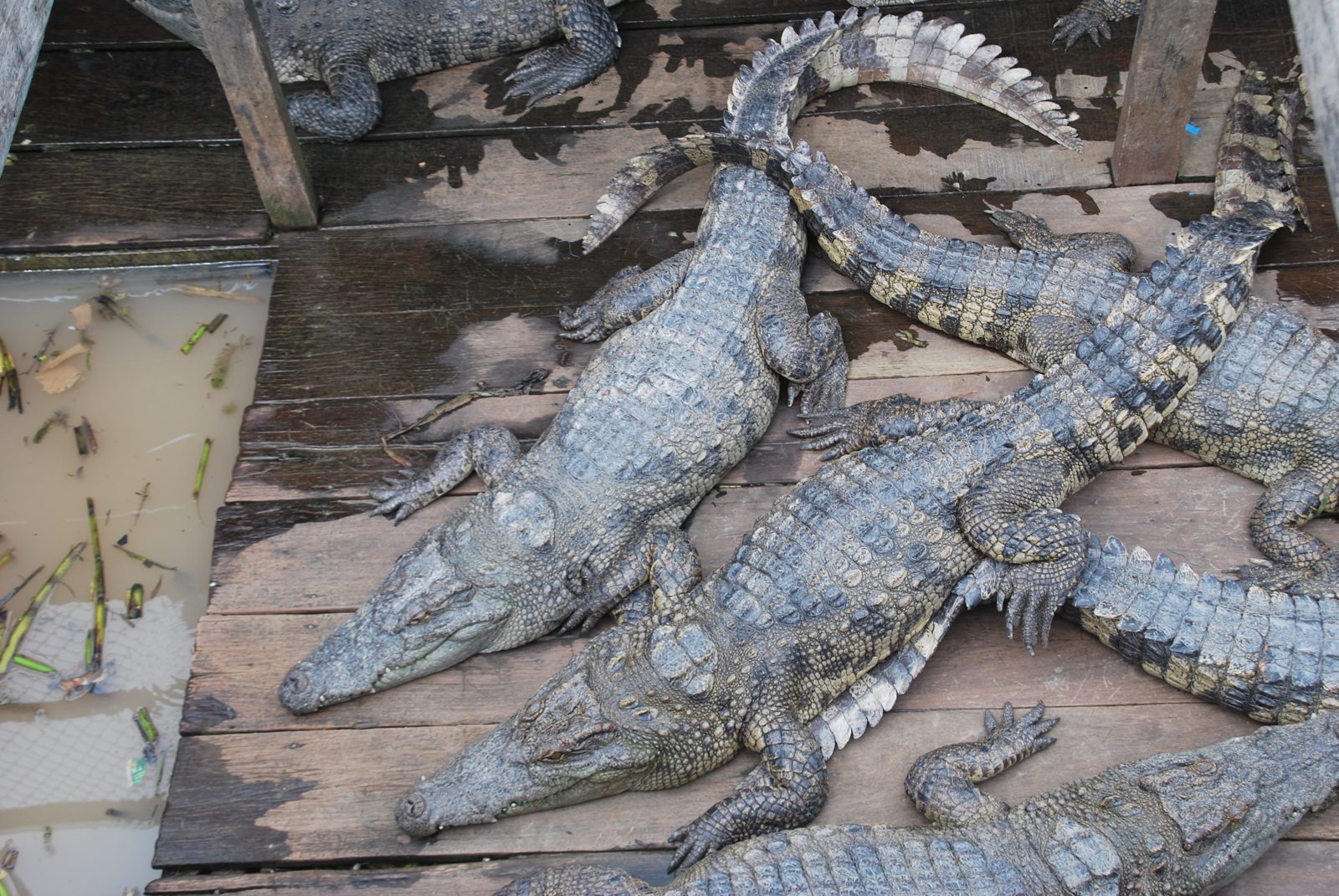
UNESCO notes that the Siamese crocodile (Crocodylus siamensis) is endangered because of its high commercial value. Before paying the entrance fee to a crocodile farm, ask what becomes of the animals and their skins. If there is no clear answer, do not go in.
Sources: MITECO FAQ on CITES (2022 PDF in Spanish, questions 8, 28 and 29), Exteriores and UNESCO · checked on 15 Nov 2026.
How to go without causing harm
- Ask in writing for the final price and what it includes (boat, tickets, stops, transfer), and who collects each charge.
- Ask who owns the boat and what share of the price reaches the community. If they do not know or do not answer, choose another operator.
- Decline stops at orphanages, schools and centres with children.
- Buy food and crafts from adults who sell them as a business. Do not buy wildlife souvenirs.
- Do not photograph children or families you do not know. With adults, ask permission first.
- Do not give money, food or gifts to children.
- Do not board if the boat is overloaded, if it is raining heavily, or if there is a risk of flooding or a storm: according to Exteriores, passenger boats on rivers and at sea do not have adequate safety measures. Ask about life jackets before paying.
Source of the boat warning: Exteriores · checked on 15 Nov 2026. The life-jacket advice is our own.
Tourism does not have to be extractive: who you hire, what you buy and who you photograph are decisions that are yours to make.
How to choose an operator
- What to ask for: itinerary, duration, stops, total price and the name of the boat’s owner, in writing and before paying.
- What to rule out: excursions that include orphanages, schools, farms that do not explain what becomes of the animals, or compulsory shopping stops.
- Chong Khneas: the boats are sold at the official Angkor Enterprise ticket counter, not online (section 04).
- Prek Toal: it is a core zone of the biosphere reserve, and WCS Cambodia counts its waterbirds among the most threatened bird species in the world. According to WCS, visitors pay the entrance fee to the Ministry of Environment staff who manage the zone, and the money funds the rangers and the communities that protect it. WCS does not publish the amount.
- Birds: UNESCO counts 225 bird species at Tonlé Sap, 17 of them endangered worldwide. Exteriores recommends staying away from nature reserves with birds because of bird flu: consult your international vaccination centre before deciding.
This guide does not recommend agencies. Apart from the official ticket counter at Chong Khneas, none of the official sources consulted accredits any operator of excursions on the lake.
Sources: WCS Cambodia, UNESCO, Exteriores and Angkor Enterprise · checked on 15 Nov 2026.
Getting there: the boat from Siem Reap
From Siem Reap, Chong Khneas boats are bought at the official Angkor Enterprise ticket counter and paid for per boat, not per person.
- Price
- Small boat (up to 8 seats), for international visitors: USD 28 in total for 1–5 people and USD 38 for 6–8. Special trip linking Prek Toal, Kampong Phluk and Wat Chae Chrey: USD 85 for 1–8 people, or USD 150 on a long-range boat for 1–42.
- Hours
- Angkor Enterprise does not publish the counter’s opening hours; it recommends leaving between 16:30 and 17:15 to see the sunset over the lake.
- Getting there
- Chong Khneas ticket counter (Village 6, Sangkat Chong Khneas), 11.4 km from the city: about 25 min by tuk-tuk or taxi on Route 63.
- Payment
- At windows 1 to 4, in cash or by QR code (KHQR). Not sold online.
Source: Angkor Enterprise, official ticket office · checked on 15 Nov 2026. Its website does not say how long the trip lasts, which stops it makes or whether the special trip includes the Prek Toal entrance fee: ask before paying.
- Take a tuk-tuk or taxi to the ticket counter.
- Buy the ticket at the window: it is not sold anywhere else.
- Before paying, ask about the stops and the duration, and about life jackets.
- For Kampong Phluk or Prek Toal, the official published fare is the special trip: USD 85 for 1–8 people (USD 150 on a long-range boat for 1–42); with other operators, ask for the price in writing.
Siem Reap and Phnom Penh have international airports (Exteriores). For the rest of the trip, see the 5-day Siem Reap and Angkor Wat guide.
When to go: rains and floods
The rains run from June to October according to Sanidad Exterior (Spain’s Foreign Health service), and from July to November according to Exteriores. Exteriores includes the Tonlé Sap basin among the areas most prone to flooding, which can cut off the affected areas: follow the forecast and adapt your plans.
What you see from the boat depends on the date: in the rainy season, the overflow of the Mekong can expand the lake to up to five times its size, according to UNESCO. How it fills and empties is explained in how the lake works.
That flood pulse is weakening: the lake’s wet-season water level fell by 1.05 m in 2010-2019 compared with 1996-2009, which means 20.6% less surface area, according to Chua and co-authors (2022). The authors say that existing dams do not on their own explain the decline, and point to irrigation and riverbed erosion.
Sources: Sanidad Exterior, Exteriores, UNESCO and Hydrology and Earth System Sciences · checked on 15 Nov 2026.
Before you travel: entry, health, money and customs
Entry requirements for Spanish passport holders
- Passport valid for at least six months from the date of entry.
- Compulsory visa: through the e-visa (recommended by Exteriores; it is only valid at certain border crossings), at the border (passport photo and fees, ideally paid in US dollars in cash) or at a Cambodian embassy.
- Electronic arrival card (e-arrival card), compulsory since 1 Jul 2024; best completed before your flight.
- A one-month stay, extendable only once at the immigration office in Phnom Penh. Overstaying means a fine for each day and can lead to detention and deportation.
Source: Exteriores, page last updated on 22 Jul 2026 · checked on 15 Nov 2026. It does not state the amount of the fees: check the e-visa website. With another passport, check that website and your own government’s travel advice.
Health
No vaccinations are compulsory, except yellow fever if you arrive from risk areas. According to Exteriores, the health authorities recommend vaccination against tetanus, typhoid fever, Japanese encephalitis, hepatitis A and B, typhus and rabies; consult an international vaccination centre.
There is a year-round risk of malaria in wooded rural areas, but not in Phnom Penh or around Tonlé Sap (Siem Reap), according to Sanidad Exterior (2019 data).
Exteriores warns of the high prevalence of dengue and advises avoiding mosquito bites with repellent, mosquito nets and clothing that covers arms and legs. It also asks you to drink only bottled, or boiled and filtered, water; not to eat raw fish; to stay away from bird markets, nature reserves with birds and farms (bird flu); and not to bathe in contaminated fresh water, especially in the Mekong (schistosomiasis). It strongly recommends travel insurance with comprehensive cover.
Sources: Exteriores and Sanidad Exterior · checked on 15 Nov 2026.
Money and safety
The official currency is the riel, but paying in dollars is the norm, and it is forbidden to bring riels into or out of the country. Carry low-denomination notes: 100 and 50 USD notes are hard to change, many establishments reject them if they are dirty, creased or torn, and many counterfeit notes are in circulation.
Exteriores records an increase in thefts and assaults on foreigners in tourist areas: avoid travelling at night through isolated areas, do not carry much money on you and keep your passport safe.
Shopping and customs
Trafficking in antiques, works of art and archaeological pieces is punishable in Cambodia, and Exteriores recommends checking Cambodia’s customs restrictions before you travel. For wildlife souvenirs, see practice 5 and the MITECO FAQ on CITES (in Spanish).
Source: Exteriores · checked on 15 Nov 2026.
Sources
- Exteriores: travel advice for Cambodia · official (in Spanish) · last updated on 22 Jul 2026 · checked on 15 Nov 2026
- MITECO: CITES FAQ · official (in Spanish) · 2022 PDF · checked on 15 Nov 2026
- Angkor Enterprise: Chong Khneas boats · official (ticket office) · checked on 15 Nov 2026
- Sanidad Exterior: Cambodia · official (in Spanish) · checked on 15 Nov 2026
- UNESCO: Tonle Sap Biosphere Reserve · international organisation · checked on 15 Nov 2026
- UNICEF Cambodia: children in residential care (26 Sep 2025) and the 1280 helpline · international organisation · checked on 15 Nov 2026
- IUCN: Kampong Phluk (5 Jul 2016) · international organisation · checked on 15 Nov 2026
- ChildSafe: tips for travellers, helplines and Friends-International · the movement’s own website · checked on 15 Nov 2026
- WCS Cambodia: waterbird ecotourism · conservation NGO, not official · checked on 15 Nov 2026
- Chua and co-authors (2022), Hydrology and Earth System Sciences · scientific journal · checked on 15 Nov 2026
More travel photography on Instagram: @vidaiatzen.
